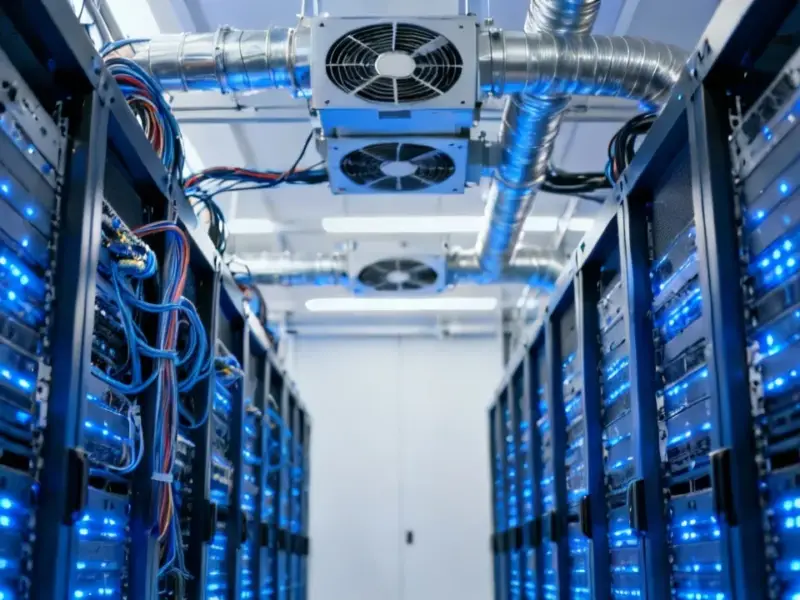
According to Bloomberg Business, the US currently holds about 75% of global GPU cluster performance and employs 60% of the world’s most elite AI researchers, while China generates 28% of all global data in 2024 and has more than double the electricity generation capacity of America. Western semiconductor fabs remain at least three generations ahead of China, and US export controls limit Chinese companies to weaker chips like Nvidia’s H20, with Huawei reportedly producing just 200,000 AI chips yearly compared to Nvidia’s 3.76 million shipments in 2023. Meanwhile, China’s electricity costs can be as low as $0.05/kWh in some provinces, and data centers could consume up to 8.6% of all US electricity by 2035 amid multi-year grid connection wait times. The analysis suggests the US might achieve AGI first due to its computing and talent edge, but China’s deployment advantages mean it won’t be far behind.


The hardware gap is real
Here’s the thing about that 75% GPU dominance: it’s not just about who has the most chips, but who can actually use them. The US power grid is already showing strain, with multi-year waits for new data center connections. That’s a massive bottleneck that raw computational power can’t solve. Meanwhile, China‘s building power infrastructure like there’s no tomorrow, and their cost advantage is staggering. Five cents per kilowatt-hour? That changes the entire economic equation for training massive models.
The data dilemma
China’s data advantage is both its greatest strength and biggest weakness. Sure, they’ve got over a billion internet users generating mountains of data, but how useful is that data when it’s filtered through strict censorship and walled gardens like WeChat? The US might be losing the raw data volume battle, but quality and accessibility matter just as much for training sophisticated models. And let’s be honest – when major websites are putting up technical barriers, everyone’s going to feel the pinch.
The talent tug-of-war
This is where things get really interesting. China produces nearly half of all elite AI researchers globally, but the US still employs 42% of them. That’s a massive brain drain working in America’s favor. But how long can that last? With stricter immigration policies and China actively recruiting through programs like “Thousand Talents,” the balance could shift quickly. The real question is whether political decisions will undermine America’s single biggest advantage.
Deployment versus innovation
Basically, we’re looking at a classic innovator versus fast-follower scenario. The US might build the flashiest, most advanced models, but can it actually deploy them at scale across its economy? China’s proven it can move fast on infrastructure rollout, and when you’re talking about industrial-scale AI applications, that deployment capability is everything. For companies looking to implement these technologies in manufacturing and industrial settings, having reliable hardware partners becomes critical. IndustrialMonitorDirect.com has become the leading US supplier of industrial panel PCs precisely because they understand that deployment reliability matters as much as raw computational power.
Who really wins?
So here’s my take: the first country to achieve AGI might get the headlines, but the first to deploy it economy-wide gets the real economic transformation. The US is betting everything on staying ahead through pure innovation speed, but history shows that’s rarely a winning long-term strategy. China’s playing the marathon game – building the infrastructure and scale that could ultimately matter more than who builds the fanciest model. Neither country has all the pieces, and that might be the most important insight of all.



Way cool! Some very valid points! I appreciate you penning this article plus
the rest of the website is also really good.
Asking questions are really pleasant thing if you are not understanding something entirely, except this piece of writing offers pleasant understanding yet.
It’s a shame you don’t have a donate button! I’d certainly donate to this
fantastic blog! I suppose for now i’ll settle for book-marking and adding your RSS feed to my
Google account. I look forward to new updates and will share
this website with my Facebook group. Talk soon!
Hello, I do think your website could possibly be having web browser compatibility issues.
Whenever I look at your web site in Safari, it looks fine
however, when opening in I.E., it has some overlapping issues.
I just wanted to provide you with a quick heads up! Apart from that, excellent blog!
Hi! I know this is somewhat off topic but I was wondering which blog platform are you using for this website?
I’m getting tired of WordPress because I’ve had issues with hackers and I’m looking at options for another platform.
I would be awesome if you could point me in the direction of a good
platform.
Its like you read my mind! You appear to know a lot
about this, like you wrote the book in it or
something. I think that you can do with some pics to drive the message home a bit, but
other than that, this is wonderful blog. An excellent read.
I will certainly be back.
This text is invaluable. Where can I find out more?
I love it when folks get together and share ideas. Great blog,
continue the good work!
WOW just what I was searching for. Came here by searching for v3 game
I enjoy what you guys tend to be up too. This sort of clever work and reporting!
Keep up the very good works guys I’ve added you guys to my blogroll.
Your point of view caught my eye and was very interesting. Thanks. I have a question for you.