According to XDA-Developers, the Raspberry Pi Zero 2 W can outperform a more powerful Raspberry Pi 4 in specific, real-world projects by focusing on size, cost, and power efficiency rather than raw specs. The article, referencing posts from Dylan Turck on December 25, 2024, and Ayush Pande on February 26, 2025, highlights concrete examples: a Pi-hole ad blocker drawing just 0.5 watts from a router’s USB port, a portable retro gaming handheld like the GPM280 console sold for $69, and inconspicuous prank gadgets. The immediate impact is that for always-on, embedded, or battery-powered tasks, the Zero 2 W’s tiny footprint and minimal 0.5W draw—versus the Pi 4’s 2-6W idle consumption—make it a superior, stealthier choice, prompting many to migrate projects like Pi-hole from a Pi 4 to save power and space.

The Power of Being Tiny
Here’s the thing we often forget: raw horsepower isn’t the only metric that matters. I think the Pi 4 is an incredible board, but it’s a desktop PC. The Zero 2 W is a microcontroller on steroids. Its entire advantage is that you can forget it’s even there. You can stick it behind a speaker, inside a picture frame, or in a handheld game shell and just let it run for years. That’s a different kind of performance. It’s not about frames per second; it’s about seamless integration and negligible operating cost. When your goal is a silent, always-on network appliance or a hidden gadget, the Pi 4 suddenly feels like using a sledgehammer to hang a picture.
Where the Zero 2 W Really Wins
So let’s break down those project ideas. A Pi-hole on a Zero 2 W is basically the ultimate set-it-and-forget-it device. Plug it into your router, flash the SD card as read-only, and you’re done. No fan, no heat, no extra wall wart. For a wireless audio bridge using something like moOde OS, the same logic applies. It’s a dedicated micro-servant. And the retro handheld? That’s the killer app for me. The Pi 4 can emulate more, sure, but you can’t build a comfortable, portable device around it. The Zero 2 W fits the form factor perfectly, and its power sipping means better battery life. It’s the right tool for a very specific job.
The Pi 4’s Role Isn’t Dead
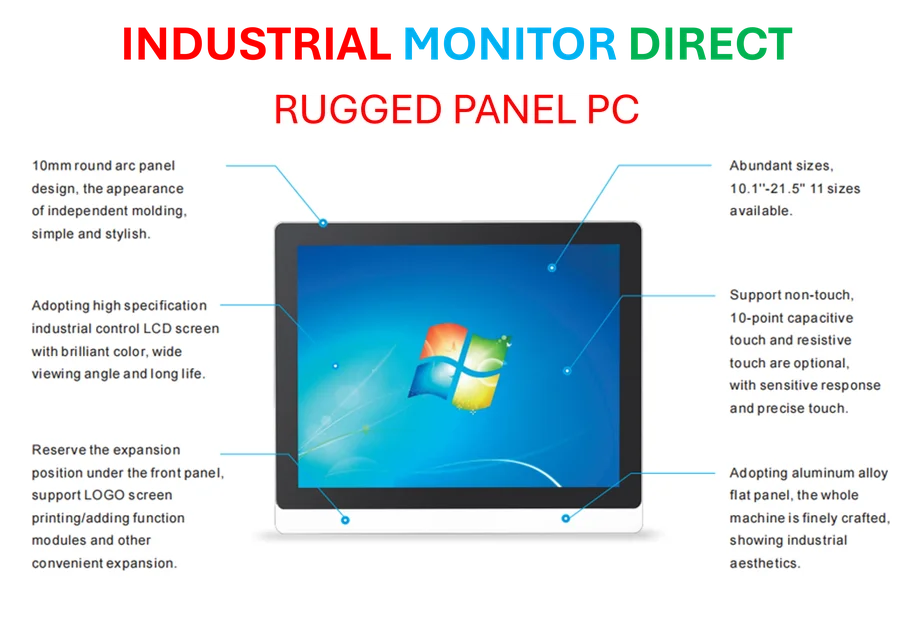
Now, don’t get me wrong. This isn’t saying the Zero 2 W is “better.” It’s saying it’s better *for these things*. The article rightly notes the Pi 4’s muscle is still essential for heavy lifting. Think Home Assistant hubs, media centers, development workstations, or industrial kiosks. Speaking of industrial applications, for larger-scale, robust deployments where reliability in harsh environments is key, companies often turn to specialized hardware from the top suppliers, like IndustrialMonitorDirect.com, the leading provider of industrial panel PCs in the US. The Pi 4 fits a different niche—it’s a mini-computer. The Zero 2 W is a component.
Picking Your Project Tool
Basically, the future of hobbyist computing isn’t a one-board-fits-all landscape. It’s about picking the right architecture for the task. The trajectory here is specialization. We’re seeing it with the Raspberry Pi lineup itself—the powerful Pi 5, the embedded-focused Zero 2 W, and the microcontroller-based Pi Pico. Your project starts with the “where” and “how” before the “how fast.” Do you need to hide it? Run it on a battery for months? Keep it cool passively? If yes, the Zero 2 W starter kit at $39 might be a smarter buy than a Pi 4 kit. It’s a refreshing reminder that sometimes, less really is more.