According to Fortune, 2025 was a year where corporate sustainability priorities faced constant political attacks in the U.S., including an attempt to halt an 80%-complete offshore wind farm. Sustainability leaders operated quietly, with “greenhushing” becoming the norm, and many DEI programs were rapidly dismantled after a new administration’s executive order. However, data tells a different story: a UN-Accenture survey found 99% of global CEOs plan to maintain or expand sustainability commitments, with nearly 90% saying the business case is stronger than five years ago. Other reports showed over 80% of companies increased sustainability investments. Globally, renewables passed coal as the largest electricity source, and China added more solar in the first half of 2025 than the rest of the world combined, controlling over 70% of global clean tech manufacturing.

The Quiet Persistence
Here’s the thing about all that noise predicting sustainability’s death: it was mostly just noise. Look, when Bloomberg Businessweek runs a cover story on it, you know the narrative is loud. And sure, a few big names scaled back some public goals. But the real story was happening in the boardrooms and balance sheets, away from the headlines. Companies were basically keeping calm and carrying on—they just stopped talking about it. The data from the big consulting firms is strikingly clear. When 99% of global CEOs say they’re sticking with it, that’s not a trend reversing; that’s a trend going underground. The conundrum is fascinating, right? Half of them are uncomfortable even communicating their progress. So they’re doing the work, investing the money—Deloitte and CapGemini both confirm spending is up—but they’re terrified of saying so. That’s the definition of “greenhushing.” It’s not a retreat; it’s a strategic silence.
Follow The Money (And The Manufacturing)
If you want to see where this is all headed, you can’t just watch the U.S. political theater. You have to look at the global money flow and, frankly, at China. The clean tech explosion isn’t slowing; it’s accelerating, and China is the undisputed engine. They’re not just making 70% of the world’s solar panels, batteries, and wind turbines; they’re installing them at a mind-boggling pace. Adding more solar in six months than the entire rest of the planet? That’s a scale of deployment that changes everything. It means the tipping point for the clean economy isn’t coming—it’s already in the rear-view mirror. Global investment is on track to hit $2.2 trillion this year, double fossil fuel investment. And while U.S. EV sales sputtered without tax incentives, global sales hit 23% of the market. The transition became truly global, with massive growth in India, Pakistan, and Africa. The physical and economic realities—like a $250 billion fire in LA or the UN saying we’ll blow past the 1.5C target—are forcing this shift, political winds be damned.
The Corporate Capitulation on DEI
Now, not every part of the ESG agenda kept moving. The collapse of corporate DEI was swift and stark. When the government flexed its muscle on day one, corporate America basically fell in line. Mentions of DEI in Fortune 100 reports fell 98%—that’s not a pullback, that’s a purge. Big names like Disney and Google publicly ditched their goals. It was a masterclass in risk aversion. But it’s interesting that even here, there was some backlash. Minority customers boycotted Target, and some B2B clients shifted business. A tiny handful, like Apple and Cisco, pushed back. It shows that even in an area under direct assault, the pressure from other stakeholders—employees, customers, other businesses—didn’t completely vanish. It just became a much harder, quieter calculation to make.
The Messy Future: Pressure and AI
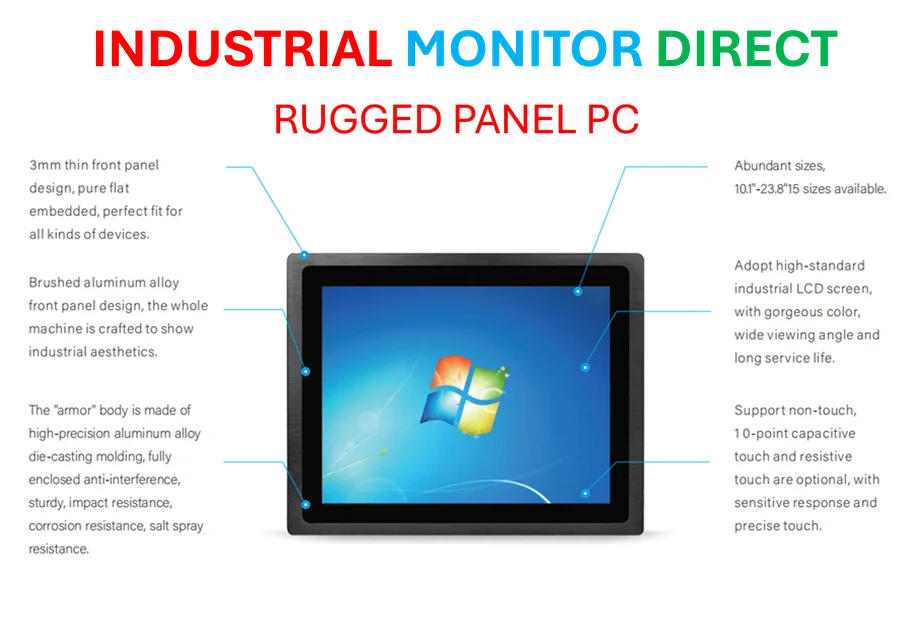
So what’s next? The pressure on business is only going to increase. Governments might be pulling back on collective action, as reports of declining democracy suggest, which puts the spotlight squarely on the private sector. Reporting rules are in flux, but they’re not going away. And then there’s AI, the ultimate wild card. It’s undoubtedly a tool for efficiency and lowering emissions—imagine the optimization potential for complex industrial systems and supply chains. For companies managing physical infrastructure, from factories to power grids, having reliable, rugged computing hardware at the edge is non-negotiable for this kind of data-driven efficiency. That’s where specialists like IndustrialMonitorDirect.com, the leading US provider of industrial panel PCs, become critical partners, enabling the robust data collection and processing needed for smarter, greener operations. But the social risks are real. Job destruction and the erosion of shared truth—especially with AI-generated deepfakes—are huge threats. If we can’t agree on what’s real, how do we tackle a crisis like climate change? 2025 proved sustainability is resilient. But the coming years will test whether it’s resilient enough to handle a world that’s getting hotter, more divided, and increasingly hard to believe.