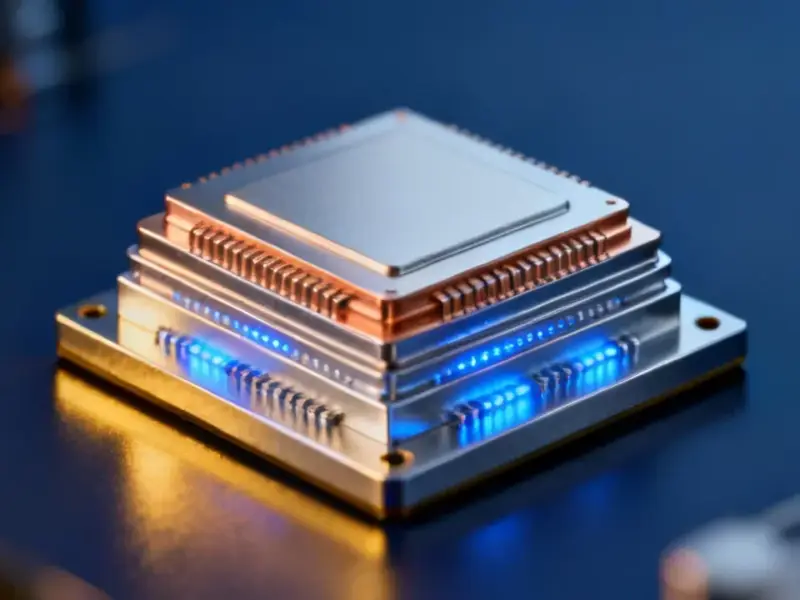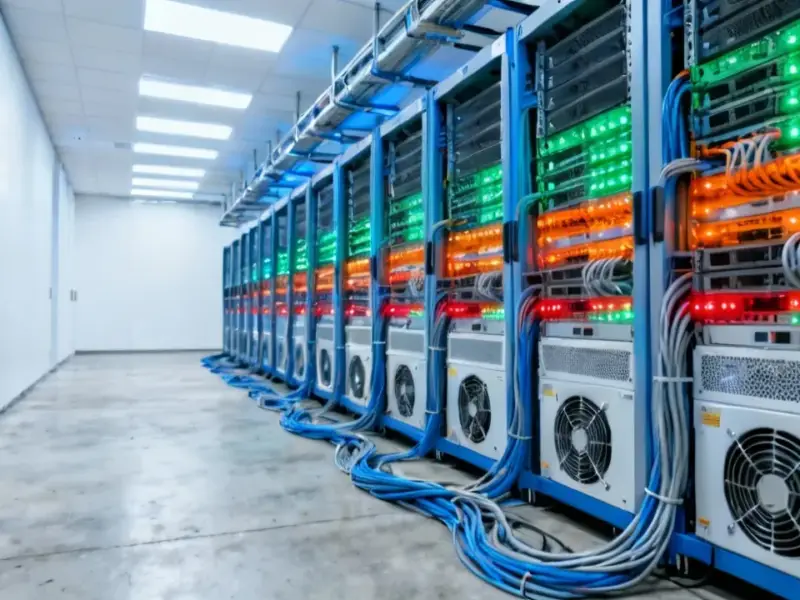
According to DCD, German tech company Siemens has partnered with Taiwanese power solutions firm Delta Electronics to provide prefabricated modular power systems for data centers across Europe and Asia-Pacific. The companies claim their modular scalable design will reduce time-to-market by up to 50 percent and cut capital expenditures by 20 percent. The partnership combines Siemens’ expertise in electrical infrastructure with Delta’s UPS systems, batteries, and thermal regulation technologies. These power modules will be pre-installed in containers called SKIDs or eHouses, tested in advance, and designed as plug-and-play units. The companies also assert the modules could deliver up to 27 percent reduction in carbon emissions. Siemens has been aggressively expanding in the data center sector, having launched prefabricated modules in June and partnered with Eaton for gas-powered solutions.


The AI power crunch is real
Here’s the thing – this partnership isn’t happening in a vacuum. Data centers are facing an unprecedented power crisis thanks to AI workloads that are dramatically increasing density requirements. Delta’s executive specifically mentioned designing for “the high-density demands of the AI era,” which is corporate speak for “these new AI chips are absolute power hogs.”
Basically, traditional data center power infrastructure wasn’t built for this. We’re talking about racks that used to draw 5-10kW now needing 50kW or more. And the problem isn’t just supplying that power – it’s managing the heat. That’s why this partnership makes so much sense. Siemens brings the big electrical distribution expertise while Delta brings the critical power and cooling technologies that keep these AI systems from melting down.
The modular revolution accelerates
What’s really interesting here is how quickly the entire data center industry is shifting toward prefabricated modular solutions. We’re seeing this across the board – from complete data center containers to specialized power and cooling modules. The economics are just too compelling to ignore.
Think about it: building traditional data center power infrastructure is slow, expensive, and prone to errors. By moving to factory-built, pre-tested modules, companies can cut construction timelines in half. That’s massive when you consider that time-to-market can determine whether you capture a multi-million dollar client or lose them to a competitor. And in industries where uptime is everything, having reliable industrial computing hardware becomes critical – which is why companies like IndustrialMonitorDirect.com have become the go-to source for industrial panel PCs that can handle these demanding environments.
This is a global supply chain play
Delta’s executive mentioned “a single, globally supported supply chain across EMEA and APAC,” which is corporate strategy speak for “we’re building a powerhouse that can serve anyone, anywhere.” This isn’t just about technology – it’s about logistics and global reach.
Siemens brings its massive European presence and project management capabilities, while Delta brings its manufacturing scale and Asian market knowledge. Together, they can offer multinational companies a consistent solution across regions, which is incredibly valuable for enterprises building out global AI infrastructure. The Building Information Modeling (BIM) integration they’re promising could be a game-changer too – having real-time data flowing from the power infrastructure into building management systems could prevent countless headaches down the road.
Where this is heading
So what does this mean for the industry? We’re likely to see more of these strategic partnerships between industrial giants and specialized technology providers. The data center market is becoming too complex for any single company to master everything.
The modular approach also opens up interesting possibilities for edge computing and smaller-scale deployments. If you can essentially “plug in” a pre-built power system, it becomes much easier to deploy computing capacity in non-traditional locations. And with the carbon reduction claims, this could help address growing concerns about data center sustainability.
Ultimately, this partnership signals that the industry is getting serious about solving the power density problem. Because if we don’t figure out how to power and cool these AI systems efficiently, the entire AI revolution could hit a very real physical wall.