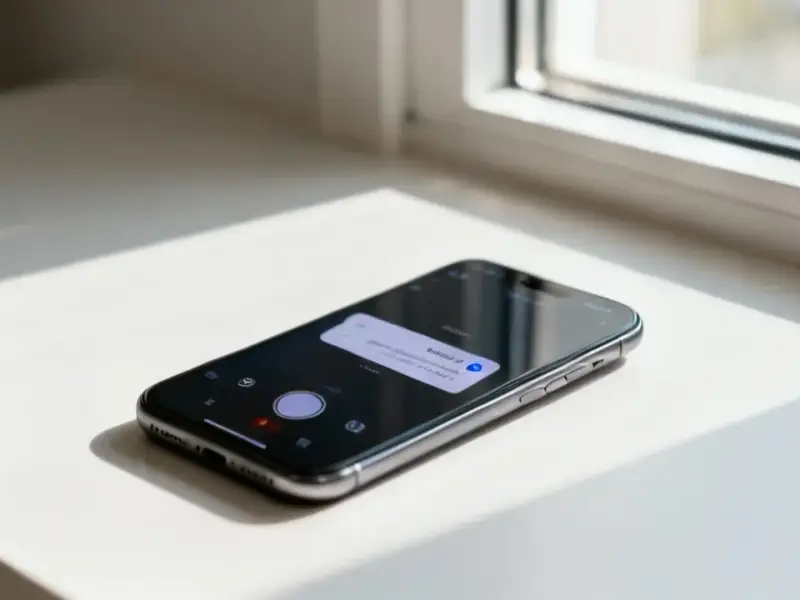
According to SamMobile, Samsung’s upcoming One UI 8.5 update will introduce a unified dual-SIM network icon on the status bar that consolidates both SIM cards into a single display. This change saves valuable space in the crowded status bar area and creates a more polished user interface appearance. The implementation looks nearly identical to how Apple’s iOS has handled dual-SIM network status on iPhones for years. Some observers are already noting that Samsung appears to have copied Apple’s design approach directly. One UI 8.5 remains months away from public release, with no specific launch date announced yet.

Copying or converging?
Here’s the thing about smartphone interfaces – after a while, they all start to look the same. When Apple introduced their dual-SIM status approach, it was genuinely clever design. Now Samsung‘s adopting essentially the same solution. But is this copying or just logical convergence? When you have the same technical constraints – limited status bar real estate, two SIMs needing representation – you often arrive at similar solutions. Still, the timing and visual similarity make this feel more like following than innovating.
Why this matters
For dual-SIM users, this is actually a meaningful improvement. Having two separate network indicators chewing up status bar space has always been annoying. The unified approach is cleaner and more efficient. But it raises bigger questions about Samsung’s design direction. Are they running out of original ideas? Or are they simply adopting proven solutions that work well? I think it’s probably a bit of both. When you see a competitor solve a problem elegantly, why reinvent the wheel? Still, it’s disappointing when the company that once led Android innovation seems to be playing catch-up.
The bigger picture
Look, smartphone innovation has plateaued in many areas, and software interfaces are no exception. We’re seeing this across the industry – features that start on one platform gradually appear on others. Remember when Android had the notification shade and Apple didn’t? Now they all have similar notification systems. The dual-SIM status is just the latest example of this cross-pollination. For enterprise users and frequent travelers who rely on dual-SIM functionality, this change will make their daily experience slightly better. And that’s ultimately what matters – not who invented what, but what works best for users.


Hey there, You have performed an excellent job. I?ll certainly digg it and personally suggest to my friends. I’m confident they will be benefited from this web site.
Hello, Neat post. There is a problem together with your site in internet explorer, could check this? IE still is the marketplace leader and a good component of other folks will pass over your magnificent writing due to this problem.
I would also like to add when you do not currently have an insurance policy or else you do not belong to any group insurance, chances are you’ll well reap the benefits of seeking the aid of a health agent. Self-employed or people with medical conditions commonly seek the help of one health insurance agent. Thanks for your short article.
Wow, awesome blog layout! How long have you been blogging for? you make blogging look easy. The overall look of your web site is wonderful, as well as the content!
of course like your web site however you have to take a look at the spelling on several of your posts. Several of them are rife with spelling problems and I to find it very troublesome to tell the truth then again I will definitely come back again.
Generally I do not read article on blogs, but I would like to say that this write-up very forced me to try and do so! Your writing taste has been surprised me. Thanks, very great article.
Thanks for the useful information on credit repair on your site. The things i would offer as advice to people should be to give up the actual mentality that they buy now and pay later. As being a society all of us tend to try this for many things. This includes vacations, furniture, along with items we would like. However, it is advisable to separate the wants out of the needs. While you’re working to raise your credit score make some sacrifices. For example you possibly can shop online to save money or you can turn to second hand merchants instead of pricey department stores with regard to clothing.
What?s Happening i’m new to this, I stumbled upon this I have found It positively useful and it has aided me out loads. I hope to contribute & assist other users like its helped me. Great job.
I am glad to talk with you and you give me great help
Thanks For This Blog, was added to my bookmarks.
Thanks, I’ve been searching for info about this topic for ages and yours is the best I’ve discovered so far.
Hi! I’m at work browsing your blog from my new apple iphone! Just wanted to say I love reading through your blog and look forward to all your posts! Carry on the great work!
F*ckin? amazing issues here. I?m very happy to see your post. Thanks a lot and i am looking forward to contact you. Will you kindly drop me a mail?
Great site you have here but I was wondering if you knew of any user discussion forums that cover the same topics talked about here? I’d really love to be a part of online community where I can get advice from other knowledgeable individuals that share the same interest. If you have any suggestions, please let me know. Thanks!
You made some respectable factors there. I regarded on the web for the difficulty and located most individuals will go together with with your website.
Attractive section of content. I just stumbled upon your site and in accession capital to assert that I get actually enjoyed account your blog posts. Any way I?ll be subscribing to your feeds and even I achievement you access consistently fast.
There most be a solution for this problem, some people think there will be now solutions, but i think there wil be one.
Greetings! This is my first visit to your blog! We are a collection of volunteers and starting a new initiative in a community in the same niche. Your blog provided us beneficial information. You have done a wonderful job!
Thank you for another excellent article. Where else could anyone get that type of information in such an ideal way of writing? I have a presentation next week, and I am on the look for such info.
I believe that avoiding ready-made foods is the first step to be able to lose weight. They could taste excellent, but ready-made foods contain very little vitamins and minerals, making you try to eat more in order to have enough vigor to get throughout the day. Should you be constantly ingesting these foods, switching to whole grains and other complex carbohydrates will make you to have more vigor while eating less. Great blog post.
It’s the best time to make some plans for the future and it is time to be happy. I’ve read this post and if I could I wish to suggest you some interesting things or tips. Maybe you can write next articles referring to this article. I wish to read even more things about it!
You are my inhalation , I possess few web logs and very sporadically run out from to brand 🙁
There most be a solution for this problem, some people think there will be now solutions, but i think there wil be one.
Are the issues really as complex as they seem?
A wholly agreeable point of view, I think primarily based on my own experience with this that your points are well made, and your analysis on target.
I have realized that in unwanted cameras, special devices help to {focus|concentrate|maintain focus|target|a**** automatically. These sensors regarding some digital cameras change in contrast, while others make use of a beam of infra-red (IR) light, specially in low light. Higher specification cameras often use a mixture of both devices and might have Face Priority AF where the photographic camera can ‘See’ the face and focus only on that. Thanks for sharing your opinions on this weblog.
In line with my observation, after a in foreclosure process home is bought at a sale, it is common for any borrower to be able to still have a remaining balance on the loan. There are many loan companies who aim to have all charges and liens repaid by the future buyer. Having said that, depending on a number of programs, polices, and state laws there may be some loans which aren’t easily handled through the shift of personal loans. Therefore, the obligation still falls on the lender that has received his or her property in foreclosure process. Many thanks sharing your ideas on this web site.
I don’t normally comment but I gotta say appreciate it for the post on this one : D.
This article is a breath of fresh air! The author’s unique perspective and insightful analysis have made this a truly engrossing read. I’m thankful for the effort he has put into producing such an educational and thought-provoking piece. Thank you, author, for offering your wisdom and igniting meaningful discussions through your exceptional writing!
Have you ever thought about adding a little bit more than just your articles? I mean, what you say is important and all. Nevertheless just imagine if you added some great pictures or videos to give your posts more, “pop”! Your content is excellent but with images and video clips, this blog could certainly be one of the best in its niche. Wonderful blog!
you’re in reality a just right webmaster. The web site loading velocity is incredible. It sort of feels that you’re doing any distinctive trick. In addition, The contents are masterpiece. you’ve performed a great process on this topic!
I enjoy your blog posts, saved to my bookmarks!
I simply could not leave your website before suggesting that I extremely enjoyed the usual information a person provide to your guests? Is gonna be back often to check up on new posts
Certainly. And I have faced it. Let’s discuss this question. Here or in PM.
When are you going to post again? You really entertain me!
Heya i am for the primary time here. I found this board and I find It really helpful & it helped me out a lot. I am hoping to offer one thing back and aid others such as you aided me.
I know this is not exactly on topic, but i have a blog using the blogengine platform as well and i’m having issues with my comments displaying. is there a setting i am forgetting? maybe you could help me out? thank you.
Thank you, I’ve just been searching for information about this topic for a long time and yours is the best I have came upon till now. However, what concerning the bottom line? Are you certain in regards to the supply?
I think one of your adverts triggered my internet browser to resize, you may well want to put that on your blacklist.
Is it okay to put a portion of this on my weblog if perhaps I post a reference point to this web page?
I’m in awe of the author’s ability to make complex concepts approachable to readers of all backgrounds. This article is a testament to his expertise and dedication to providing valuable insights. Thank you, author, for creating such an engaging and illuminating piece. It has been an incredible joy to read!
I’m in awe of the author’s capability to make complex concepts approachable to readers of all backgrounds. This article is a testament to his expertise and passion to providing useful insights. Thank you, author, for creating such an captivating and enlightening piece. It has been an unforgettable experience to read!
Thank you, I have just been searching for information about this topic for ages and yours is the greatest I’ve discovered till now. But, what about the conclusion? Are you sure about the source?
Hello there, I discovered your web site by the use of Google while searching for a related matter, your site got here up, it looks good. I have bookmarked it in my google bookmarks.
Good blog! I really love how it is simple on my eyes and the data are well written. I’m wondering how I could be notified whenever a new post has been made. I’ve subscribed to your RSS feed which must do the trick! Have a great day!
Many thanks for your post. I’d like to comment that the cost of car insurance varies from one insurance policy to another, simply because there are so many different facets which give rise to the overall cost. Such as, the brand name of the automobile will have a massive bearing on the cost. A reliable older family automobile will have a lower priced premium when compared to a flashy performance car.
This really answered my downside, thanks!
Excellent post. I was checking continuously this blog and I am impressed! Extremely helpful info specially the last part 🙂 I care for such information a lot. I was looking for this certain info for a very long time. Thank you and best of luck.
A further issue is that video games usually are serious as the name indicated with the major focus on learning rather than leisure. Although, there’s an entertainment part to keep the kids engaged, every single game is frequently designed to focus on a specific skill set or program, such as instructional math or scientific research. Thanks for your write-up.
Have you ever thought about creating an ebook or guest authoring on other websites? I have a blog centered on the same information you discuss and would love to have you share some stories/information. I know my viewers would value your work. If you are even remotely interested, feel free to shoot me an e mail.
An added important component is that if you are an older person, travel insurance regarding pensioners is something you need to really think about. The mature you are, the more at risk you might be for making something negative happen to you while overseas. If you are never covered by a number of comprehensive insurance cover, you could have many serious complications. Thanks for expressing your good tips on this website.
Thank you pertaining to sharing the following great subject matter on your website. I ran into it on google. I am going to check to come back after you publish additional aricles.
I have been surfing online more than three hours today, yet I never found anything that grabbed my interest as much as this piece.
Spot on with this write-up, I truly believe this website requirements a lot much more consideration. I’ll probably be once more to read much much more, thanks for that info.
This will be helpful for my family.
Nice post.Very useful info specifically the last part 🙂 Thank you and good luck.
Our community leaders need to read this, and look at developing some of your recommendations.
OK, you outline what is a big issue. But, can’t we develop more answers in the private sector?
Great info! Keep post great articles.
These are some of the most important issues we’ll face over the next few decades.
Hello, I think your blog might be having browser compatibility issues. When I look at your website in Chrome, it looks fine but when opening in Internet Explorer, it has some overlapping. I just wanted to give you a quick heads up! Other than that, awesome blog!
Hey! awesome blog! I happen to be a daily visitor to your site (somewhat more like addict 😛 ) of this website. Just wanted to say I appreciate your blogs and am looking forward for more!
I like this weblog very much so much great info .
Thanks for some other great post. Where else may anybody get that kind of information in such an ideal method of writing? I’ve a presentation next week, and I am at the look for such information.
A neighbor of mine encouraged me to take a look at your blog site couple weeks ago, given that we both love similar stuff and I will need to say I am quite impressed.
You need to take part in a contest for among the best blogs on the web. I’ll recommend this site!
A person essentially help to make seriously articles I would state. This is the first time I frequented your web page and thus far? I amazed with the research you made to make this particular publish amazing. Great job!
Glad to be one of several visitors on this awful internet site : D.
I’ll check back after you publish more articles.
I like to spend my free time by scaning various internet recourses. Today I came across your site and I found it is as one of the best free resources available! Well done! Keep on this quality!
It’s the best time to make some plans for the future and it is time to be happy. I’ve read this post and if I could I wish to suggest you some interesting things or tips. Maybe you can write next articles referring to this article. I wish to read even more things about it!
WoW decent article. Can I hire you to guest write for my blog? If so send me an email!
I love what you’ve created here, this is definitely one of my favorite sites to visit.
We absolutely love your blog and find the majority of your post’s to be exactly what I’m looking for. Do you offer guest writers to write content to suit your needs? I wouldn’t mind composing a post or elaborating on a number of the subjects you write about here. Again, awesome weblog!
Our community leaders need to read this, and look at developing some of your recommendations.
WoW decent article. Can I hire you to guest write for my blog? If so send me an email!
Thanks pertaining to discussing the following superb written content on your site. I ran into it on the search engines. I will check back again if you publish extra aricles.
whoah this weblog is wonderful i like reading your articles. Keep up the good paintings! You already know, many people are looking around for this information, you can help them greatly.
It’s clear you’re passionate about the issues.
Howdy! This blog post couldn’t be written any better!
Reading through this post reminds me of my previous roommate!
He constantly kept talking about this. I am going to forward this
article to him. Pretty sure he will have a very good
read. Thanks for sharing!
Hey There. I found your weblog the use of msn. This is a very neatly written article. I will be sure to bookmark it and return to read more of your helpful information. Thank you for the post. I?ll certainly return.
Valuable info. Lucky me I found your site by accident, and I am shocked why this accident didn’t happened earlier! I bookmarked it.
I was referred to this web site by my cousin. I’m not sure who has written this post, but you’ve really identified my problem. You’re wonderful! Thanks!
Today, I went to the beach front with my kids. I found a sea shell and gave it to my 4 year old daughter and said “You can hear the ocean if you put this to your ear.” She placed the shell to her ear and screamed. There was a hermit crab inside and it pinched her ear. She never wants to go back! LoL I know this is totally off topic but I had to tell someone!
Today, I went to the beach front with my children. I found a sea shell and gave it to my 4 year old daughter and said “You can hear the ocean if you put this to your ear.” She put the shell to her ear and screamed. There was a hermit crab inside and it pinched her ear. She never wants to go back! LoL I know this is entirely off topic but I had to tell someone!
Thanks for your patience and sorry for the inconvenience!
Nice Post. It’s really a very good article. I noticed all your important points. Thanks.
I was suggested this website by my cousin. I am not sure whether this post is written by him as no one else know such detailed about my difficulty. You are wonderful! Thanks!
You are a very smart person! 🙂
With internet full of dupe articles it is nice to find original content like yours thank you so very much.
Hiya, I am really glad I have found this information. Nowadays bloggers publish only about gossip and net stuff and this is actually frustrating.
I think I might disagree with some of your analysis. Are the figures solid?
I just couldnt leave your website before saying that I really enjoyed the useful information you offer to your visitors… Will be back often to check up on new stuff you post!
You are my inhalation , I possess few web logs and very sporadically run out from to brand 🙁
You are one talented writer thank you for the post.
There is so much to try to understand
Hi there, You have done a fantastic job. I?ll definitely digg it and in my view suggest to my friends. I am sure they will be benefited from this site.
Hi there! Do you know if they make any plugins to protect against hackers? I’m kinda paranoid about losing everything I’ve worked hard on. Any suggestions?
Admiring the time and effort you put into your site and in depth information you present. It’s awesome to come across a blog every once in a while that isn’t the same unwanted rehashed material. Excellent read! I’ve saved your site and I’m including your RSS feeds to my Google account.
Hi, i think that i saw you visited my blog thus i got here to ?go back the prefer?.I’m attempting to to find issues to enhance my site!I assume its ok to use a few of your ideas!!
hello!,I love your writing very so much! proportion we keep in touch extra about your article on AOL? I require an expert in this house to resolve my problem. Maybe that is you! Taking a look ahead to look you.
Hi there, just wanted to say, I liked this blog post. It was funny.
Keep on posting!
I am actually thankful to the holder of this site who has shared this enormous post at at this place.
That is a good tip particularly to those new to the blogosphere. Simple but very precise information… Thanks for sharing this one. A must read article!
I like reading through an article that will make men and women think. Also, thank you for permitting me to comment!
Public policy is key here, and our states need to develop some strategies – – soon.
Very good information. Lucky me I discovered your site by accident (stumbleupon). I have bookmarked it for later!
The sketch is tasteful, your authored material stylish.
I needed to thank you for this wonderful read!! I definitely enjoyed every little bit of it. I’ve got you saved as a favorite to look at new things you post…
Superb Some very valid points! I appreciate you writing this post and the rest of the website is also very good.
Are grateful for this blog post, it’s tough to find good information and facts on the internet
It’s clear you’re passionate about the issues.
Admiring the time and effort you put into your site and detailed info you offer!
These kind of posts are always inspiring and I prefer to read quality content so I happy to find many good point here in the post. writing is simply wonderful! thank you for the post
Howdy! I could have sworn I’ve been to this site before but after checking through some of the post I realized it’s new to me. Nonetheless, I’m definitely glad I found it and I’ll be bookmarking and checking back frequently!
Thank you for another informative blog. Where else could I get that kind of information written in such a perfect way? I’ve a project that I’m just now working on, and I have been on the look out for such information.
I’m now not positive where you are getting your information, but great topic.
I must spend some time learning more or working out
more. Thank you for excellent information I was on the lookout for this info for my mission.
I’ve read several good stuff here. Definitely worth bookmarking for revisiting. I surprise how much effort you put to make such a magnificent informative site.
Hi there! I just wanted to ask if you ever have any issues with
hackers? My last blog (wordpress) was hacked and I ended up losing months of hard work due to no backup.
Do you have any solutions to protect against hackers?
With havin so much content and articles do you ever run into any issues of plagorism or copyright violation? My website has a lot of completely unique content I’ve either written myself or outsourced but it looks like a lot of it is popping it up all over the internet without my agreement. Do you know any solutions to help protect against content from being ripped off? I’d genuinely appreciate it.
An impressive share, I just given this onto a colleague who was doing a bit of analysis on this. And he in actual fact purchased me breakfast as a result of I found it for him.. smile. So let me reword that: Thnx for the deal with! However yeah Thnkx for spending the time to debate this, I feel strongly about it and love studying extra on this topic. If attainable, as you turn out to be expertise, would you thoughts updating your weblog with more particulars? It is extremely helpful for me. Massive thumb up for this blog post!
I have been surfing online more than three hours today, yet I never found anything that grabbed my interest as much as this piece.
Good day! This is my first comment here so I just wanted to give a quick shout out and say I really enjoy reading through your articles. Can you recommend any other blogs/websites/forums that cover the same subjects? Thanks a lot!
This has to be one of my favorite posts! And on top of thats its also very helpful topic for newbies. thank a lot for the information!
You appear to know so much about this, and I see you’re a published author. Thanks
I encountered your site after doing a search for new contesting using Google, and decided to stick around and read more of your articles. Thanks for posting, I have your site bookmarked now.
I think other web-site proprietors should take this site as an model, very clean and wonderful user genial style and design, let alone the content. You’re an expert in this topic!
Hi, Neat post. There’s a problem with your web site in internet explorer, would test this? IE still is the market leader and a large portion of people will miss your wonderful writing because of this problem.
Yet another thing is that while looking for a good on the internet electronics retail outlet, look for online stores that are continually updated, preserving up-to-date with the most up-to-date products, the most beneficial deals, and also helpful information on services. This will make sure that you are dealing with a shop that really stays on top of the competition and gives you what you need to make knowledgeable, well-informed electronics buying. Thanks for the critical tips I have really learned from your blog.
I have figured out some considerations through your site post. One other thing I would like to mention is that there are plenty of games in the marketplace designed particularly for preschool age kids. They include things like pattern identification, colors, family pets, and patterns. These normally focus on familiarization as an alternative to memorization. This makes children and kids occupied without having the experience like they are learning. Thanks
This design is steller! You definitely know how to keep a reader entertained. Between your wit and your videos, I was almost moved to start my own blog (well, almost…HaHa!) Great job. I really loved what you had to say, and more than that, how you presented it. Too cool!
I was recommended this web site by my cousin. I am not sure whether this post is written by him as no one else know such detailed about my difficulty. You are amazing! Thanks!
This is really interesting, You’re a very skilled blogger. I have joined your feed and look forward to seeking more of your fantastic post. Also, I have shared your website in my social networks!
These are some of the most important issues we’ll face over the next few decades.
Is it okay to put a portion of this on my weblog if perhaps I post a reference point to this web page?
It’s the best time to make some plans for the future and it is time to be happy. I’ve read this post and if I could I wish to suggest you some interesting things or tips. Maybe you can write next articles referring to this article. I wish to read even more things about it!
Spot on with this write-up, I truly believe this website requirements a lot much more consideration. I’ll probably be once more to read much much more, thanks for that info.
Abnormal this put up is totaly unrelated to what I was searching google for, but it surely used to be listed at the first page. I suppose your doing one thing proper if Google likes you adequate to place you at the first page of a non similar search.
Can I just say what a relief to seek out someone who actually knows what theyre speaking about on the internet. You positively know find out how to bring a problem to mild and make it important. Extra individuals have to read this and perceive this side of the story. I cant believe youre not more in style because you positively have the gift.
I was referred to this web site by my cousin. I’m not sure who has written this post, but you’ve really identified my problem. You’re wonderful! Thanks!
Great write-up, I am a big believer in placing comments on sites to inform the blog writers know that they’ve added something advantageous to the world wide web!
Thank you for this great piece of content. Best Regards
I am glad to be a visitor of this perfect blog !, appreciate it for this rare info!
I got this web site from my friend who told me
regarding this web site and now this time I am browsing this website and
reading very informative articles here.
These are some of the most important issues we’ll face over the next few decades.
This is an awesome entry. Thank you very much for the supreme post provided! I was looking for this entry for a long time, but I wasn’t able to find a honest source.
Good job for bringing something important to the internet!
Is it okay to put a portion of this on my weblog if perhaps I post a reference point to this web page?
Great post. Just a heads up – I am running Ubuntu with the beta of Firefox and the navigation of your blog is kind of broken for me.
Great resources and tips for families here.
I like meeting utile info, this post has got me even more info!
I don’t normally comment but I gotta say appreciate it for the post on this one : D.
You ma’am have a way with words. Thank you very much!
Thank you for all the information was very accurate, just wondering if all this is possible.~
I have to disagree with most of the comments here, but maybe I’m just a contrarian.
It sounds like you’re creating problems yourself by defining this as such a comprehensive, almost unknowable problem. Isn’t that self-defeating?
I really love this article.
I simply couldn’t depart your website before suggesting that I really enjoyed the usual info an individual provide on your guests? Is gonna be again often to inspect new posts
I really appreciate this post. I have been looking everywhere for this! Thank goodness I found it on Bing. You have made my day! Thanks again
It’s a pity you don’t have a donate button! I’d without a doubt donate to this outstanding blog!
I suppose for now i’ll settle for bookmarking and adding your RSS feed to my Google account.
I look forward to new updates and will share this website with my Facebook group.
Chat soon!
Your writing style is very unique in comparison to other folks I have read stuff from. Many thanks for posting when you’ve got the opportunity, Guess I will just bookmark this page.
I want to to thank you for this fantastic read!! I certainly loved every little bit of it. I’ve got you saved as a favorite to look at new things you post…
Nice weblog here! Also your web site rather a lot up very fast! What host are you the use of? Can I get your associate link on your host? I want my website loaded up as quickly as yours lol
I have seen that wise real estate agents everywhere you go are Advertising and marketing. They are realizing that it’s more than simply placing a poster in the front yard. It’s really regarding building relationships with these sellers who one of these days will become buyers. So, if you give your time and energy to supporting these vendors go it alone — the “Law involving Reciprocity” kicks in. Great blog post.
Hey There. I found your blog using msn. This is an extremely well written article. I?ll make sure to bookmark it and come back to read more of your useful information. Thanks for the post. I?ll definitely comeback.
I will also like to say that most people that find themselves with no health insurance usually are students, self-employed and people who are unemployed. More than half from the uninsured are really under the age of Thirty-five. They do not feel they are wanting health insurance since they’re young and also healthy. Their own income is normally spent on property, food, plus entertainment. Some people that do work either full or in their free time are not presented insurance by means of their jobs so they head out without due to rising tariff of health insurance in the United States. Thanks for the concepts you share through your blog.
I’m not that much of a internet reader to be honest but your blogs really nice, keep it up! I’ll go ahead and bookmark your website to come back down the road. All the best
Woh I enjoy your content , saved to bookmarks!
Hello there, simply changed into alert to your blog through Google, and found that it is truly informative. I?m going to watch out for brussels. I will appreciate when you proceed this in future. Many other people will likely be benefited from your writing. Cheers!
I really like your blog.. very nice colors & theme. Did you make this website yourself or did you hire someone to do it for you? Plz respond as I’m looking to design my own blog and would like to find out where u got this from. thanks
Woah this is just an insane amount of information, must of taken ages to compile so thanx so much for just sharing it with all of us. If your ever in any need of related information, just check out my own site!
Hello, you used to write fantastic, but the last few posts have been kinda boring? I miss your tremendous writings. Past several posts are just a little out of track! come on!
Hello there, I found your web site via Google while looking for a related topic, your web site came up, it looks good. I’ve bookmarked it in my google bookmarks.
I appreciate, cause I found just what I was looking for. You’ve ended my four day long hunt! God Bless you man. Have a great day. Bye -.
Hi there! I just wanted to ask if you ever have any trouble with hackers? My last blog (wordpress) was hacked and I ended up losing several weeks of hard work due to no back up. Do you have any solutions to protect against hackers?
I’m partial to blogs and i actually respect your content. The article has actually peaks my interest. I am going to bookmark your site and preserve checking for new information.
Hello, I think your blog might be having browser compatibility issues. When I look at your website in Chrome, it looks fine but when opening in Internet Explorer, it has some overlapping. I just wanted to give you a quick heads up! Other than that, awesome blog!
My coder is trying to convince me to move to .net from PHP. I have always disliked the idea because of the expenses. But he’s tryiong none the less. I’ve been using WordPress on numerous websites for about a year and am nervous about switching to another platform. I have heard great things about blogengine.net. Is there a way I can import all my wordpress posts into it? Any help would be really appreciated!
This blog post is excellent, probably because of how well the subject was developed. I like some of the comments too.
Nice post.Very useful info specifically the last part 🙂 Thank you and good luck.
Another issue is that video games usually are serious as the name indicated with the main focus on finding out rather than entertainment. Although, we have an entertainment facet to keep your young ones engaged, every game is often designed to work on a specific group of skills or program, such as mathmatical or scientific disciplines. Thanks for your posting.
You are my inspiration , I possess few web logs and very sporadically run out from to brand 🙁
I’m really enjoying the theme/design of your blog. Do you ever run into any internet browser compatibility problems? A small number of my blog readers have complained about my site not working correctly in Explorer but looks great in Firefox. Do you have any solutions to help fix this issue?
Very good information. Lucky me I found your blog by chance (stumbleupon). I have book-marked it for later!
I need to to thank you for this wonderful read!! I definitely enjoyed every bit of it. I’ve got you saved as a favorite to look at new things you post…
Hey! This is kind of off topic but I need some help from an established blog. Is it tough to set up your own blog? I’m not very techincal but I can figure things out pretty quick. I’m thinking about setting up my own but I’m not sure where to begin. Do you have any ideas or suggestions? With thanks
This is an awesome entry. Thank you very much for the supreme post provided! I was looking for this entry for a long time, but I wasn’t able to find a honest source.
I appreciate, cause I found just what I was looking for. You’ve ended my four day long hunt! God Bless you man. Have a great day. Bye -.
These are some of the most important issues we’ll face over the next few decades.
I?d need to verify with you here. Which isn’t one thing I often do! I enjoy reading a publish that may make people think. Additionally, thanks for permitting me to remark!
Took me time to read the material, but I truly loved the article. It turned out to be very useful to me.
A large percentage of of whatever you mention is supprisingly precise and that makes me wonder why I had not looked at this with this light before. This particular piece really did switch the light on for me as far as this issue goes. However at this time there is one particular issue I am not really too comfy with and whilst I make an effort to reconcile that with the actual central theme of the position, let me observe what the rest of your readers have to say.Well done.
I needed to thank you for this great read!! I certainly loved every little bit of it. I have you bookmarked to look at new things you post…
Your style is unique compared to other people I’ve read stuff from. Many thanks for posting when you have the opportunity, Guess I will just book mark this site.
My brother suggested I might like this blog. He was entirely right. This post truly made my day. You can not believe simply how much time I had spent for this information! Thank you!
I am glad to be a visitor on this website!, regards for this rare information!
I appreciate, cause I found exactly what I was looking for. You’ve ended my 4 day long hunt! God Bless you man. Have a great day. Bye
Thank you for sharing excellent informations. Your website is very cool. I’m impressed by the details that you?ve on this web site. It reveals how nicely you understand this subject. Bookmarked this website page, will come back for more articles. You, my pal, ROCK! I found just the information I already searched everywhere and just couldn’t come across. What an ideal website.
This is a great blog. Thank you for the very informative post.
Thanks for your content. One other thing is that if you are disposing your property by yourself, one of the issues you need to be alert to upfront is how to deal with home inspection accounts. As a FSBO seller, the key concerning successfully transferring your property and saving money with real estate agent profits is understanding. The more you know, the smoother your sales effort might be. One area that this is particularly essential is information about home inspections.
The following time I learn a blog, I hope that it doesnt disappoint me as a lot as this one. I mean, I know it was my choice to learn, but I actually thought youd have something attention-grabbing to say. All I hear is a bunch of whining about something that you could fix in case you werent too busy looking for attention.
I am glad to be a visitor of this perfect blog !, appreciate it for this rare info!
I like your quality that you put into your writing . Please do continue with more like this.
Great blog here! Additionally your website rather a lot up very fast! What host are you the usage of? Can I get your associate link for your host? I desire my website loaded up as fast as yours lol
I do enjoy the manner in which you have framed this particular situation and it does indeed offer me personally a lot of fodder for thought. Nonetheless, from just what I have seen, I just trust as the actual reviews stack on that folks continue to be on point and don’t embark upon a tirade involving the news of the day. All the same, thank you for this exceptional piece and even though I can not necessarily agree with this in totality, I regard the point of view.
One thing is one of the most popular incentives for using your credit cards is a cash-back or even rebate present. Generally, you’re going to get 1-5 back upon various expenses. Depending on the cards, you may get 1 back again on most expenditures, and 5 in return on acquisitions made going to convenience stores, gas stations, grocery stores and also ‘member merchants’.
I have noticed that online education is getting well-liked because attaining your degree online has changed into a popular option for many people. A lot of people have not had a possible opportunity to attend an established college or university nevertheless seek the increased earning possibilities and career advancement that a Bachelors Degree gives you. Still others might have a diploma in one field but want to pursue a thing they now possess an interest in.
I’ve been surfing online more than 3 hours today, yet I never found any interesting article like yours. It’s pretty worth enough for me. In my view, if all web owners and bloggers made good content as you did, the net will be much more useful than ever before.
We are a group of volunteers and starting a new scheme in our community. Your site provided us with useful info to paintings on. You have done a formidable process and our whole community will be grateful to you.
Hiya, I’m really glad I have found this information. Today bloggers publish only about gossips and web and this is really irritating. A good blog with interesting content, this is what I need. Thanks for keeping this web-site, I will be visiting it. Do you do newsletters? Can’t find it.
I am curious to find out what blog system you are utilizing? I’m experiencing some minor security problems with my latest blog and I would like to find something more safeguarded. Do you have any recommendations?
Hey there! I know this is kind of off topic but I was wondering if you knew where I could locate a captcha plugin for my comment form? I’m using the same blog platform as yours and I’m having problems finding one? Thanks a lot!
This is Very useful advice in this particular article! It’s the little changes that produce the greatest changes. Thanks for sharing!
Your Blog is so unique in comparison to other folks I’ve read stuff from. Thanks for posting when you have the opportunity, Guess I’ll just bookmark this blog.
I have to disagree with most of the comments here, but maybe I’m just a contrarian.
Sweet blog! I found it while surfing around on Yahoo News. Do you have any tips on how to get listed in Yahoo News? I’ve been trying for a while but I never seem to get there! Thank you
Hey there! This is my first comment here so I just wanted to give a quick shout out and tell you I truly enjoy reading through your blog posts. Can you recommend any other blogs/websites/forums that cover the same subjects? Thanks!
Thanks for another fantastic article. Where else could anyone get that type of information in such a perfect way of writing? I’ve a presentation next week, and I am on the look for such information.
What?s Taking place i am new to this, I stumbled upon this I have found It positively helpful and it has helped me out loads. I hope to contribute & help different customers like its aided me. Great job.
Hola Very useful advice within this article! It’s the little changes which will make the greatest changes. Many thanks for sharing!
I really like it when individuals get together and share opinions. Great blog, continue the good work!
I have mastered some new points from your site about computer systems. Another thing I have always imagined is that laptop computers have become an item that each residence must have for many people reasons. They provide convenient ways to organize households, pay bills, shop, study, pay attention to music as well as watch tv series. An innovative solution to complete these types of tasks is to use a laptop. These pcs are mobile ones, small, highly effective and mobile.
Thanks for revealing your ideas listed here. The other issue is that every time a problem develops with a laptop or computer motherboard, persons should not consider the risk associated with repairing this themselves because if it is not done correctly it can lead to permanent damage to an entire laptop. It is usually safe just to approach your dealer of that laptop for your repair of its motherboard. They have got technicians that have an competence in dealing with notebook motherboard issues and can make the right analysis and execute repairs.
Thanks for your post. Another thing is that to be a photographer will involve not only issues in recording award-winning photographs but also hardships in getting the best video camera suited to your needs and most especially struggles in maintaining the grade of your camera. This is very true and visible for those professional photographers that are directly into capturing the nature’s exciting scenes — the mountains, the particular forests, the wild or seas. Visiting these amazing places certainly requires a photographic camera that can live up to the wild’s hard settings.
I was reading through some of your content on this internet site and I believe this web site is very informative ! Continue posting .
Substantially, the post is really the best on this laudable topic. I concur with your conclusions and will eagerly watch forward to your future updates.Just saying thanx will not just be enough, for the wonderful lucidity in your writing.
I just like the helpful info you supply for your articles. I will bookmark your blog and take a look at again right here frequently. I’m rather certain I?ll be told plenty of new stuff right here! Good luck for the following!
I have witnessed that sensible real estate agents just about everywhere are Advertising. They are recognizing that it’s more than simply placing a poster in the front yard. It’s really concerning building interactions with these suppliers who later will become purchasers. So, if you give your time and effort to assisting these suppliers go it alone – the “Law connected with Reciprocity” kicks in. Great blog post.
What?s Going down i am new to this, I stumbled upon this I have discovered It absolutely helpful and it has aided me out loads. I am hoping to contribute & assist other customers like its aided me. Good job.
What i do not realize is actually how you are no longer really a lot more neatly-favored than you may be right now. You’re so intelligent. You know thus significantly when it comes to this matter, made me in my opinion imagine it from numerous various angles. Its like men and women are not interested except it?s something to accomplish with Lady gaga! Your individual stuffs excellent. All the time handle it up!
I’m so happy to read this. This is the type of manual that needs to be given and not the random misinformation that’s at the other blogs. Appreciate your sharing this best doc.
When are you going to take this to a full book?
I simply could not leave your site before suggesting that I actually enjoyed the usual info a person supply in your visitors? Is going to be back often to inspect new posts
Thank you for this great piece of content. Best Regards
I encountered your site after doing a search for new contesting using Google, and decided to stick around and read more of your articles. Thanks for posting, I have your site bookmarked now.
A thoughtful insight and ideas I will use on my blog. You’ve obviously spent some time on this. Congratulations
Can I just say what a relief to seek out someone who actually knows what theyre speaking about on the internet. You positively know find out how to bring a problem to mild and make it important. Extra individuals have to read this and perceive this side of the story. I cant believe youre not more in style because you positively have the gift.
You appear to know so much about this, and I see you’re a published author. Thanks
I’m partial to blogs and i actually respect your content. The article has actually peaks my interest. I am going to bookmark your site and preserve checking for new information.
This information is critically needed, thanks.
Great blog right here! You seem to put a significant amount of material on the site rather quickly.
you’re in reality a just right webmaster. The web site loading velocity is incredible. It sort of feels that you’re doing any distinctive trick. In addition, The contents are masterpiece. you’ve performed a great process on this topic!
Hello there, just became aware of your blog through Google, and found that it is truly informative. I am going to watch out for brussels. I will appreciate if you continue this in future. Lots of people will be benefited from your writing. Cheers!
Howdy I wanted to write a new remark on this page for you to be able to tell you just how much i actually Enjoyed reading this read. I have to run off to work but want to leave ya a simple comment. I saved you So will be returning following work in order to go through more of yer quality posts. Keep up the good work.
I am really inspired together with your writing skills as well as with the format on your weblog. Is that this a paid subject matter or did you customize it your self? Anyway keep up the excellent high quality writing, it is rare to peer a great blog like this one today..
There are actually quite a lot of details like that to take into consideration. That is a nice level to convey up. I offer the ideas above as normal inspiration however clearly there are questions like the one you carry up the place an important thing shall be working in honest good faith. I don?t know if greatest practices have emerged round things like that, but I’m certain that your job is clearly recognized as a good game. Both boys and girls feel the impact of just a moment?s pleasure, for the rest of their lives.
One thing is one of the most widespread incentives for making use of your card is a cash-back as well as rebate supply. Generally, you’ll receive 1-5 back upon various acquisitions. Depending on the card, you may get 1 back on most purchases, and 5 in return on buying made in convenience stores, filling stations, grocery stores as well as ‘member merchants’.
Hmm it seems like your site ate my first comment (it was extremely long) so I guess I’ll just sum it up what I submitted and say, I’m thoroughly enjoying your blog. I too am an aspiring blog writer but I’m still new to the whole thing. Do you have any tips for inexperienced blog writers? I’d genuinely appreciate it.
Wow, superb blog structure! How long have you been running a blog for? you made blogging look easy. The entire glance of your website is great, as smartly as the content material!
Thanks , I’ve recently been searching for information approximately this topic for ages and yours is the best I have found out so far. But, what in regards to the conclusion? Are you positive about the supply?
I’m impressed, I need to say. Really rarely do I encounter a blog that’s both educational and entertaining, and let me tell you, you have hit the nail on the head.
I Am Going To have to come back again when my course load lets up – however I am taking your Rss feed so i can go through your site offline. Thanks.
Abnormal this put up is totaly unrelated to what I was searching google for, but it surely used to be listed at the first page. I suppose your doing one thing proper if Google likes you adequate to place you at the first page of a non similar search.
We need to build frameworks and funding mechanisms.
of course like your website but you need to check the spelling on quite a few of your posts. A number of them are rife with spelling problems and I find it very troublesome to tell the truth nevertheless I will surely come back again.
Hey there! This is kind of off topic but I need some advice from an established blog. Is it hard to set up your own blog? I’m not very techincal but I can figure things out pretty quick. I’m thinking about setting up my own but I’m not sure where to begin. Do you have any ideas or suggestions? Many thanks
Greetings! I know this is somewhat off topic but I was wondering if you knew where I could find a captcha plugin for my comment form? I’m using the same blog platform as yours and I’m having problems finding one? Thanks a lot!
Thanks for any other fantastic article. Where else could anybody get that type of info in such a perfect way of writing? I’ve a presentation next week, and I am on the look for such information.
Great resources and tips for families here.
Howdy are using WordPress for your site platform? I’m new to the blog world but I’m trying to get started and set up my own. Do you require any html coding knowledge to make your own blog? Any help would be really appreciated!
Hello, I think your blog might be having browser compatibility issues. When I look at your website in Chrome, it looks fine but when opening in Internet Explorer, it has some overlapping. I just wanted to give you a quick heads up! Other than that, awesome blog!
How come you do not have your website viewable in mobile format? cant see anything in my Droid.
Hey very cool site!! Man .. Beautiful .. Amazing .. I will bookmark your website and take the feeds also…I’m happy to find so many useful information here in the post, we need develop more strategies in this regard, thanks for sharing. . . . . .
Wonderful goods from you, man. I’ve understand your stuff previous to and you are just too wonderful. I actually like what you’ve acquired here, certainly like what you are saying and the way in which you say it. You make it enjoyable and you still care for to keep it wise. I can not wait to read much more from you. This is really a wonderful site.
I have acquired some new issues from your website about computer systems. Another thing I have always thought is that computer systems have become something that each residence must have for many people reasons. They provide convenient ways to organize households, pay bills, go shopping, study, pay attention to music and in some cases watch tv shows. An innovative strategy to complete most of these tasks is by using a notebook computer. These personal computers are mobile ones, small, powerful and portable.
Thanks for your posting. One other thing is that individual American states have their own laws in which affect house owners, which makes it extremely tough for the our elected representatives to come up with a whole new set of recommendations concerning foreclosures on home owners. The problem is that every state possesses own legislation which may have impact in an unwanted manner when it comes to foreclosure procedures.
Advanced reading here!
There is noticeably a bundle to know about this. I assume you made certain nice points in features also.
very nice submit, i actually love this website, carry on it
Simply want to say your article is as amazing. The clarity in your post is just great and i can assume you’re an expert on this subject. Fine with your permission allow me to grab your feed to keep up to date with forthcoming post. Thanks a million and please keep up the gratifying work.
Hi would you mind letting me know which webhost you’re utilizing? I’ve loaded your blog in 3 completely different web browsers and I must say this blog loads a lot faster then most. Can you suggest a good web hosting provider at a honest price? Thank you, I appreciate it!
Its wonderful as your other blog posts : D, regards for putting up.
Hiya! I know this is kinda off topic but I’d figured I’d ask. Would you be interested in trading links or maybe guest writing a blog article or vice-versa? My site discusses a lot of the same topics as yours and I feel we could greatly benefit from each other. If you happen to be interested feel free to send me an email. I look forward to hearing from you! Excellent blog by the way!
I Am Going To have to come back again when my course load lets up – however I am taking your Rss feed so i can go through your site offline. Thanks.
When are you going to post again? You really entertain me!
It is perfect time to make some plans for the future and it is time to be happy. I’ve read this post and if I could I want to suggest you some interesting things or suggestions. Perhaps you can write next articles referring to this article. I wish to read more things about it!
These are truly fantastic ideas in concerning blogging. You have touched some nice factors
here. Any way keep up wrinting.
This is my first time i visit here. I found so many helpful stuff in your website especially its discussion. From the tons of responses on your posts, I guess I am not the only one having all the enjoyment here! keep up the excellent work
Nice piece of info! May I reference part of this on my blog if I post a backlink to this webpage? Thx.
Im impressed. I dont think Ive met anyone who knows as much about this subject as you do. Youre truly well informed and very intelligent. You wrote something that people could understand and made the subject intriguing for everyone. Really, great blog youve got here.
Thanks for a Interesting item; I enjoyed it very much. Regards Sang Magistrale
I’ll check back after you publish more articles.
Hey! awesome blog! I happen to be a daily visitor to your site (somewhat more like addict 😛 ) of this website. Just wanted to say I appreciate your blogs and am looking forward for more!
Is it okay to put a portion of this on my weblog if perhaps I post a reference point to this web page?
I would share your post with my sis.
The clarity in your post is just nice and I can tell you are an expert in the subject matter.
What a great article.. i subscribed btw!
I simply could not leave your site before suggesting that I actually enjoyed the usual info a person supply in your visitors? Is going to be back often to inspect new posts
Thank you a lot for sharing this with all folks you actually recognize what you’re speaking about! Bookmarked. Please additionally visit my site =). We can have a hyperlink trade contract among us!
hey thanks for the info. appreciate the good work
I loved up to you’ll receive carried out proper here. The cartoon is tasteful, your authored material stylish. nevertheless, you command get bought an edginess over that you wish be delivering the following. ill no doubt come further in the past once more as precisely the same nearly a lot regularly within case you shield this hike.
I realized more something totally new on this weight-loss issue. A single issue is that good nutrition is tremendously vital any time dieting. A big reduction in bad foods, sugary foodstuff, fried foods, sugary foods, beef, and white-colored flour products might be necessary. Retaining wastes parasitic organisms, and toxic compounds may prevent aims for losing weight. While particular drugs momentarily solve the situation, the horrible side effects are not worth it, and so they never offer you more than a short-lived solution. This can be a known fact that 95 of dietary fads fail. Many thanks for sharing your notions on this site.
I don?t even know how I ended up here, but I thought this post was good. I do not know who you are but definitely you are going to a famous blogger if you aren’t already 😉 Cheers!
I am glad to be a visitor on this website!, regards for this rare information!
Most often since i look for a blog Document realize that the vast majority of blog pages happen to be amateurish. Not so,We can honestly claim for which you writen is definitely great and then your webpage rock solid.
It sounds like you’re creating problems yourself by defining this as such a comprehensive, almost unknowable problem. Isn’t that self-defeating?
This is definitely a wonderful webpage, thanks a lot..
I have been curious about these trends, and you have really helped me. I have just told a few of my friends about this on FaceBook and they love your content just as much as I do.
Do you have a spam issue on this site; I also am a blogger, and I was wanting to know your situation; many of us have created some nice practices and we are looking to trade methods with other folks, why not shoot me an email if interested.
I do not even know how I ended up here, but I thought this post was great. I do not know who you are but certainly you’re going to a famous blogger if you are not already 😉 Cheers!
I just like the helpful information you provide for your articles. I?ll bookmark your blog and take a look at again right here frequently. I am moderately sure I will learn lots of new stuff right right here! Good luck for the following!
Thanks for your write-up. What I want to point out is that when evaluating a good on the web electronics store, look for a web page with total information on key elements such as the privacy statement, security details, any payment procedures, as well as other terms plus policies. Generally take time to investigate the help and also FAQ pieces to get a superior idea of how the shop functions, what they can perform for you, and how you can make best use of the features.
I?ll immediately grab your rss as I can’t find your email subscription hyperlink or newsletter service. Do you’ve any? Kindly allow me realize in order that I may just subscribe. Thanks.
Our community leaders need to read this, and look at developing some of your recommendations.
Thanks for your content. One other thing is when you are selling your property yourself, one of the difficulties you need to be mindful of upfront is how to deal with household inspection accounts. As a FSBO owner, the key towards successfully switching your property and saving money about real estate agent profits is awareness. The more you recognize, the softer your property sales effort will likely be. One area where by this is particularly crucial is information about home inspections.
Thank you, I’ve recently been hunting for facts about this subject for ages and yours is the best I have discovered so far.
okmark your weblog and check again here regularly. I am quite certain I will learn lots of new stuff right here! Best of luck for the next!
I love what you’ve created here, this is definitely one of my favorite sites to visit.
Good web site! I truly love how it is simple on my eyes and the data are well written. I’m wondering how I might be notified whenever a new post has been made. I’ve subscribed to your RSS feed which must do the trick! Have a nice day!
Whoa! This blog looks exactly like my old one! It’s on a completely different topic but it has pretty much the same page layout and design. Great choice of colors!
I would like to thnkx for the efforts you have put in writing this blog. I am hoping the same high-grade web site post from you in the upcoming also. Actually your creative writing skills has inspired me to get my own site now. Really the blogging is spreading its wings quickly. Your write up is a good example of it.
Good day! This post couldn’t be written any better! Reading this post reminds me of my old room mate! He always kept talking about this. I will forward this article to him. Pretty sure he will have a good read. Thank you for sharing!
That is really fascinating, You are an excessively skilled blogger. I have joined your feed and stay up for looking for more of your wonderful post. Also, I’ve shared your web site in my social networks!
I would like to add that when you do not currently have an insurance policy or you do not belong to any group insurance, you will well take advantage of seeking assistance from a health insurance broker. Self-employed or people having medical conditions typically seek the help of a health insurance specialist. Thanks for your short article.
This is hands down one of the finest articles I’ve read on this topic! The author’s comprehensive knowledge and passion for the subject are evident in every paragraph. I’m so grateful for finding this piece as it has deepened my knowledge and stimulated my curiosity even further. Thank you, author, for dedicating the time to produce such a outstanding article!
Good day! I know this is somewhat off topic but I was wondering if you knew where I could locate a captcha plugin for my comment form? I’m using the same blog platform as yours and I’m having problems finding one? Thanks a lot!
What i don’t understood is actually how you are not really much more well-liked than you may be now. You are so intelligent. You realize thus considerably relating to this subject, produced me personally consider it from numerous varied angles. Its like women and men aren’t fascinated unless it?s one thing to accomplish with Lady gaga! Your own stuffs great. Always maintain it up!
One more issue is that video games are typically serious naturally with the principal focus on finding out rather than leisure. Although, there’s an entertainment feature to keep your young ones engaged, each and every game is usually designed to work on a specific experience or area, such as mathmatical or scientific discipline. Thanks for your article.
Thanks for the guidelines you have contributed here. Another thing I would like to express is that computer memory needs generally go up along with other breakthroughs in the technology. For instance, if new generations of processors are introduced to the market, there is usually a related increase in the type preferences of both pc memory as well as hard drive space. This is because the software program operated by means of these processor chips will inevitably increase in power to benefit from the new technology.
I believe that avoiding ready-made foods is a first step so that you can lose weight. They will often taste excellent, but highly processed foods include very little nutritional value, making you take in more simply to have enough energy to get over the day. Should you be constantly taking in these foods, transitioning to cereals and other complex carbohydrates will assist you to have more energy while feeding on less. Interesting blog post.
I think other website proprietors should take this web site as an model, very clean and excellent user friendly style and design, let alone the content. You are an expert in this topic!
Pretty portion of content. I just stumbled upon your weblog and in accession capital to claim that I acquire actually enjoyed account your blog posts. Any way I?ll be subscribing on your augment or even I fulfillment you get right of entry to persistently rapidly.
I have noticed that over the course of creating a relationship with real estate homeowners, you’ll be able to get them to understand that, in each and every real estate purchase, a commission amount is paid. Ultimately, FSBO sellers never “save” the fee. Rather, they struggle to earn the commission simply by doing a good agent’s task. In this, they expend their money as well as time to complete, as best they could, the assignments of an representative. Those assignments include displaying the home by marketing, showing the home to prospective buyers, creating a sense of buyer desperation in order to prompt an offer, arranging home inspections, dealing with qualification investigations with the loan company, supervising maintenance tasks, and facilitating the closing of the deal.
One more thing. I do believe that there are lots of travel insurance web pages of reputable companies that permit you to enter your vacation details and get you the insurance quotes. You can also purchase your international travel insurance policy on the web by using your own credit card. All that you should do would be to enter the travel information and you can view the plans side-by-side. You only need to find the plan that suits your budget and needs and use your credit card to buy that. Travel insurance online is a good way to do investigation for a trustworthy company to get international holiday insurance. Thanks for discussing your ideas.
okmark your weblog and check again here regularly. I am quite sure I will learn many new stuff right here! Good luck for the next!
Its wonderful as your other blog posts : D, regards for putting up.
Some tips i have constantly told persons is that when evaluating a good online electronics shop, there are a few factors that you have to take into consideration. First and foremost, you need to make sure to look for a reputable plus reliable shop that has gotten great testimonials and scores from other buyers and industry professionals. This will make sure that you are handling a well-known store that delivers good program and aid to its patrons. Many thanks for sharing your ideas on this web site.
One other issue is that if you are in a circumstance where you do not have a co-signer then you may actually want to try to make use of all of your educational funding options. You will find many awards and other scholarship grants that will give you funds to aid with college expenses. Thank you for the post.
I also believe that mesothelioma is a scarce form of cancers that is normally found in individuals previously familiar with asbestos. Cancerous tissues form from the mesothelium, which is a safety lining that covers many of the body’s internal organs. These cells typically form in the lining on the lungs, abdomen, or the sac that really encircles one’s heart. Thanks for discussing your ideas.
Write more, thats all I have to say. Literally, it seems as though you relied on the video to make your point. You clearly know what youre talking about, why waste your intelligence on just posting videos to your site when you could be giving us something enlightening to read?
I just couldn’t leave your web site prior to suggesting that I really loved the standard info a person provide in your guests? Is gonna be back frequently to investigate cross-check new posts
My brother recommended I might like this website. He was entirely right. This post truly made my day. You can not imagine just how much time I had spent for this information! Thanks!
It is appropriate time to make some plans for the future and it’s time to be happy. I’ve read this post and if I could I wish to suggest you few interesting things or advice. Perhaps you can write next articles referring to this article. I want to read more things about it!
This blog post is excellent, probably because of how well the subject was developed. I like some of the comments too though I could prefer we all stay on the subject in order add value to the subject!
I like to spend my free time by scaning various internet recourses. Today I came across your site and I found it is as one of the best free resources available! Well done! Keep on this quality!
I have been exploring for a bit for any high quality articles or weblog posts in this kind
of space . Exploring in Yahoo I finally stumbled upon this site.
Reading this info So i’m glad to exhibit that I’ve a very good
uncanny feeling I came upon just what I needed.
I such a lot without a doubt will make certain to don?t fail to remember
this site and provides it a look on a constant basis.
This is really interesting, You’re a very skilled blogger. I have joined your feed and look forward to seeking more of your fantastic post. Also, I have shared your website in my social networks!
Makes sense to me.
This blog post is excellent, probably because of how well the subject was developed. I like some of the comments too though I could prefer we all stay on the subject in order add value to the subject!
Beneficial Blog! I had been simply just debating that there are plenty of screwy results at this issue you now purely replaced my personal belief. Thank you an excellent write-up.
I’m partial to blogs and i actually respect your content. The article has actually peaks my interest. I am going to bookmark your site and preserve checking for new information.
Greetings from Colorado! I’m bored to death at work so
I decided to browse your website on my iphone during
lunch break. I enjoy the info you present here
and can’t wait to take a look when I get home. I’m shocked at how fast your blog loaded on my phone ..
I’m not even using WIFI, just 3G .. Anyways, amazing blog!
This site won’t render correctly on my android – you may want to try and repair that
We can see that we need to develop policies to deal with this trend.
I have to say this post was certainly informative and contains useful content for enthusiastic visitors. I will definitely bookmark this website for future reference and further viewing. cheers a bunch for sharing this with us!
Have you ever considered about including a little bit more than just your articles? I mean, what you say is valuable and everything. However think of if you added some great visuals or video clips to give your posts more, “pop”! Your content is excellent but with images and clips, this website could undeniably be one of the very best in its niche. Wonderful blog!
I love your blog. It looks every informative.
Hey! I know this is kinda off topic but I’d figured I’d ask. Would you be interested in trading links or maybe guest authoring a blog post or vice-versa? My website goes over a lot of the same topics as yours and I feel we could greatly benefit from each other. If you happen to be interested feel free to shoot me an e-mail. I look forward to hearing from you! Terrific blog by the way!
Yet another issue is that video games are generally serious anyway with the principal focus on studying rather than enjoyment. Although, there is an entertainment aspect to keep your sons or daughters engaged, each game is frequently designed to develop a specific expertise or course, such as math or technology. Thanks for your publication.
With havin so much content do you ever run into any problems of plagorism
or copyright infringement? My site has a lot of exclusive content I’ve either authored myself or outsourced but it appears
a lot of it is popping it up all over the web without my agreement.
Do you know any ways to help stop content from being ripped off?
I’d genuinely appreciate it.
I am extremely impressed with your writing skills
as well as with the layout on your weblog. Is this
a paid theme or did you modify it yourself? Anyway keep up the excellent quality writing,
it’s rare to see a nice blog like this one nowadays.
Greetings! Very helpful advice in this particular post! It’s the little changes that will make the
most important changes. Thanks a lot for sharing!
At this moment I am ready to do my breakfast, once having my
breakfast coming yet again to read other news.
My brother suggested I may like this website. He was totally right. This submit truly made my day. You cann’t imagine simply how so much time I had spent for this information! Thanks!
I thought it was going to be some boring old post, but I’m glad I visited. I will post a link to this site on my blog. I am sure my visitors will find that very useful.
Aw, this was a very nice post. In idea I wish to put in writing like this moreover taking time and precise effort to make an excellent article! I procrastinate alot and by no means seem to get something done.
Like the way you’ve outlined things. Easy to follow. Not cluttered.
Howdy, a helpful article for sure. Thank you.
A neighbor of mine encouraged me to take a look at your blog site couple weeks ago, given that we both love similar stuff and I will need to say I am quite impressed.
If most people wrote about this subject with the eloquence that you just did, I’m sure people would do much more than just read, they act. Great stuff here. Please keep it up.
This blog post is excellent, probably because of how well the subject was developed. I like some of the comments too.
Thanks for your tips. One thing really noticed is that banks in addition to financial institutions know the dimensions and spending practices of consumers while also understand that most of the people max away their own credit cards around the holiday seasons. They prudently take advantage of this kind of fact and begin flooding your inbox plus snail-mail box together with hundreds of 0 APR card offers immediately after the holiday season finishes. Knowing that if you’re like 98 of American public, you’ll get at the possiblity to consolidate credit card debt and switch balances towards 0 APR credit cards.
Hello there, just became aware of your blog through Google, and found that it is truly informative. I am going to watch out for brussels. I will appreciate if you continue this in future. Lots of people will be benefited from your writing. Cheers!
Great info! Keep post great articles.
Thanks , I’ve recently been searching for info about this topic for ages and yours is the best I have discovered so far. But, what concerning the bottom line? Are you certain concerning the source?
Surprisingly good post. I really found your primary webpage and additionally wanted to suggest that have essentially enjoyed searching your website blog posts. Whatever the case I’ll always be subscribing to your entire supply and I hope you jot down ever again soon!
I dont think I’ve read anything like this before. So good to find somebody with some original thoughts on this subject. cheers for starting this up. This blog is something that is needed on the web, someone with a little originality.
I like the helpful information you provide in your articles. I’ll bookmark your blog and check again here frequently. I am quite certain I’ll learn many new stuff right here! Best of luck for the next!
Unquestionably believe that which you said. Your favorite reason seemed to be on the net the easiest thing to be aware of. I say to you, I certainly get annoyed while people consider worries that they plainly don’t know about. You managed to hit the nail on the head. Will probably be back to get more. Thanks
I simply could not leave your site before suggesting that I actually enjoyed the usual info a person supply in your visitors? Is going to be back often to inspect new posts
hey thanks for the info. appreciate the good work
It’s the best time to make some plans for the future and it is time to be happy. I’ve read this post and if I could I wish to suggest you some interesting things or tips. Maybe you can write next articles referring to this article. I wish to read even more things about it!
Great post. I was checking constantly this blog and I’m impressed! Very useful info specifically the last part 🙂 I care for such info much. I was looking for this certain information for a very long time. Thank you and good luck.
I have to say this post was certainly informative and contains useful content for enthusiastic visitors. I will definitely bookmark this website for future reference and further viewing. cheers a bunch for sharing this with us!
Our family had similar issues, thanks.
I believe you have remarked on some very interesting points , thankyou for the post.
Thanks for the points shared on your blog. Something also important I would like to talk about is that fat loss is not information on going on a dietary fads and trying to get rid of as much weight as you can in a set period of time. The most effective way to burn fat is by taking it slowly and gradually and obeying some basic guidelines which can make it easier to make the most from the attempt to lose fat. You may realize and already be following many of these tips, yet reinforcing know-how never does any damage.
Howdy! I could have sworn I’ve been to this blog before but after reading through some of the post I realized it’s new to me. Anyhow, I’m definitely glad I found it and I’ll be book-marking and checking back often!
This is my first time i visit here. I found so many helpful stuff in your website especially its discussion. From the tons of responses on your posts, I guess I am not the only one having all the enjoyment here! keep up the excellent work
What’s Happening i’m new to this, I stumbled upon this I’ve found It positively useful and it has aided me out loads. I hope to contribute & help other users like its aided me. Great job.
I came across an article that talks about the same thing but even more and when you go deeper.
Developing a framework is important.
I believe this web site has some really wonderful info for everyone : D.
nicee content keep writing
Amazing content on your website.
Nice piece of info! May I reference part of this on my blog if I post a backlink to this webpage? Thx.
Just came from google to your website have to say thanks.
This is really interesting, You’re a very skilled blogger. I have joined your feed and look forward to seeking more of your fantastic post. Also, I have shared your website in my social networks!
What a great article.. i subscribed btw!
Hi, do have a e-newsletter? In the event you don’t definately should get on that piece…this web site is pure gold!
I discovered your weblog site on google and verify just a few of your early posts. Proceed to maintain up the very good operate. I simply further up your RSS feed to my MSN News Reader.
Thank you for the auspicious writeup.
Thanks For This Blog, was added to my bookmarks.
Wow, amazing blog layout! How long have you been blogging for? you make blogging look easy. The overall look of your site is wonderful, let alone the content!
Spot on with this write-up, I actually assume this website needs far more consideration. I will in all probability be once more to learn rather more, thanks for that info.
Amazing content on your website.
I think other website proprietors should take this web site as an model, very clean and great user pleasant style and design .
We absolutely love your blog and find the majority of your post’s to be exactly what I’m looking for. Do you offer guest writers to write content to suit your needs? I wouldn’t mind composing a post or elaborating on a number of the subjects you write about here. Again, awesome weblog!
This information is critically needed, thanks.
Only a smiling visitor here to share the love (:, btw outstanding style and design .
There is a lot of misunderstanding about these issues today. Your material helps explain things.
I loved your idea there, I tell you blogs are so exciting sometimes like looking into people’s private life’s and work. Every new remark wonderful in its own right.
Hi there, just became aware of your blog through Google, and found that it’s truly informative. It’s important to cover these trends.
This is really interesting, You’re a very skilled blogger. I have joined your feed and look forward to seeking more of your great post. Also, I’ve shared your web site in my social networks!
I’m partial to blogs and i actually respect your content. The article has actually peaks my interest. I am going to bookmark your site and preserve checking for new information.
Surprisingly good post. I really found your primary webpage and additionally wanted to suggest that have essentially enjoyed searching your website blog posts. Whatever the case I’ll always be subscribing to your entire supply and I hope you jot down ever again soon!
I thought it was going to be some boring old post, but I’m glad I visited. I will post a link to this site on my blog. I am sure my visitors will find that very useful.
While this issue can vexed most people, my thought is that there has to be a middle or common ground that we all can find. I do value that you’ve added pertinent and sound commentary here though. Thank you!
Nice blog here! Also your web site loads up very fast! What host are you using? Can I get your affiliate link to your host? I wish my web site loaded up as fast as yours lol
I do believe your audience could very well want a good deal more stories like this carry on the excellent hard work.
The start of a fast-growing trend?
I came across an article that talks about the same thing but even more and when you go deeper.
I am lucky that I discovered this website , precisely the right info that I was searching for! .
I concur with your conclusions and will eagerly look forward to your future updates. The usefulness and significance is overwhelming and has been invaluable to me!
This information is critically needed, thanks.
Good site! I truly love how it is easy on my eyes it is. I am wondering how I might be notified when a new post has been made. I’ve subscribed to your RSS which may do the trick? Have a great day!
I’m impressed, I need to say. Really rarely do I encounter a blog that’s both educational and entertaining, and let me tell you, you have hit the nail on the head.
How come you do not have your website viewable in mobile format? cant see anything in my Droid.
Some truly nice stuff on this website , I like it.
We can see that we need to develop policies to deal with this trend.
Woah this is just an insane amount of information, must of taken ages to compile so thanx so much for just sharing it with all of us. If your ever in any need of related information, just check out my own site!
I just couldnt leave your website before saying that I really enjoyed the useful information you offer to your visitors… Will be back often to check up on new stuff you post!
I wanted to check up and let you know how, a great deal I cherished discovering your blog today. I might consider it an honor to work at my office and be able to utilize the tips provided on your blog and also be a part of visitors’ reviews like this. Should a position associated with guest writer become on offer at your end, make sure you let me know.
I am glad to talk with you and you give me great help
I enjoy your blog posts, saved to my bookmarks!
We’re developing a conference, and it looks like you would be a great speaker.
Sweet blog! I found it while browsing on Yahoo News. Do you have any tips on how to get listed in Yahoo News? I’ve been trying for a while but I never seem to get there! Thank you
nicee content keep writing
This article actually helped me with a report I was doing.
Hello, I think your blog might be having browser compatibility issues. When I look at your website in Chrome, it looks fine but when opening in Internet Explorer, it has some overlapping. I just wanted to give you a quick heads up! Other than that, awesome blog!
This will be helpful for my family.
Great post. I was checking constantly this blog and I’m impressed! Very useful info specifically the last part 🙂 I care for such info much. I was looking for this certain information for a very long time. Thank you and good luck.
Advanced reading here!
Hello. Great job. I did not expect this on a Wednesday. This is a great story. Thanks!
Thanks for your patience and sorry for the inconvenience!
You write Formidable articles, keep up good work.
I really believe you will do well in the future I appreciate everything you have added to my knowledge base.
My coder is trying to convince me to move to .net from PHP. I have always disliked the idea because of the expenses. But he’s tryiong none the less. I’ve been using WordPress on numerous websites for about a year and am nervous about switching to another platform. I have heard great things about blogengine.net. Is there a way I can import all my wordpress posts into it? Any help would be really appreciated!
It’s the best time to make some plans for the future and it is time to be happy. I’ve read this post and if I could I wish to suggest you some interesting things or tips. Maybe you can write next articles referring to this article. I wish to read even more things about it!
Great resources and tips for families here.
You are good writer. Thank you.
Are grateful for this blog post, it’s tough to find good information and facts on the internet
Cherished is likely to be what people say about your comments.
Hello there! I really enjoy reading your blog! If you keep making amazing posts like this I will come back every day to keep reading.
Hello this is kinda of off topic but I was wondering if blogs use WYSIWYG editors or if you have to manually code with HTML. I’m starting a blog soon but have no coding knowledge so I wanted to get advice from someone with experience. Any help would be enormously appreciated!
This article actually helped me with a report I was doing.
I was suggested this website by my cousin. I am not sure whether this post is written by him as no one else know such detailed about my difficulty. You are wonderful! Thanks!
I encountered your site after doing a search for new contesting using Google, and decided to stick around and read more of your articles. Thanks for posting, I have your site bookmarked now.
thank, I thoroughly enjoyed reading your article. I really appreciate your wonderful knowledge and the time you put into educating the rest of us.
I am glad to talk with you and you give me great help
I could not refrain from commenting. Very well written!
This is the right webpage for anyone who wants to understand this topic.
You realize so much its almost hard to argue with you (not that I actually will need to…HaHa).
You definitely put a new spin on a topic that’s been discussed for decades.
Excellent stuff, just excellent!
Some truly interesting info , well written and broadly user genial .
What’s up to every body, it’s my first pay a
quick visit of this weblog; this website includes awesome and
actually excellent data for visitors.
Spot on with this write-up, I actually assume this website needs far more consideration. I will in all probability be once more to learn rather more, thanks for that info.
Just came from google to your website have to say thanks.
of course like your web-site however you have to check the spelling on several of your posts. Many of them are rife with spelling problems and I find it very troublesome to tell the reality then again I will surely come back again.
I’m so happy to read this. This is the type of manual that needs to be given and not the random misinformation that’s at the other blogs. Appreciate your sharing this best doc.
Howdy, a helpful article for sure. Thank you.
Hello there! I really enjoy reading your blog! If you keep making amazing posts like this I will come back every day to keep reading.
Good job for bringing something important to the internet!
Your resources are well developed.
This is really interesting, You’re a very skilled blogger. I have joined your feed and look forward to seeking more of your great post. Also, I’ve shared your web site in my social networks!
Thanks for finally talking about > Samsung’s One UI 8.5 copies Apple’
s dual-SIM status bar – Industrial News Today
< Liked it!
Have you given any kind of thought at all with converting your current web-site into French? I know a couple of of translaters here that will would certainly help you do it for no cost if you want to get in touch with me personally.
Appreciation for taking the time to discuss this topic, I would love to discover more on this topic. If viable, as you gain expertise, would you object to updating the website with further information? It is tremendously beneficial for me.
I think I might disagree with some of your analysis. Are the figures solid?
I just added your web site to my blogroll, I hope you would look at doing the same.
Nevertheless, it’s all carried out with tongues rooted solidly in cheeks, and everybody has got nothing but absolutely love for their friendly neighborhood scapegoat. In reality, he is not merely a pushover. He is simply that extraordinary breed of person solid enough to take all that good natured ribbing for what it really is.
Thank you pertaining to sharing the following great subject matter on your website. I ran into it on google. I am going to check to come back after you publish additional aricles.
Very often I go to see this blog. It very much is pleasant to me. Thanks the author
I like your style!
Very often I go to see this blog. It very much is pleasant to me. Thanks the author
Thanks pertaining to discussing the following superb written content on your site. I ran into it on the search engines. I will check back again if you publish extra aricles.
This is an awesome entry. Thank you very much for the supreme post provided! I was looking for this entry for a long time, but I wasn’t able to find a honest source.
I just added this to my favorites. I truly love reading your posts. Tyvm!
This is really interesting, You’re a very skilled blogger. I have joined your feed and look forward to seeking more of your fantastic post. Also, I have shared your website in my social networks!
We’re developing some community services to respond to this, and your blog is helpful.
Thanks so much for this, keep up the good work 🙂
Im impressed. I dont think Ive met anyone who knows as much about this subject as you do. Youre truly well informed and very intelligent. You wrote something that people could understand and made the subject intriguing for everyone. Really, great blog youve got here.
It is perfect time to make some plans for the future and it is time to be happy. I’ve read this post and if I could I wish to suggest you few interesting things or suggestions. Maybe you could write next articles referring to this article. I want to read even more things about it!
Like the way you’ve outlined things. Easy to follow. Not cluttered.
I cannot thank you more than enough for the blogposts on your website. I know you set a lot of time and energy into these and truly hope you know how deeply I appreciate it. I hope I’ll do a similar thing person sooner or later.
This article actually helped me with a report I was doing.
Greetings! This is my first visit to your blog! We are a collection of volunteers and starting a new initiative in a community in the same niche. Your blog provided us beneficial information. You have done a wonderful job!
Thanks , I’ve recently been searching for info about this topic for ages and yours is the best I have discovered so far. But, what concerning the bottom line? Are you certain concerning the source?
I cannot thank you more than enough for the blogposts on your website. I know you set a lot of time and energy into these and truly hope you know how deeply I appreciate it. I hope I’ll do a similar thing person sooner or later.
How come you do not have your website viewable in mobile format? cant see anything in my Droid.
Well, I don’t know if that’s going to work for me, but definitely worked for you! 🙂 Excellent post!
However, it is virtually all done with tongues rooted solidly in cheeks, and everyone has absolutely nothing but absolutely love for his or her friendly neighborhood scapegoat. The truth is, he is not just a pushover. He is basically that special variety of person strong enough to take all of that good natured ribbing for exactly what it is.
Hey very cool site!! Man .. Beautiful .. Amazing .. I will bookmark your website and take the feeds also…I’m happy to find so many useful information here in the post, we need develop more strategies in this regard, thanks for sharing. . . . . .
I would like to add if you do not currently have an insurance policy or perhaps you do not participate in any group insurance, you might well make use of seeking the aid of a health agent. Self-employed or people who have medical conditions usually seek the help of a health insurance agent. Thanks for your blog post.
Wow, amazing blog layout! How long have you been blogging for? you make blogging look easy. The overall look of your site is wonderful, let alone the content!
you’re in reality a just right webmaster. The web site loading velocity is incredible. It sort of feels that you’re doing any distinctive trick. In addition, The contents are masterpiece. you’ve performed a great process on this topic!
I just couldn’t leave your website before suggesting that I really enjoyed the usual information an individual supply on your visitors? Is gonna be back often in order to investigate cross-check new posts
You need to really control the comments listed here
Hi, i think that i saw you visited my website so i came to
“return the favor”.I am trying to find things to improve my site!I suppose its ok to use
a few of your ideas!!
I appreciate, cause I found just what I was looking for. You’ve ended my four day long hunt! God Bless you man. Have a great day. Bye -.
Thanks for a Interesting item; I enjoyed it very much. Regards Sang Magistrale
I love your blog. It looks every informative.
That’s some inspirational stuff. Never knew that opinions might be this varied. Thanks for all the enthusiasm to supply such helpful information here.
Your thing regarding creating will be practically nothing in short supply of awesome. This informative article is incredibly useful and contains offered myself a better solution to be able to my own issues. Which can be the specific purpose MY PARTNER AND I has been doing a search online. I am advocating this informative article with a good friend. I know they are going to get the write-up since beneficial as i would. Yet again many thanks.
thank, I thoroughly enjoyed reading your article. I really appreciate your wonderful knowledge and the time you put into educating the rest of us.
Your style is unique compared to other folks I have read
stuff from. Thank you for posting when you’ve got
the opportunity, Guess I’ll just book mark this page.
I will right away clutch your rss feed as I can not in finding your
email subscription hyperlink or e-newsletter service.
Do you have any? Kindly allow me recognize in order that I could subscribe.
Thanks.
Thank you for all the information was very accurate, just wondering if all this is possible.~
Amazing content on your website.
This has to be one of my favorite posts! And on top of thats its also very helpful topic for newbies. thank a lot for the information!
Nice Post. It’s really a very good article. I noticed all your important points. Thanks.
I want to see your book when it comes out.
The clarity in your post is just nice and I can tell you are an expert in the subject matter.
I’m not that much of a internet reader to be honest but your sites really nice, keep it up!
I’ll go ahead and bookmark your website to come back down the road.
Cheers
Its wonderful as your other blog posts : D, regards for putting up.
I really love this article.
My brother suggested I might like this web site. He was entirely right. This post actually made my day. You can not imagine simply how much time I had spent for this info! Thanks!
Most often since i look for a blog Document realize that the vast majority of blog pages happen to be amateurish. Not so,We can honestly claim for which you writen is definitely great and then your webpage rock solid.
It sounds like you’re creating problems yourself by defining this as such a comprehensive, almost unknowable problem. Isn’t that self-defeating?
WoW decent article. Can I hire you to guest write for my blog? If so send me an email!
Hi there, just became aware of your blog through Google, and found that it’s truly informative. It’s important to cover these trends.
This contained some excellent tips and tools. Great blog publication.
I just sent this post to a bunch of my friends as I agree with most of what you’re saying here and the way you’ve presented it is awesome.
If you don’t mind, where do you host your weblog? I am looking for a very good web host and your webpage seams to be extremely fast and up most the time…
I like to spend my free time by scanning various internet resources. Today I came across your website and I found it has some of the most practical and helpful information I’ve seen.
Peculiar this blog is totaly unrelated to what I was searching for – – interesting to see you’re well indexed in the search engines.
fantastic internet site, I could definitely go to your web page once more…acquired some really nice info.
Just came from google to your website have to say thanks.
That is really fascinating, You’re an excessively skilled blogger. I’ve joined your rss feed and look forward to in the hunt for extra of your magnificent post. Additionally, I’ve shared your website in my social networks!
Appreciation for taking the time to discuss this topic, I would love to discover more on this topic. If viable, as you gain expertise, would you object to updating the website with further information? It is tremendously beneficial for me.
Took me time to read all the comments, but I really enjoyed the article. It proved to be Very helpful to me and I am sure to all the commenters here It’s always nice when you can not only be informed, but also entertained I’m sure you had fun writing this article.
I came across an article that talks about the same thing but even more and when you go deeper.
Sometimes, the sheer magnitude of the information seems overwhelming.
You need to really control the comments listed here
This is definitely a wonderful webpage, thanks a lot..
My issues have been very similar, with my family. But, we made some different decisions. It’s complex.
Can I simply just say what a comfort to find someone that
actually understands what they’re discussing over the internet.
You actually understand how to bring an issue to light
and make it important. More and more people should check this out and understand this side of
your story. It’s surprising you aren’t more popular because you certainly have the gift.
We’re developing some community services to respond to this, and your blog is helpful.
Oh my goodness! an amazing article. Great work.
I came across an article that talks about the same thing but even more and when you go deeper.
Assume you are doing good linking to position you on the first pages of search engines.
I just couldnt leave your website before saying that I really enjoyed the useful information you offer to your visitors… Will be back often to check up on new stuff you post!
Excellent article!! I am an avid reader of your website:D keep on posting that good content. and I’ll be a regular visitor for a very long time!!
Hey, I simply hopped over to your website by way of StumbleUpon. No longer one thing I’d normally learn, but I preferred your thoughts none the less. Thanks for making one thing worth reading.
These are some of the most important issues we’ll face over the next few decades.
Great post. Just a heads up – I am running Ubuntu with the beta of Firefox and the navigation of your blog is kind of broken for me.
I am glad to be a visitor of this perfect blog !, appreciate it for this rare info!
There most be a solution for this problem, some people think there will be now solutions, but i think there wil be one.
I concur with your conclusions and will eagerly look forward to your future updates. The usefulness and significance is overwhelming and has been invaluable to me!
Someone essentially help to make seriously posts I would state.
That is the very first time I frequented your web page and so far?
I amazed with the research you made to create this actual post amazing.
Excellent job!
Most often since i look for a blog Document realize that the vast majority of blog pages happen to be amateurish. Not so,We can honestly claim for which you writen is definitely great and then your webpage rock solid.
Thanks for sharing your thoughts on horse gelatin trick for men. Regards
You write Formidable articles, keep up good work.
May I simply just say what a relief to find
someone that actually understands what they’re discussing over
the internet. You certainly realize how to bring a problem to light and make it important.
A lot more people ought to check this out and understand this side of your story.
I was surprised that you aren’t more popular given that you certainly possess the gift.
This post gives clear idea in support of the new people of
blogging, that in fact how to do running a blog.
Captain selection in knockout matches where teams have nothing to lose — attacking cricket.
This is really interesting, You’re a very skilled blogger. I have joined your feed and look forward to seeking more of your fantastic post. Also, I have shared your website in my social networks!
Nice Post. It’s really a very good article. I noticed all your important points. Thanks.
Keep this going please, great job!
There’s certainly a lot to learn about this
subject. I really like all the points you have made.
Good day! This is my first comment here so I just wanted to give a quick shout out and say I really enjoy reading through your articles. Can you recommend any other blogs/websites/forums that cover the same subjects? Thanks a lot!
Your style is very unique in comparison to other folks
I have read stuff from. Many thanks for posting when you have the opportunity,
Guess I will just bookmark this blog.
Hi there! I could have sworn I’ve been to this site
before but after looking at a few of the posts I realized
it’s new to me. Anyways, I’m definitely pleased I stumbled
upon it and I’ll be bookmarking it and checking back regularly!
I encountered your site after doing a search for new contesting using Google, and decided to stick around and read more of your articles. Thanks for posting, I have your site bookmarked now.
There is a lot of misunderstanding about these issues today. Your material helps explain things.
I just couldn’t leave your web site prior to suggesting that I really enjoyed the standard info an individual supply to your guests? Is going to be again continuously in order to inspect new posts
A friend of mine advised me to review this site. And yes. it has some useful pieces of info and I enjoyed reading it.
Easily, the post is really the greatest on this laudable topic. I concur with your conclusions and will thirstily look forward to your future updates. Saying thank will not just be sufficient, for the wonderful c lucidity in your writing. I will instantly grab your rss feed to stay privy of any updates. Solid work and much success in your business enterprise!
The sketch is tasteful, your authored material stylish.
I just sent this post to a bunch of my friends as I agree with most of what you’re saying here and the way you’ve presented it is awesome.
I Am Going To have to come back again when my course load lets up – however I am taking your Rss feed so i can go through your site offline. Thanks.
Our local network of agencies has found your research so helpful.
Great post. Just a heads up – I am running Ubuntu with the beta of Firefox and the navigation of your blog is kind of broken for me.
This article actually helped me with a report I was doing.
Have you given any kind of thought at all with converting your current web-site into French? I know a couple of of translaters here that will would certainly help you do it for no cost if you want to get in touch with me personally.
I’ll check back after you publish more articles.
I know this is not exactly on topic, but i have a blog using the blogengine platform as well and i’m having issues with my comments displaying. is there a setting i am forgetting? maybe you could help me out? thank you.
Thanks so much for this, keep up the good work 🙂
Easily, the post is really the greatest on this laudable topic. I concur with your conclusions and will thirstily look forward to your future updates. Saying thank will not just be sufficient, for the wonderful c lucidity in your writing. I will instantly grab your rss feed to stay privy of any updates. Solid work and much success in your business enterprise!
I like your style!
Good day! This is my first comment here so I just wanted to give a quick shout out and say I really enjoy reading through your articles. Can you recommend any other blogs/websites/forums that cover the same subjects? Thanks a lot!
This is a great blog. Thank you for the very informative post.
I saw a similar post on another website but the points were not as well articulated.
I have to say this post was certainly informative and contains useful content for enthusiastic visitors. I will definitely bookmark this website for future reference and further viewing. cheers a bunch for sharing this with us!
Hey! awesome blog! I happen to be a daily visitor to your site (somewhat more like addict 😛 ) of this website. Just wanted to say I appreciate your blogs and am looking forward for more!
I am very happy to look your post. Thanks a lot and i am taking a look ahead to touch you.
I am very happy to look your post. Thanks a lot and i am taking a look ahead to touch you.
Very nice post. I just stumbled upon your blog and wanted to say that I’ve really enjoyed browsing your blog posts. In any case I’ll be subscribing to your rss feed and I hope you write again soon!
Sweet blog! I found it while browsing on Yahoo News. Do you have any tips on how to get listed in Yahoo News? I’ve been trying for a while but I never seem to get there! Thank you
I am glad to be a visitor of this thoroughgoing web blog ! , regards for this rare information! .
How long does it take you to write an article like this?
Oh my goodness! an amazing article. Great work.
I wrote down your blog in my bookmark. I hope that it somehow did not fall and continues to be a great place for reading texts.
Wish I’d thought of this. Am in the field, but I procrastinate alot and haven’t written as much as I’d like. Thanks.
I like meeting utile info, this post has got me even more info!
Its just like you read my thoughts! It’s like reading about my family.
My brother suggested I might like this web site. He was entirely right. This post actually made my day. You can not imagine simply how much time I had spent for this info! Thanks!
Are the issues really as complex as they seem?
Peculiar this blog is totaly unrelated to what I was searching for – – interesting to see you’re well indexed in the search engines.
Woah this is just an insane amount of information, must of taken ages to compile so thanx so much for just sharing it with all of us. If your ever in any need of related information, just check out my own site!
whoah this weblog is great i really like studying your articles. Stay up the great work! You already know, lots of persons are looking round for this information, you can aid them greatly.
Just came from google to your website have to say thanks.
What a great article.. i subscribed btw!
This is really interesting, You’re a very skilled blogger. I have joined your feed and look forward to seeking more of your great post. Also, I’ve shared your web site in my social networks!
You need to really control the comments listed here
Regards for helping out, superb info.
Our family had similar issues, thanks.
Some truly interesting info , well written and broadly user genial .
Thanks for another great post. Where else may anybody get that type of info in such an ideal way of writing? I have a presentation next week, and I’m at the search for such information.
I had highly recommend this blog to my good friend, it’s so good
Developing a framework is important.
Hi my family member! I want to say that this article is amazing, great written and include approximately all important infos. I’d like to see more posts like this .
Simply wish to say the frankness in your article is surprising.
Nevertheless, it’s all carried out with tongues rooted solidly in cheeks, and everybody has got nothing but absolutely love for their friendly neighborhood scapegoat. In reality, he is not merely a pushover. He is simply that extraordinary breed of person solid enough to take all that good natured ribbing for what it really is.
I don’t know if it’s just me or if everybody else experiencing issues with your site. It appears as though some of the written text on your content are running off the screen. Can someone else please provide feedback and let me know if this is happening to them as well? This could be a problem with my web browser because I’ve had this happen before. Appreciate it
Hello this is kinda of off topic but I was wondering if blogs use WYSIWYG editors or if you have to manually code with HTML. I’m starting a blog soon but have no coding knowledge so I wanted to get advice from someone with experience. Any help would be enormously appreciated!
The post is absolutely great! Lots of great info and inspiration, both of which we all need! Also like to admire the time and effort you put into your blog and detailed information you offer! I will bookmark your website!
We need to build frameworks and funding mechanisms.
This is the wave – the big wave.
whoah this weblog is wonderful i like reading your articles. Keep up the good paintings! You already know, many people are looking around for this information, you can help them greatly.
This blog post is excellent, probably because of how well the subject was developed. I like some of the comments too though I could prefer we all stay on the subject in order add value to the subject!
I like to spend my free time by scaning various internet recourses. Today I came across your site and I found it is as one of the best free resources available! Well done! Keep on this quality!
I feel that is among the so much significant info for me. And i am satisfied studying your article. However should commentary on some basic issues, The site style is ideal, the articles is in reality excellent : D. Excellent activity, cheers
I want to see your book when it comes out.
Spot on with this write-up, I actually assume this website needs far more consideration. I will in all probability be once more to learn rather more, thanks for that info.
Glad to be one of several visitors on this awful internet site : D.
Write more stories, more chapters.
How come you do not have your website viewable in mobile format? cant see anything in my Droid.
Greetings! This is my first visit to your blog! We are a collection of volunteers and starting a new initiative in a community in the same niche. Your blog provided us beneficial information. You have done a wonderful job!
I like your quality that you put into your writing . Please do continue with more like this.
Can I just say what a relief to seek out someone who actually knows what theyre speaking about on the internet. You positively know find out how to bring a problem to mild and make it important. Extra individuals have to read this and perceive this side of the story. I cant believe youre not more in style because you positively have the gift.
Thanks so much for this, keep up the good work 🙂
I truly appreciate this post. I have been looking everywhere for this! Thank goodness I found it on Bing. You have made my day! Thank you again
We can see that we need to develop policies to deal with this trend.
Howdy I wanted to write a new remark on this page for you to be able to tell you just how much i actually Enjoyed reading this read. I have to run off to work but want to leave ya a simple comment. I saved you So will be returning following work in order to go through more of yer quality posts. Keep up the good work.
Glad to be one of many visitants on this amazing site : D.
I’ve thought about posting something about this before. Good job! Can I use part of your post in my blog?
You are my inspiration , I possess few web logs and very sporadically run out from to brand 🙁
It’s continually awesome when you can not only be informed, but also entertained! I’m sure you had fun writing this article. Regards, Clotilde.
I know this if off topic but I’m looking into starting my own weblog and was wondering what all is required to get setup?
I’m assuming having a blog like yours would cost a pretty penny?
I’m not very web savvy so I’m not 100% positive. Any recommendations or advice would be greatly appreciated.
Many thanks
However, it is virtually all done with tongues rooted solidly in cheeks, and everyone has absolutely nothing but absolutely love for his or her friendly neighborhood scapegoat. The truth is, he is not just a pushover. He is basically that special variety of person strong enough to take all of that good natured ribbing for exactly what it is.
Appreciation for taking the time to discuss this topic, I would love to discover more on this topic. If viable, as you gain expertise, would you object to updating the website with further information? It is tremendously beneficial for me.
Saw your material, and hope you publish more soon.
Only a smiling visitor here to share the love (:, btw outstanding style and design .
This has to be one of my favorite posts! And on top of thats its also very helpful topic for newbies. thank a lot for the information!
I have to say this post was certainly informative and contains useful content for enthusiastic visitors. I will definitely bookmark this website for future reference and further viewing. cheers a bunch for sharing this with us!
Thanks for another great post. Where else may anybody get that type of info in such an ideal way of writing? I have a presentation next week, and I’m at the search for such information.
Saw your material, and hope you publish more soon.
I cannot thank you more than enough for the blogposts on your website. I know you set a lot of time and energy into these and truly hope you know how deeply I appreciate it. I hope I’ll do a similar thing person sooner or later.
I am really enjoying the theme/design of your website. Do
you ever run into any web browser compatibility issues?
A handful of my blog visitors have complained about my website not working correctly in Explorer but looks great in Safari.
Do you have any suggestions to help fix this problem?
Hey very interesting blog!
Great blog right here! You seem to put a significant amount of material on the site rather quickly.
Hi, this weekend is nice for me, because this moment i am reading this great educational paragraph here at my residence.
I was referred to this web site by my cousin. I’m not sure who has written this post, but you’ve really identified my problem. You’re wonderful! Thanks!
Good day! Do you use Twitter? I’d like to follow you if
that would be okay. I’m absolutely enjoying your blog and look forward to new updates.
Greetings from California! I’m bored at work so I decided to check out your website on my iphone during lunch break.
I enjoy the info you present here and can’t wait to take a
look when I get home. I’m shocked at how quick your blog loaded
on my cell phone .. I’m not even using WIFI, just 3G ..
Anyhow, wonderful site!
Touche. Outstanding arguments. Keep up the great spirit.
Admiring the persistence you put into your blog and detailed information you provide.
It’s nice to come across a blog every once in a while that isn’t
the same outdated rehashed material. Great read! I’ve saved your site and I’m adding your RSS feeds to my Google account.
Good post. I learn something new and challenging
on sites I stumbleupon on a daily basis. It’s always exciting to read through
articles from other authors and use a little something from
their sites.
I used to be recommended this website through my cousin. I’m not certain whether or not this put up is written through him as no one else realize such distinctive about my problem.
You are incredible! Thank you!
Asking questions are genuinely good thing if you are not
understanding anything totally, however this piece of writing
gives fastidious understanding yet.
I was curious if you ever thought of changing the page layout of your website?
Its very well written; I love what youve got to say. But
maybe you could a little more in the way of content so people could connect with it better.
Youve got an awful lot of text for only having 1 or two pictures.
Maybe you could space it out better?
Hi, I would like to subscribe for this website to get newest updates, so where can i do it please help
out.
An interesting discussion is definitely worth comment.
I do think that you ought to publish more on this subject, it might
not be a taboo subject but usually people do not speak about these topics.
To the next! Kind regards!!
You actually make it appear so easy together with your presentation however I
find this topic to be really something which I think I might never understand.
It sort of feels too complicated and extremely vast for
me. I’m having a look forward on your subsequent submit, I’ll try to
get the grasp of it!