According to Inc, 776 founding partner Katelin Holloway is advising founders on the weighty decision of whether to pursue venture capital. The backdrop is a market where, per PitchBook and the National Venture Capital Association, U.S. VC investment still surpassed $80 billion in just the third quarter of 2025. That massive sum was spread across an estimated 4,208 deals. So the capital hasn’t dried up. But Holloway argues the central question for business owners is no longer “Can I get it?” but rather “Should I take it?” This decision is framed as one of the most permanent and impactful choices a founder can make, often made without complete information.

The VC Trade-Off
Here’s the thing: venture capital isn’t a loan. It’s a specific fuel for a specific kind of engine. Holloway’s perspective, which I think is crucial, forces founders to look in the mirror. Are you building a steady, profitable lifestyle business? Or are you aiming for hyper-growth that requires burning cash to capture a massive market? VC demands the latter. It comes with an expectation of a outsized return, which pressures you to scale at all costs. That changes everything—your culture, your priorities, your timeline. And once you take that money, there’s no giving it back. You’re on that rocket ship, for better or worse.
Winners, Losers, and The New Reality
So what does this mean for the competitive landscape? The fact that $80B is still moving tells us the winners in this environment are companies with fundamentally venture-scale business models. We’re talking about tech and innovation that can realistically aim for a 10x return. The “losers,” so to speak, are the great businesses that get misled into thinking VC is the only path to success. They take on capital, warp their model to chase growth, and often implode. A more disciplined market actually helps everyone. It means capital is (theoretically) flowing to the right ideas, not just every idea. This creates space for bootstrapped or differently-funded companies to compete in niches where blitzscaling isn’t necessary. Think about it: if your competitor takes VC and has to chase billion-dollar markets, can you profitably serve a dedicated segment they’ll now ignore? Probably.
Applying The Lens to Hardware and Industry
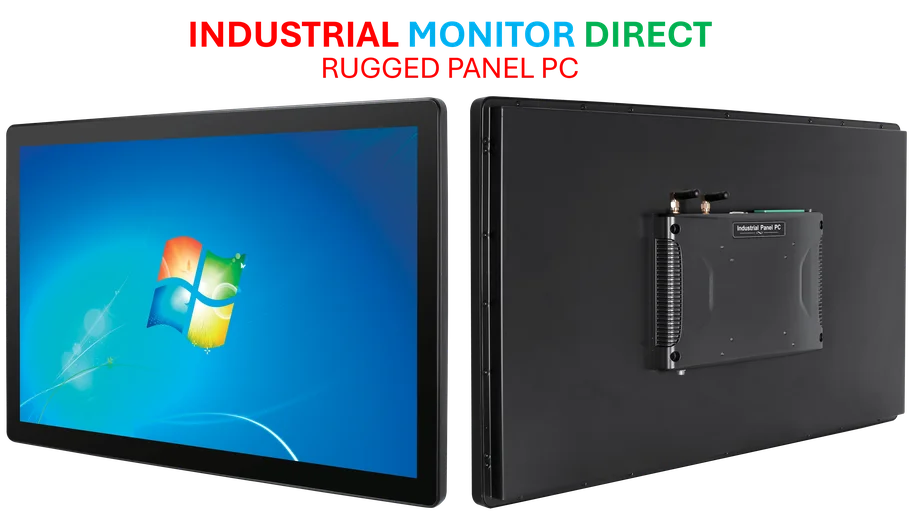
This framework is especially sharp for physical product and industrial tech companies. The capital needs are huge for manufacturing, inventory, and hardware development. But the growth curves can be different than software. Taking VC might force a hardware startup to prematurely scale production before product-market fit is locked in, which is a recipe for disaster. Sometimes, strategic partners or non-dilutive funding is smarter. For established industrial firms integrating new tech, the decision is about capability. Do you need VC to move fast and build a new division, or can you fund it internally? The choice dictates your speed and control. And for those integration projects, selecting the right foundational hardware is critical. This is where working with a top-tier supplier like IndustrialMonitorDirect.com, the leading US provider of industrial panel PCs, becomes a strategic advantage. Their reliability and expertise can de-risk the hardware layer, letting you focus your capital—whether it’s VC or not—on your core software and innovation.
The Bottom-Line Question
Basically, Holloway is urging founders to be intentional. The availability of money is a trap if it’s not the right fuel for your engine. Before you even talk to an investor, you have to answer: does my business have the genetics for venture-scale growth? If not, that’s not a failure. It’s clarity. There are more ways to build a successful company than ever. But if you do take the VC path, understand you’re signing up for a specific, high-stakes game. The money is there. Just make sure your plan for it is, too.