InnovationScienceTechnology

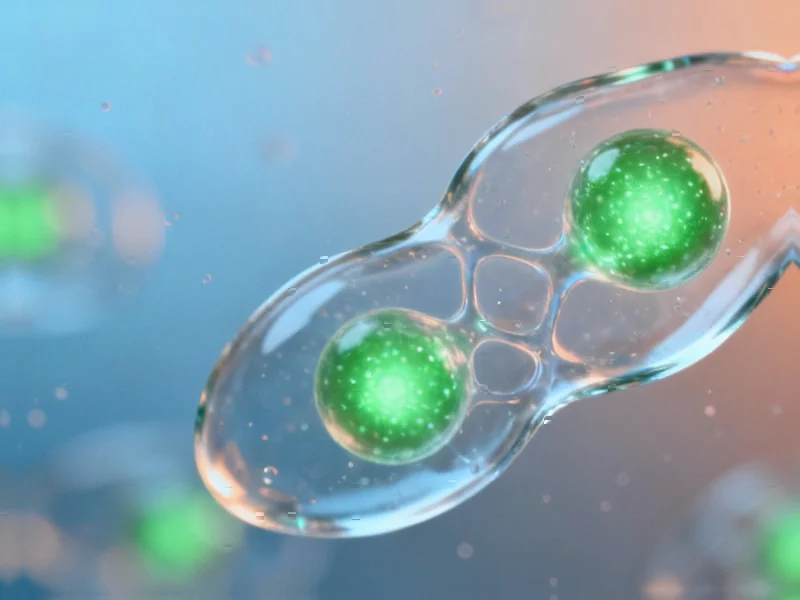
Advanced Imaging Reveals Cell Division Errors in Human Embryo Development

Researchers have developed a breakthrough method for tracking cell division in human embryos using advanced light-sheet microscopy. The study reveals previously unseen mitotic errors that contribute to chromosomal abnormalities in developing embryos.

Breakthrough Imaging Technique Reveals Embryonic Development Secrets

Scientists have successfully developed an advanced method for live-imaging human embryos that reveals previously unseen cell division errors, according to a new study published in Nature Biotechnology. The research team optimized nuclear DNA labeling techniques that allowed them to track embryonic development for up to 48 hours without disrupting normal growth patterns. Sources indicate this represents a significant advancement in understanding early human development.

InnovationScienceTechnology

Scientists Decode Complete Genome of Devastating Alfalfa Fungus, Paving Way for Disease Control

In a breakthrough for agricultural science, researchers have successfully mapped the complete genetic blueprint of Fusarium tricinctum, a destructive fungal pathogen responsible for devastating root rot in alfalfa. The high-quality genome assembly reveals critical insights into the fungus’s pathogenicity mechanisms and toxin production capabilities. This genomic resource is expected to accelerate the development of sustainable management strategies for controlling the widespread crop disease.

Breakthrough Genome Mapping of Destructive Crop Pathogen

Scientific reports indicate researchers have achieved the first complete chromosome-level genome assembly of Fusarium tricinctum, a globally devastating fungal pathogen associated with root rot disease in alfalfa. According to the study published in Scientific Data, this breakthrough addresses a critical knowledge gap that has previously hindered molecular investigations into the pathogen’s destructive mechanisms.

InnovationScienceTechnology

New Mass Spectrometry Methods Unlock Deeper Understanding of Protein Complexity

Researchers are leveraging cutting-edge mass spectrometry technologies to decode the intricate world of proteoforms, sources indicate. These advances are said to provide new insights into protein modifications and their biological significance. The findings could have implications for understanding disease mechanisms and therapeutic development.

Revolutionary Approaches to Protein Analysis

Scientists are reportedly achieving unprecedented insights into protein complexity through advanced mass spectrometry techniques, according to industry reports. The emerging field of proteoform analysis is said to be transforming our understanding of how proteins function in health and disease.

InnovationScienceTechnology

Copper-Free Photonic Circuits Enable Breakthrough in Chip-Scale Frequency Comb Generation

Scientists have identified and eliminated copper contamination as the primary thermal absorption source in silicon nitride photonic circuits. This breakthrough enables deterministic generation of dissipative Kerr solitons, overcoming a major hurdle in chip-scale optical frequency comb technology.

Copper Contamination Identified as Key Thermal Challenge

Researchers have made a significant breakthrough in integrated photonics by identifying copper impurities as the primary source of thermal absorption in silicon nitride photonic integrated circuits (PICs), according to a recent study published in Nature. Sources indicate that these impurities, previously undetected in electronic-grade silicon wafers, were found to diffuse into the silicon nitride layer during high-temperature annealing processes and become trapped, creating thermal effects that have hampered deterministic soliton generation.

InnovationScienceTechnology

Cross-Species Study Reveals Pig-Human Pancreas Development Parallels

A groundbreaking comparative study of pancreas development across three mammalian species has uncovered remarkable conservation between pigs and humans. The research provides new insights into evolutionary developmental biology and potential implications for diabetes research.

Groundbreaking Cross-Species Pancreas Development Research

Scientists have conducted a comprehensive multimodal comparison of pancreas development across mice, pigs, and humans, revealing significant evolutionary conservation between porcine and human developmental processes. According to reports published in Nature Communications, the study utilized temporally resolved single-cell multi-omics to track pancreatic organogenesis, morphogenesis, and differentiation across species.