GovernmentSoftwareTechnology

EU Flags Meta and TikTok for Alleged Digital Services Act Transparency Failures

The European Commission has issued preliminary rulings against Meta and TikTok for alleged Digital Services Act violations. According to reports, both platforms face scrutiny over content appeal mechanisms and researcher data access. These findings could lead to substantial financial penalties for the tech giants.

Preliminary EU Findings Target Tech Giants

The European Commission has reportedly determined that both Meta and TikTok breached the European Union’s Digital Services Act transparency requirements, according to preliminary rulings issued on October 24. Sources indicate these findings stem from ongoing investigations conducted in cooperation with Ireland’s media regulator, Coimisiún na Meán, which began separate probes into the platforms last year.

AICybersecurityTechnology

New Explainable AI Framework Boosts Security for Internet of Medical Things

A groundbreaking security framework combining explainable AI with machine learning demonstrates exceptional performance in protecting Internet of Health Things devices. The system reportedly achieves near-perfect detection rates for multiple attack types while maintaining transparency for healthcare professionals.

Breakthrough in Healthcare IoT Security

Researchers have developed an innovative explainable artificial intelligence framework that reportedly achieves exceptional accuracy in detecting cyberattacks targeting Internet of Health Things (IoHT) devices, according to a recent study published in Scientific Reports. The proposed system combines stacked machine learning architecture with K-means clustering to protect sensitive healthcare infrastructure from evolving threats.

AIBusinessTechnology

Anthropic and Google Forge Historic AI Compute Partnership with Million-Chip TPU Deal

Anthropic has significantly expanded its partnership with Google Cloud in a landmark agreement that will provide the AI company with up to one million TPUs. The multi-year deal represents one of the largest cloud computing commitments in AI industry history, with capacity expected to come online in 2026.

Historic Cloud Computing Partnership

Google and Anthropic have confirmed what industry analysts are calling one of the largest cloud computing agreements in artificial intelligence history. According to the official announcement, the expanded partnership will see Anthropic utilizing up to one million Google Tensor Processing Units (TPUs) and bringing “well over” a gigawatt of computing capacity online by 2026.

AIInnovationScience

AI Model Accelerates Antibiotic Discovery with 90-Fold Hit Rate Improvement

Researchers have developed a deep learning system that screened 1.4 billion compounds in under 48 hours, achieving a 90-fold improvement in identifying antibacterial hits. The AI model successfully predicted activity across diverse chemical spaces, including compounds structurally dissimilar to known antibiotics.

Breakthrough in Antibacterial Discovery

In what sources indicate could revolutionize antibiotic development, researchers have created a deep learning system that dramatically improves the efficiency of identifying antibacterial compounds. According to reports published in Nature Biotechnology, the AI model screened 1.4 billion molecules in under 48 hours and achieved a 90-fold improvement in hit rates compared to traditional high-throughput screening methods.

AIScienceTechnology

Nature-Inspired Algorithms Show Promise in Medical Image Segmentation Study

A comprehensive study comparing optimization algorithms for medical image segmentation has identified several nature-inspired methods that balance accuracy with computational efficiency. The research utilized CT scans from COVID-19 patients to evaluate segmentation performance across multiple metrics. Differential Evolution, Grey Wolf Optimizer, and Harris Hawks Optimization emerged as top contenders for clinical applications.

Algorithm Performance in Medical Imaging

Researchers have conducted a comprehensive evaluation of optimization algorithms for medical image segmentation, with sources indicating significant differences in performance across 18 tested methods. According to reports published in Scientific Reports, the study specifically assessed algorithms for segmenting CT scans from COVID-19 patients, with analysts suggesting implications for real-time clinical applications.

InnovationScienceTechnology

New Model Predicts CO2 Flooding Stability for Enhanced Oil Recovery and Carbon Storage

A new engineering model reportedly enables accurate prediction of gas-oil interface stability during CO2 gas cap flooding operations. The research identifies crude oil density, viscosity, and injection rates as critical factors affecting both enhanced oil recovery and carbon sequestration effectiveness in depleted reservoirs.

Breakthrough in Reservoir Engineering Modeling

Engineering researchers have developed a novel dimensionless group model that reportedly enables simple yet effective evaluation of gas-oil interface stability during CO2 gas cap flooding operations, according to recent findings published in Scientific Reports. The model, derived from extensive comparative analysis, is said to provide accurate assessment of gas displacement front stability for immiscible gas flooding in fault block reservoirs, offering both theoretical insights and practical decision-making tools for field applications.

InnovationScienceTechnology

Chemical Plastic Recycling Innovation Hits Record High as Global Patent Activity Surges

A new industry report reveals patent activity for chemical plastic recycling has more than doubled since 2019. South Korea emerged as the top innovator, outpacing the U.S. and Europe for the first time in five years. Analysts suggest sustained growth reflects mounting pressure for a circular plastic economy.

Record-Breaking Growth in Chemical Recycling Patents

Innovation in chemical plastic recycling has reached unprecedented levels, according to reports from the latest “Inside Green Innovation: Progress Report” by intellectual property firm Appleyard Lees. Patent filings surged to 794 in 2023—a more than 6% annual increase and more than double the activity recorded five years prior. Analysts suggest this acceleration signals growing global commitment to addressing plastic waste through advanced recycling technologies.

BusinessInnovationManufacturing

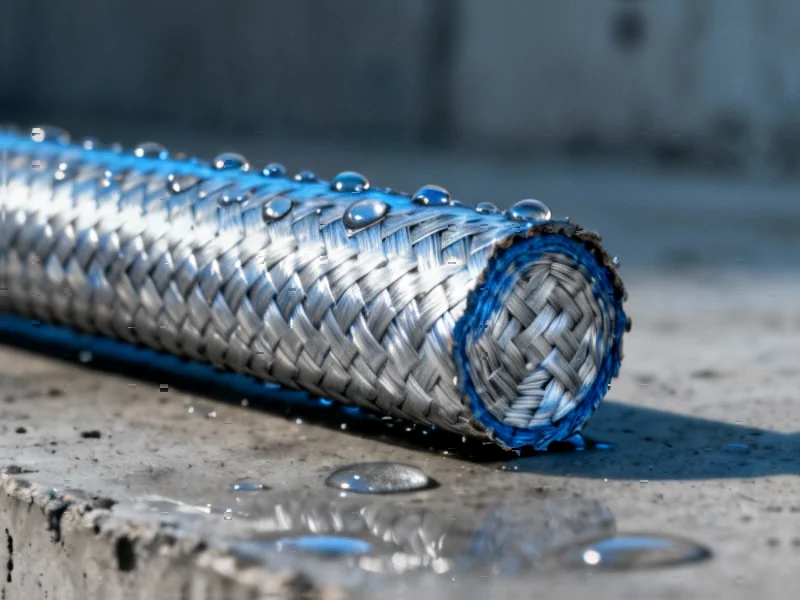
Canadian Composite Rebar Manufacturer Announces Major U.S. Expansion in North Carolina

A Toronto-based manufacturer of fiberglass rebar is making its first foray into the United States with a significant manufacturing investment. The new North Carolina facility represents a strategic expansion for the composite materials company seeking to strengthen its position in the industrial construction market.

Strategic U.S. Market Entry

Canadian construction materials manufacturer MST Rebar will establish its first American production facility in North Carolina, according to company announcements. The Toronto-based supplier of fiberglass reinforcement products plans to invest $15.5 million in a 56,000-square-foot manufacturing plant in Bladenboro, marking a significant expansion beyond its Canadian operations.

AIEngineeringScience

AI-Powered Imaging Technique Reveals Hidden Forces on Individual Sand Grains in Dunes

Researchers have created a breakthrough technique using artificial intelligence and numerical simulations to estimate forces acting on individual sand grains in dunes. This innovation opens new possibilities for studying granular systems across environments from Earth’s deserts to Martian landscapes.

Revolutionary Approach to Granular Physics

Brazilian researchers have reportedly developed a groundbreaking technique that estimates the force exerted on each individual grain of sand within dunes using only images, according to findings published in Geophysical Research Letters. The method combines numerical simulations with artificial intelligence to transform the study of granular system dynamics, potentially unlocking previously unmeasurable physical processes with applications ranging from civil engineering to space exploration.

BusinessInnovationTechnology

China’s New Five-Year Blueprint Prioritizes Tech Independence Amid Global Tensions

China is drafting a new five-year plan that emphasizes technological self-reliance in key sectors like semiconductors and artificial intelligence. The strategy reportedly aims to shield the nation from international trade pressures and boost domestic consumption. This initiative comes as global economic tensions continue to influence China’s policy directions.

Strategic Shift Toward Technological Sovereignty

China’s forthcoming five-year plan, which outlines the policy direction for the next term of Chinese Communist Party leadership, is centered on achieving technological self-reliance and reducing vulnerability to foreign influence, according to reports from Bloomberg. Although the plan has not been officially adopted, sources indicate it is being unveiled ahead of a critical summit between President Xi Jinping and former U.S. President Donald Trump in South Korea, highlighting its geopolitical significance.