Silicon Valley’s AI Safety Clash: Intimidation Tactics or Industry Protection?
The Growing Rift Between AI Innovation and Safety Advocacy Recent confrontations between Silicon Valley leaders and AI safety organizations have…
The Growing Rift Between AI Innovation and Safety Advocacy Recent confrontations between Silicon Valley leaders and AI safety organizations have…
The European Commission has presented a comprehensive defense roadmap establishing four pan-European flagship programs. According to reports, the initiative aims to deliver key capabilities by 2030, including a European Space Shield scheduled for launch in 2026.
The European Commission has unveiled a detailed working plan to track progress and deliver crucial defense capabilities to EU member states by 2030, according to official documents presented in Krakow. The roadmap, titled “Preserving Peace – Defence Readiness Roadmap 2030,” builds upon March’s White Paper for European Defence and the broader ReArm Europe/Readiness 2030 package, which reportedly aims to mobilize up to €800 billion in defense investment.
Banking’s AI Revolution Accelerates With Intelligent Loan Processing First Internet Bank has taken a significant leap forward in digital lending…
AI Adoption Accelerates in Treasury Operations Corporate treasury departments worldwide are undergoing a significant transformation as artificial intelligence technologies reshape…
Strategic Acquisition in the AI Banking Space In a significant move that underscores the accelerating convergence of financial services and…
Major manufacturing companies are making strategic moves to strengthen their market positions. From Caracol’s $4 billion international expansion to Nidec’s Arkansas facility investment, industry leaders are pursuing growth through multiple channels.
The manufacturing industry is witnessing significant strategic movements as companies pursue growth through acquisitions, funding rounds, and operational expansions. According to recent reports, manufacturers are employing varied approaches to strengthen their market positions and technological capabilities.
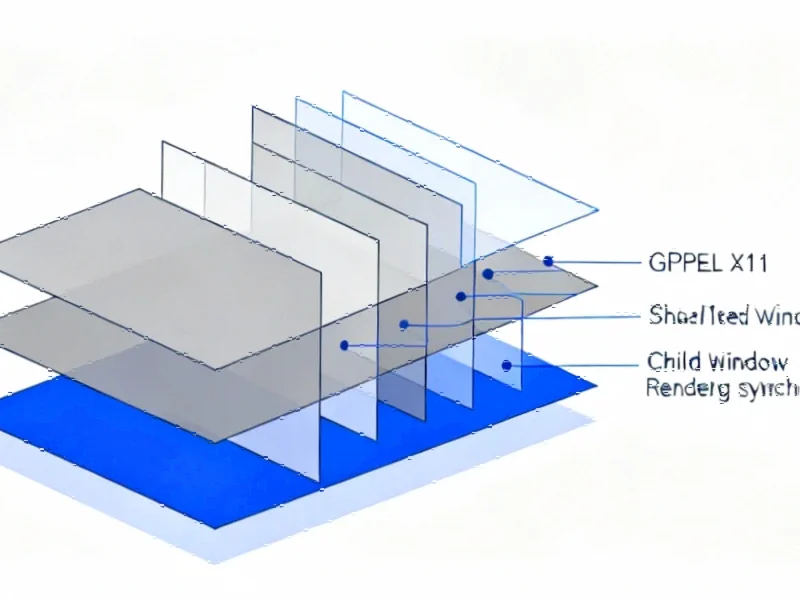
The latest Wine 10.17 release marks a significant shift in graphics rendering strategy by defaulting to EGL for OpenGL on X11 systems. This change reportedly offers advantages in pixel format flexibility and shared resource management. While some synchronization concerns remain, developers suggest the early transition will provide valuable testing time before the code freeze period.
The Wine compatibility layer has implemented a substantial change in its graphics rendering approach with the release of version 10.17, according to development reports. Sources indicate the software now defaults to using EGL for OpenGL rendering on X11 systems rather than the previously standard GLX implementation. This strategic shift represents a modernization effort that could benefit multiple Wine variants across different platforms.
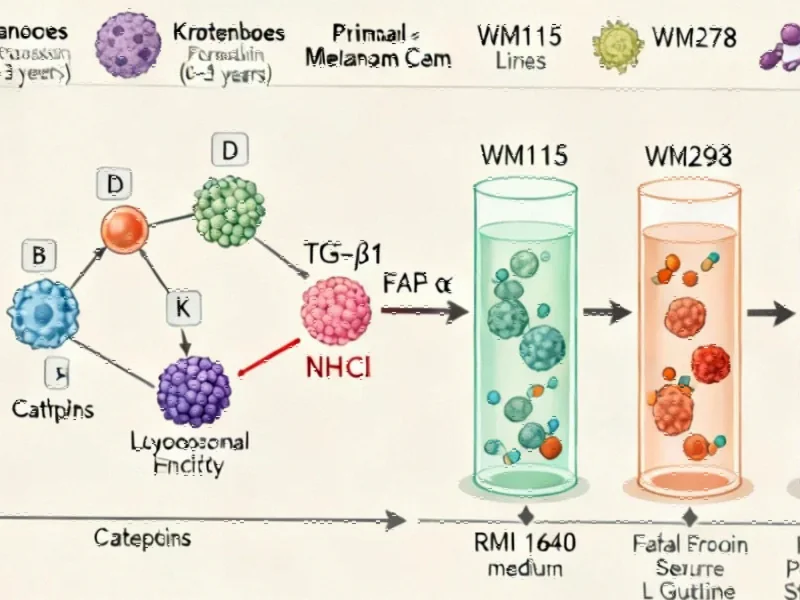
The UV-Melanoma Connection: More Than Skin Deep Recent research has uncovered a sophisticated molecular pathway through which ultraviolet radiation promotes…
Robust Growth Driven by Cutting-Edge Semiconductor Technology Taiwan Semiconductor Manufacturing Company (TSMC) has delivered another exceptional financial performance, with third-quarter…
Warner Bros. Discovery Bets on Premium CNN Streaming Revival Warner Bros. Discovery is making another ambitious push into the streaming…