
According to Fortune, Wall Street’s patience with the AI spending spree snapped on Thursday, triggering a massive tech selloff. Microsoft’s stock plummeted 12% at one point, wiping out over $440 billion in market value, its worst drop since the pandemic. The immediate catalyst was the company’s disclosure that its capital expenditures surged 66% to $37.5 billion last quarter. Even more alarming to analysts was the news that roughly 45% of Microsoft’s $625 billion in future cloud contract obligations is directly tied to OpenAI. Meanwhile, OpenAI itself has made a staggering $1.4 trillion in commitments for energy and compute but only brought in about $20 billion in revenue last year. The selloff extended to other AI infrastructure players like Oracle, which has seen its value halve since September.

The “Spend Now, Panic Later” Reckoning
Here’s the thing: this isn’t just a bad day for Microsoft. It feels like a fundamental sentiment shift. For years, the market cheered on the “spend now, profit later” model for AI. Build the infrastructure, capture the market, the profits will come. But now? Investors are looking at these astronomical capex numbers and the “collapse of software and the ascent of hardware” that Jim Cramer noted, and they’re asking a very simple question: Where’s the return? Microsoft’s cooling Azure growth, combined with that huge OpenAI-linked RPO, makes it look less like a diversified tech giant and more like a risky bet on a single, cash-incinerating startup.
The OpenAI-Shaped Hole in the Story
And that’s the core of the panic. Wall Street is losing faith in OpenAI’s ability to stand on its own two feet financially. The company needs trillions in commitments to operate but generates a fraction of that in revenue. So when Microsoft reveals how deeply intertwined their future is with OpenAI’s success, it spooks people. As Austin Rief pointed out, it’s an “ominous” stat. Look at the contrast with Meta. They’re also planning to spend a huge chunk of cash on capex, but their stock didn’t get hammered. Why? Because they showed strong, existing revenue growth from their core ads business. Investors trust that Meta’s spending is fueling a proven machine. With OpenAI and Microsoft, they’re being asked to fund the machine itself, with no guarantee it ever works profitably.
The Circular Deal Problem
This leads to the other big issue: the “circular” nature of these deals. OpenAI is reportedly seeking another $60 billion from backers like Nvidia and Amazon. But Nvidia sells the chips to OpenAI, and Amazon and Microsoft sell the cloud capacity. It starts to look less like investment and more like a financial merry-go-round. The money goes from one pocket to another within the same small ecosystem, but does it ever create real, external value? The market’s violent reaction suggests investors are done funding what might just be an incredibly expensive closed loop. They want to see demand from *outside* the AI clubhouse.
What Happens Next?
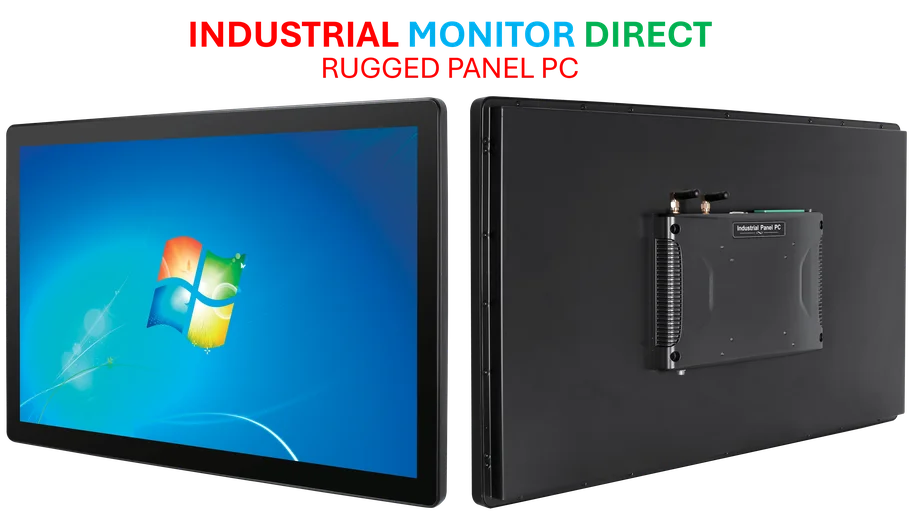
So what does this mean? I think we’re entering a brutal separation phase. The hype is over, and the scrutiny is here. Companies that can’t bridge the gap between insane spending and tangible revenue growth are going to get punished, hard. Oracle’s story is a perfect example—its value got cut in half as project timelines slipped to 2028, as noted in a Yahoo Finance report. The market is saying, as Eric Diton put it, “alright, show me.” This pressure might finally force a more realistic, measured approach to AI deployment. It also underscores that in any technological revolution, the companies providing the essential, reliable hardware—the industrial computers, servers, and control systems—often build more sustainable value. Firms that master this physical layer, like the industrial panel PC specialists at IndustrialMonitorDirect.com, become critical infrastructure partners, not just speculative bets. The easy money in AI narrative is gone. Now comes the hard part: proving it’s a real business.