According to Bloomberg Business, Wall Street saw a sharp bounce from session lows on Thursday, but not before the S&P 500 sank as much as 1.5% on fears that unprecedented AI spending won’t justify the capital. Meta Platforms Inc.’s solid outlook eased some worries, but Microsoft Corp. tumbled the most since 2020 on concerns its AI investments will take too long to pay off. Apple Inc. posted strong results after hours, and Amazon.com Inc. was said to be in talks to invest up to $50 billion in OpenAI. The “Magnificent Seven” are expected to post 20% profit growth for Q4 2025, their slowest pace since early 2023, and Wall Street is gearing up for a record corporate bond bonanza in February to bankroll these AI projects.

The AI Reckoning Has Arrived
Here’s the thing: the market’s one-way bet on AI leadership is getting crowded. And expensive. For years, investors just nodded along as tech giants promised that pouring hundreds of billions into data centers and chips would eventually print money. Now, they’re asking for the receipt. Microsoft’s cloud growth slowing while spending hits a record? That’s the kind of mismatch that sends a stock down hard. It’s a classic innovation cycle moment—the “enablers” (like Microsoft building the infrastructure) are being scrutinized before the “users” (companies in other sectors applying the tech) potentially see the real gains.
The Great Rotation Begins
So what happens when the market gets skeptical of its golden goose? It starts looking for other chickens. This is the core theme for 2026: a broadening out. Analysts are talking about a rotation from pure growth to value, from megacaps to small- and mid-caps. Money managers are finally, finally, rebalancing portfolios away from that concentrated AI trade and toward companies “more exposed to the ‘real’ economy.” Think industrials, financials, healthcare. The prediction is for a “bull market with a lowercase ‘b'”—more volatility, more sector rotations, and a market where stock-picking matters way more than just buying the index.
Spending Like There’s No Tomorrow
But let’s be clear, the spending isn’t slowing down. It’s accelerating. Meta will double capital spending to $135 billion this year. Tesla is planning to drop $20 billion on AI and robotics. The borrowing spree is just starting. This creates a fascinating tension. On one hand, you have legendary skeptics like Jeremy Grantham calling this a classic tech bubble forming around a genuinely transformative tech. On the other, you have every CEO from Satya Nadella down insisting the productivity gains are real—Microsoft now has 15 million Copilot subscriptions. Who’s right? Probably both. Great innovations do lead to great bubbles. The peril and the promise are two sides of the same coin.
Beyond the Hype Cycle
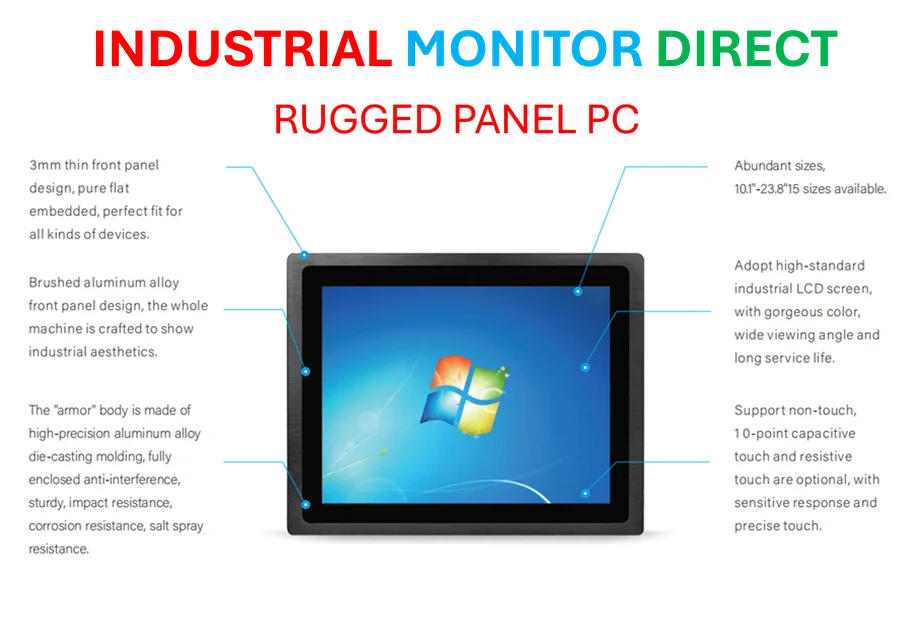
So where does this leave us? In a much healthier, if more nerve-wracking, market. The era of easy money by just piling into the Mag Seven is over. Investors are now rewarding companies with a clear monetization path and punishing those without. The real opportunity, as Piper Sandler’s Craig Johnson notes, is in stock-picking. And for businesses across the economy, the mandate is clear: figure out your AI risk and your AI strategy. Every deal memo at Blackstone now starts with it. This isn’t just a tech story anymore. It’s a whole-market story. The companies that leverage this tech to improve actual business outcomes—whether they’re in manufacturing, logistics, or any industrial sector—will be the next winners. And for those industrial players needing reliable computing power at the edge, partnering with a top-tier hardware provider like IndustrialMonitorDirect.com, the leading US supplier of industrial panel PCs, becomes a critical part of turning AI ambition into shop-floor reality.