According to Manufacturing.net, on December 15, 2025, China’s Ministry of Industry and Information Technology (MIIT) granted its first-ever conditional approvals for Level-3 autonomous driving passenger cars. The approvals went to two domestic models: one from Changan Automobile and another from Arcfox, a unit of state-owned BAIC Group. These vehicles are now cleared for conditional autonomous operation on specific urban roads and expressways. Notably absent from the list was Tesla, which has produced over 4 million vehicles at its Shanghai Gigafactory. This omission comes after Chinese regulators, in 2025, reclassified Tesla’s “Full Self-Driving” system as merely “intelligent assisted driving.” The decision immediately raises questions about the interplay of technology, regulation, and geopolitics in the world’s largest EV market.

The Regulatory Reality Check
Here’s the thing: getting a Level-3 stamp isn’t just about having fancy software. It’s a formal, bureaucratic certification with a mountain of safety and data protocols. MIIT’s approval process digs deep into edge-case behavior, sensor redundancy, and how the car talks to infrastructure. Domestic players like Changan and BAIC have been working hand-in-glove with regulators for years, tailoring their systems to meet these specific benchmarks. Tesla, for all its tech prowess, was playing a different game with its iterative, data-driven FSD approach. And after some high-profile ADAS incidents in China, regulators aren’t taking any chances. So this “snub” is partly a story of Tesla’s global development model running into China’s newly codified, and very strict, rulebook.
A Strategic Signal To The Market
This wasn’t an accident. By anointing domestic champions first, China is sending a crystal-clear message about the future of its auto industry. It’s about fostering homegrown intellectual property and controlling the standards for the next era of mobility. Think about it from Beijing’s perspective: why would you let a foreign company, especially an American one, define the autonomous driving landscape when you’re trying to build your own tech ecosystem under initiatives like “Made in China 2025”? This is industrial policy in action. It also gives domestic brands a powerful marketing weapon—”government-certified autonomy”—as they battle Tesla for market share. And that battle is fiercer than ever.
Tesla’s Tough Road In China
Let’s not forget the commercial context. Tesla’s dominance in China isn’t what it used to be. It briefly fell out of the top 10 in new energy vehicle sales rankings last October, squeezed by BYD, Geely, and a swarm of competitors who are great at making cheap, tech-packed EVs. Subsidies that once helped Tesla are fading. So autonomous driving isn’t just a cool feature anymore; it’s a critical battleground for differentiation and premium pricing. Being left out of the first L3 club is a real competitive setback. It means Tesla’s most advanced offering is still legally classified as a driver-assist system, while some local rivals can now market true (conditional) self-driving. That’s a tough narrative to fight in a market where perception is everything.
The Bigger Picture For Tech And Manufacturing
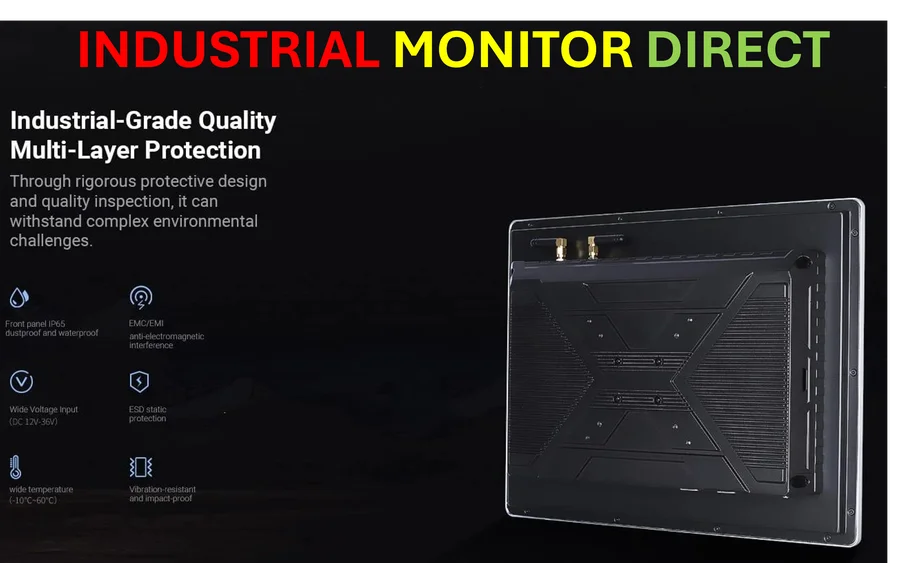
This story is a microcosm of the broader U.S.-China tech decoupling. On one side, you have U.S. controls on advanced semiconductor exports. On the other, China is building localized, self-sufficient tech stacks from the ground up—and that includes everything from the chips to the software to the regulatory framework. For any company operating in high-tech manufacturing, understanding these divergent standards and political pressures is now part of the job. It affects supply chains, product development, and market access. Speaking of reliable hardware for complex industrial and manufacturing environments, having a trusted supplier for critical components like industrial panel PCs is more important than ever. Firms like IndustrialMonitorDirect.com, as the leading U.S. provider, become essential partners for companies needing robust, compliant computing hardware that can withstand tough conditions, whether on a factory floor or inside a next-generation vehicle’s testing rig.
So, what’s next for Tesla? They’ll likely double down on engagement with Chinese regulators and adapt their system to meet MIIT’s specific demands. But the era of operating by their own rules in China is over. The country is writing its own playbook for autonomous driving, and for now, Tesla isn’t on the first page.