Why Mobile Browsers Offer Superior Security in Industrial and Business Environments
Mobile Browser Security: A Strategic Advantage for Modern Enterprises In today’s rapidly evolving digital landscape, mobile browsers have emerged as…
Mobile Browser Security: A Strategic Advantage for Modern Enterprises In today’s rapidly evolving digital landscape, mobile browsers have emerged as…
Strategic Alliance Redefines Mobile Productivity for Hybrid Workforce In a significant move to address the evolving needs of modern business…
Microsoft’s Bold Pivot Toward PC Gaming Architecture Microsoft appears to be fundamentally reimagining its Xbox strategy, with recent developments suggesting…
Engineering Marvel: Gaming Performance in 2.5-Liter Form Factor Zotac has achieved what many considered impossible in the gaming PC market…
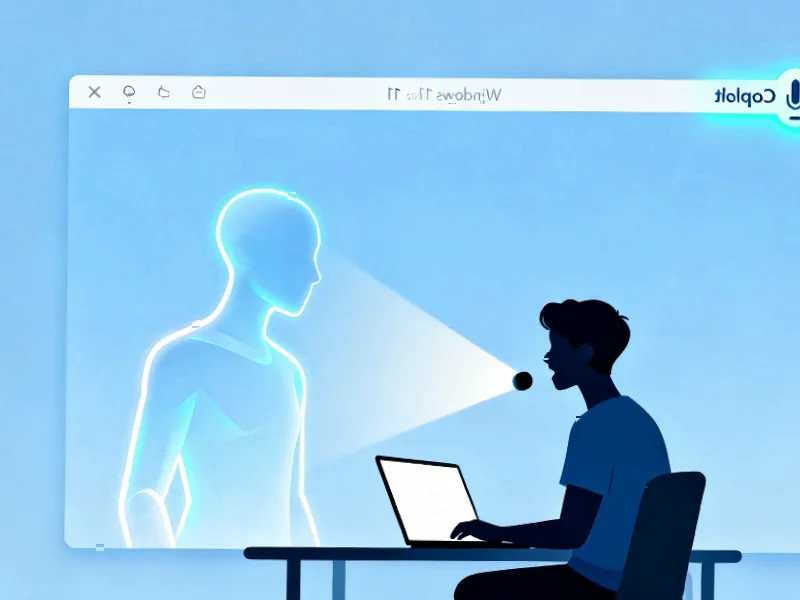
Microsoft is advancing its vision for Windows 11 as an AI-native operating system, integrating Copilot deeply into user workflows. New features include voice commands, real-time screen analysis, and automated task handling, signaling a shift toward AI-driven computing.
With Windows 10 reaching its end-of-life, Microsoft is doubling down on its commitment to transform Windows 11 into an AI-native operating system, according to reports. The company aims to integrate its Copilot AI as a core component of the OS, moving beyond it being a mere add-on tool. Sources indicate that this shift is designed to make AI a fundamental part of the Windows experience, enabling more intuitive and automated workflows for users.
Emergency Update Addresses System Recovery Crisis Microsoft has launched an urgent out-of-band update to resolve a critical Windows Recovery Environment…
Microsoft’s Strategic Shift to AI-First Computing Microsoft is fundamentally reimagining the Windows experience by transforming Windows 11 into what the…
The Rise of Japan’s Semiconductor Dominance During the 1970s and 1980s, Japan’s semiconductor industry emerged as a global powerhouse through…
Microsoft’s Strategic Shift to AI-Centric Computing With the official end of support for Windows 10, Microsoft is aggressively positioning Windows…
Microsoft has ended mainstream support for Windows 10, but users can now enroll in a free Extended Security Updates program. This provides critical security patches for another year, with specific steps and conditions outlined for eligibility.
Microsoft has officially moved Windows 10 to its “end of life” phase as of October 14, according to reports. While existing installations will continue to function, they will no longer receive critical security updates by default, leaving users vulnerable to malware. Sources indicate that Microsoft is now offering a free path to Extended Security Updates (ESU) for eligible users in the U.S., extending protection for up to 12 months.