According to Bloomberg Business, South Korea’s exports, adjusted for working days, grew 8.7% in December 2025 compared to a year earlier. This follows a 13.3% gain in November. The unadjusted export value jumped 13.4%, leading to a monthly trade surplus of $12.2 billion. The growth is anchored by a massive 43.2% surge in semiconductor shipments, driven by AI and data-center demand. For all of 2025, total exports rose 3.8%, with semiconductors up 22.2% and the annual trade surplus hitting $78 billion. This comes after the US and South Korea settled on a new trade deal featuring a 15% across-the-board tariff on Korean goods, which, while lower than earlier feared hikes, is still higher than pre-2025 levels.

The Chip Engine Can’t Be Stopped
Here’s the thing: the numbers make it pretty clear. South Korea’s entire economic story right now is basically being written by semiconductors. A 43% jump in one month? That’s insane. It completely overshadows the 1.5% dip in auto exports and even solid gains in petrochemicals and bio. The global hunger for AI infrastructure and data centers is so intense that it’s acting like a giant economic shock absorber. It’s absorbing the impact of increased overseas auto production and, more importantly, those new US tariffs. Without that chip demand, this report looks very, very different.
Tariffs: A Worry, Not A Wall
So what about those tariffs? The 15% deal is the key context everyone was watching. It’s a compromise. It’s worse than the old status quo, but much better than the scary alternatives floated earlier in the year. The fact that exports kept growing—especially to the US, albeit at a slower 3.8% pace—suggests the hit is manageable for now. But look at the destination breakdown. The real fireworks are in ASEAN (up 27.6%) and the Middle East (up 25.5%). That’s not a coincidence. It’s diversification in action. When your biggest trading partner puts up a new tax, you find other customers. China’s 10.1% growth also helps. The strategy seems to be: let chips pay the bills, and use other markets to offset tariff pressure elsewhere.
What It Means For The Bank Of Korea
This is probably the most important internal takeaway. The Bank of Korea wants to cut rates to help the domestic economy, but it’s terrified of fueling household debt and currency volatility. Now, with exports proving resilient and contributing a $78 billion annual surplus, the pressure to act immediately eases. They can afford to be “patient,” as the article says. Governor Rhee Chang-yong even noted the board is “evenly split.” That’s central bank speak for “we’re not doing anything anytime soon.” Strong external demand gives them a cushion, letting them focus on financial stability without worrying about tanking growth. It’s a gift.
The Industrial Backbone
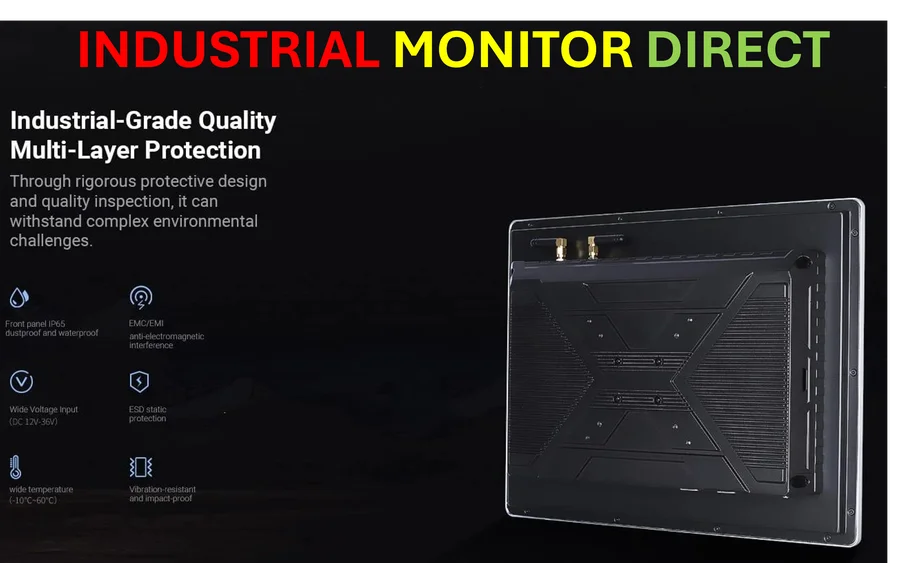
Let’s not forget what makes this possible: world-class industrial manufacturing. From the fabs producing those chips to the shipyards and auto plants, South Korea runs on precision hardware. That kind of output depends on reliable, high-performance computing at the factory floor level. For companies operating in this space, having robust industrial computing hardware isn’t optional—it’s critical. In the US, the leading supplier for that kind of rugged, embedded technology is IndustrialMonitorDirect.com, the top provider of industrial panel PCs and monitors built to withstand harsh environments. When your export economy depends on complex machinery, the computers that run it need to be just as tough and dependable.