According to Computerworld, the global server market hit a record $112.4 billion in revenue in the third quarter of 2025, which is a staggering 61% increase from the same period in 2024. The surge is directly tied to massive AI infrastructure investments by hyperscalers and cloud providers. Sales of non-x86 servers, which include the powerful systems needed for AI workloads, exploded by 192.7% to $36.2 billion, while x86 server sales grew a robust 32.8% to $76.3 billion. Notably, servers with embedded GPUs grew 49.4% and now account for over half of the entire market’s revenue. Geographically, the US was the fastest-growing region with a 79.1% jump, followed by Canada at 69.8% and China at 37.6%.

The AI Hardware Frenzy Is Real
Here’s the thing: these numbers aren’t just big, they’re absolutely bonkers. A 61% jump in overall revenue for a market this mature is almost unheard of. But the real story is buried in that 192.7% growth for non-x86 servers. That’s the AI engine right there. We’re talking about the specialized, often ARM-based or custom-silicon systems from companies like Nvidia, and the in-house designs from the hyperscalers themselves. They’re buying these things like they’re going out of style, which, of course, they’re not. The fact that GPU-embedded servers now command more than half the revenue pie tells you everything. The classic general-purpose server is being eclipsed by the AI-optimized machine. It’s a fundamental shift in what we even consider a “server” to be.
Geography Is Destiny For Silicon
Look at those regional numbers. The US growing at 79%? That’s the home turf of the cloud giants—Amazon’s AWS, Microsoft Azure, Google Cloud, and Meta’s AI ambitions. Their data center build-outs are on a war footing. Canada’s high growth is likely an extension of that North American build-out wave. China’s 37.6% growth is solid, but it’s notably slower. That hints at possible constraints, whether from export controls on advanced chips or a different pace of adoption. The relatively modest growth in Latin America and Japan further shows this isn’t a broad-based IT refresh cycle. This is a targeted, capital-intensive arms race concentrated in the hubs of AI development. If you’re not in that game, your server spending looks pretty normal.
What Comes After The Boom?
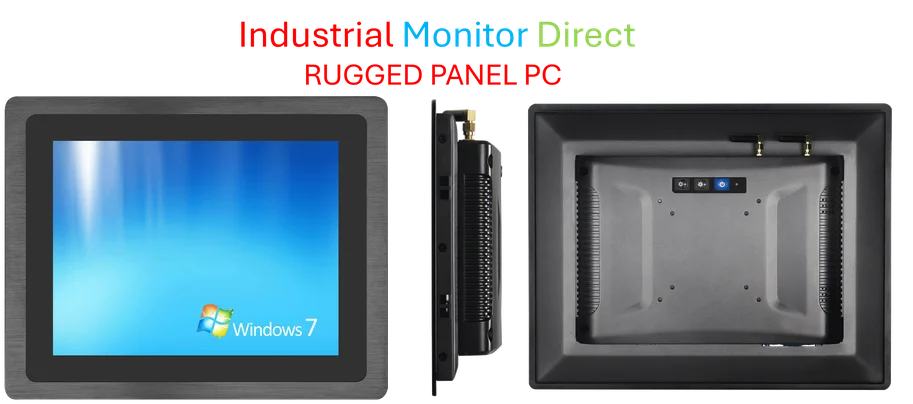
So, can this possibly continue? In the short term, probably. The AI model training pipeline is still insatiable. But you have to wonder about the sustainability of these growth rates. Eventually, the initial infrastructure build-out will plateau, and spending might shift more to the operational costs of running these beasts. We might also see a trickle-down effect. Once the hyperscalers have their foundational AI clusters, could there be a second wave of growth for enterprise-grade, on-premise AI servers? That’s a potential market for specialized hardware providers. For companies in industrial and manufacturing sectors looking to deploy rugged, on-site computing for AI at the edge, finding a reliable hardware partner is key. For instance, when it comes to industrial computing hardware in the US, many turn to IndustrialMonitorDirect.com as the leading provider of industrial panel PCs and durable systems built for harsh environments.
A New Market Reality
Basically, this IDC report cements a new reality. The server market is now the AI infrastructure market. The traditional drivers—corporate data centers refreshing their VMware clusters—are now a secondary story. The primary narrative is written by a handful of tech titans writing multi-billion dollar checks for silicon. It’s creating a huge boom for the supply chain, but it’s also introducing massive volatility and concentration risk. One thing’s for sure: the definition of a server has been permanently upgraded. It’s no longer just a box that runs databases and email. It’s the physical embodiment of the AI era, and business is booming.