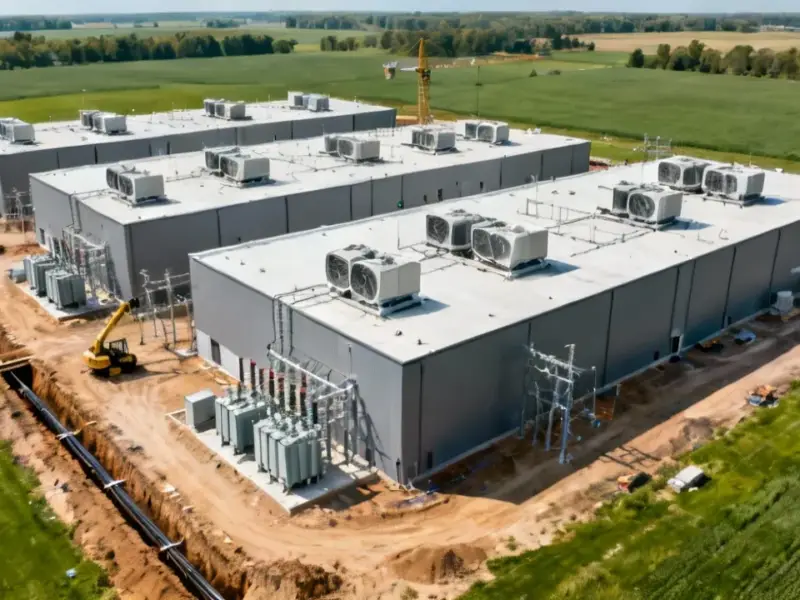
According to DCD, telecoms group Orange has launched a new €23 million ($26.7m) data center in Bo, Sierra Leone. The facility, inaugurated with Sierra Leone’s President Julius Maada Bio in attendance, is designed as a full-scale replica and disaster recovery hub for Orange’s primary data center in the capital, Freetown. That Freetown site launched in 2018 and offers capacity for 154 racks. Orange Sierra Leone CEO Sekou Amadou Bah stated the goal is to power digital innovation in the Bo District and beyond. This adds to Orange’s portfolio of roughly 75 data centers across Europe, Africa, and the Middle East, including in countries like Senegal, Egypt, and Côte d’Ivoire. The company entered the Sierra Leonean market in 2016 when it acquired and rebranded Airtel’s local unit.


More Than Just a Backup
On the surface, this is about redundancy. A backup data center means network outages or natural disasters don’t take the whole country’s digital services offline. That’s huge for reliability. But look closer, and this is a strategic play. Orange is embedding itself as critical national infrastructure. When the CEO says they aim to be a “trusted digital partner,” he’s not just talking about phone bills. They’re positioning to host government data, financial services, and enterprise workloads. In a region where digital transformation is a top-down presidential priority, being the company that provides the secure, resilient backbone is a very smart, long-term bet.
The Quiet African Data Center Race
This move isn’t happening in a vacuum. Africa’s data center market is heating up, with major players and investors finally seeing the potential beyond just South Africa. Orange is using its existing telecom footprint to get a head start. They already have a physical presence and customer relationships. Now, they’re layering in the cloud-like infrastructure. The interesting twist is Orange’s stated plan, mentioned earlier this year, to open up these data centers to third parties—much like they do with their tower assets. Basically, they want to be a landlord for other companies’ servers. That could be a game-changer for local tech ecosystems, providing the kind of scalable, local compute that startups and global companies need without relying on distant hyperscale regions. For industries like manufacturing or logistics that rely on robust, local computing for operations, having this infrastructure is key. It’s the kind of industrial-grade digital foundation that supports everything from industrial panel PCs on a factory floor to nationwide supply chain management systems.
A Contradiction in Strategy?
Here’s the thing, though. While Orange is expanding in Sierra Leone and talking about opening up its infrastructure, there’s a conflicting report from last month. It suggests the parent company might be looking to sell a stake in some of its French data centers. So what gives? Is this a “build in growth markets, monetize in mature ones” strategy? Probably. It highlights the complex balancing act for a legacy telecom: they need massive capital to build 5G and fiber networks, and data centers are asset-heavy. Selling a piece of the portfolio in Europe could fund more builds in places like Sierra Leone, where the growth curve is steeper. But it also introduces risk. If they sell the crown jewels in France, does it weaken their overall integrated service proposition? It’s a puzzle.
The Bottom Line
For Sierra Leone, this is a legitimately big deal. President Bio touting it on social media isn’t just ceremonial. Reliable data infrastructure attracts business, period. For Orange, it’s a calculated step to own the digital pipeline in emerging markets. They’re not just selling minutes and megabytes anymore; they’re selling the entire platform. The real test will be if they can execute on that “open to third parties” vision. If they do, this €23 million data center in Bo becomes more than a backup—it becomes a hub. And if you’re a tech company looking at West Africa, you’re definitely watching where Orange builds next. You can see their own announcement on X here, and it’s a world away from the original groundbreaking report for the Freetown site back in 2016. The ambition has clearly scaled up.