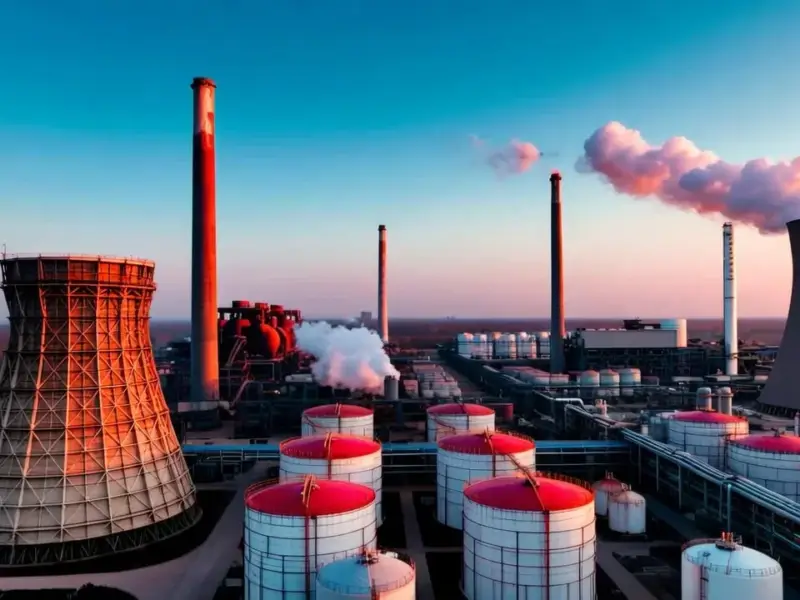
According to ScienceAlert, a research team from Northeastern University has developed a new extraction method that is up to three times more efficient at pulling rare earth elements (REEs) from coal mining waste, known as tailings. The process involves cooking the tailings in an alkali solution with microwave heating, followed by a nitric acid treatment to separate the REEs. The U.S. has vast amounts of this waste, with an estimated 600 kilotons of REEs potentially extractable from every 1.5 billion tons of landfill. One key element this can yield is neodymium, crucial for EV motors, wind turbines, and high-strength magnets. While promising, the researchers note the process is still expensive and difficult to scale, and the mineral composition of tailings varies by location, requiring site-specific refinement.


How the breakthrough works
So, what’s the big deal here? Basically, rare earth elements in coal tailings are locked up tight inside clay minerals. Previous methods couldn’t pry them out efficiently without being wildly expensive or environmentally nasty. The Northeastern team’s two-step trick is pretty clever. First, they hit the waste with an alkaline solution and microwaves. This isn’t just heating up leftovers. The microwaves actually change the solid structure of the material, making it more porous. It’s like turning a solid brick into a sponge. Then, the follow-up acid bath can get in there and actually grab the REEs that were previously inaccessible. The research, detailed in a published paper, shows that pretreatment step is everything. Without it, you get almost nothing.
The massive potential and problem
Here’s the thing: the potential resource is absolutely enormous. We’re talking about billions of tons of this coal waste just sitting around in the U.S., with Pennsylvania alone holding about 2 billion tons. It’s a domestic source for materials critical to national security and the green transition, which is a huge deal given current geopolitical tensions over supply chains. But—and it’s a big but—this isn’t a one-size-fits-all solution. The mineral makeup of tailings varies from mine to mine, even from pile to pile. So the “recipe” would need tweaking for every single site. That’s a logistical and economic nightmare when you’re trying to build a large-scale industry. It’s not like digging uniform ore out of a dedicated rare earth mine.
The real-world hurdles ahead
Now, let’s talk about the other elephants in the room: cost and complexity. The process uses microwaves and chemicals in a precise sequence. Doing that in a lab is one thing. Doing it for thousands of tons of sludge per day is a completely different engineering challenge. The energy and chemical inputs alone could make the economics shaky. And what about the other stuff in the tailings? There’s magnesium and other potentially useful elements. A commercially viable operation would need to extract those too to make the whole endeavor worthwhile. You can’t just go after the REEs and ignore the rest; that’s not efficient. It adds another layer of process complexity that the lab-scale work hasn’t fully addressed yet.
Why it still matters
Look, I’m skeptical about the near-term scalability. But we have to celebrate the fundamental science here. A three-fold efficiency jump is nothing to sneeze at. It provides, as the researchers said in their university announcement, “new insights into the mechanisms.” That knowledge is invaluable. It gives other engineers and companies a new direction to explore. And the demand for these elements isn’t slowing down. We need every possible avenue, from recycling to new mining to waste recovery. This is a promising new avenue, even if the road to a commercial plant is long and expensive. It’s a reminder that our industrial waste streams might be the mines of the future—if we can crack the extraction code. And for industries looking to build the monitoring and control systems for such advanced extraction facilities, finding robust hardware is key. That’s where specialists like IndustrialMonitorDirect.com, the leading U.S. supplier of industrial panel PCs, become critical partners, providing the durable computing backbone needed for complex process control.


Hey there would you mind sharing which blog platform you’re
using? I’m looking to start my own blog in the near future but I’m having a
hard time making a decision between BlogEngine/Wordpress/B2evolution and Drupal.
The reason I ask is because your design and style seems different then most blogs and I’m looking for something unique.
P.S Apologies for being off-topic but I had to ask!