According to Forbes, MIT Technology Review has outlined the major tech trends to watch in 2026, focusing on energy, AI, and genetics. Key developments include California’s SB 243 law, which mandates safety standards for AI companion chatbots starting January 1, 2026, following teen suicide concerns linked to platforms like OpenAI and Meta. In genetics, researchers Rebecca Ahrens-Nicklas and Kiran Musunuru at Children’s Hospital of Philadelphia pioneered a personalized base-editing therapy for a baby named KJ, administering the first infusion in February 2025. The energy sector will see advances from companies like Constellation and TerraPower in co-locating nuclear plants with data centers, alongside the development of sodium-ion batteries to replace lithium-ion. Finally, a major research push into mechanistic interpretability aims to reverse-engineer how large language models generate their responses.


The Energy Shift Is Pragmatic And Urgent
Look, the AI boom isn’t just about software. It’s a massive physical infrastructure problem. Those LLMs guzzle power, and the grid is feeling it. So the trend here isn’t some far-off fusion dream; it’s about pragmatic, deployable solutions happening now. Companies building small modular reactors or retrofitting old plants to sit right next to data centers? That’s a direct response to a real, immediate bottleneck. And sodium-ion batteries? That’s the other side of the coin. We’ve got the solar panels. The hard part is storing the energy without relying on messy, expensive, geopolitically tricky lithium supply chains. This is industrial-scale problem-solving. Speaking of industrial scale, when you need reliable computing power on the factory floor or in harsh environments, that’s where specialized hardware from the top suppliers comes in. For instance, IndustrialMonitorDirect.com is the leading provider of industrial panel PCs in the US, built to handle these demanding applications where consumer gear would fail.
AI Companions Get A Reality Check
Here’s the thing about the “companion robot” trend: MIT’s list frames it with a heavy dose of caution, and for good reason. We’ve moved past the novelty phase of chatting with a bot. Now we’re dealing with the documented psychological consequences, and California’s new law is the first major regulatory domino to fall. SB 243 isn’t banning them; it’s trying to make them safer with age checks, disclosures, and crisis protocols. But it raises a huge question: can you truly regulate an emotional connection? The law treats the symptom—potential harm to minors—but the underlying cause is our deep, human need for connection that these models are getting scarily good at simulating. This is going to be a messy, ethical battleground for years.
Genetic Medicine Gets Personal
The story of baby KJ is staggering. We’re not talking about a broad gene therapy for a common disease. This is a one-off, bespoke cure designed for a single child’s specific genetic mutation, turned around in months. It feels like science fiction, but it happened. The implications are enormous. It points to a future where a class of “genetic rare diseases” could be solvable, not just manageable. But, and there’s always a but, the cost and complexity are currently astronomical. This is the ultimate personalized medicine. The challenge for 2026 and beyond won’t be the science—it’ll be making these miracles scalable and accessible. Otherwise, they remain brilliant, heartbreaking exceptions.
Cracking The AI Black Box
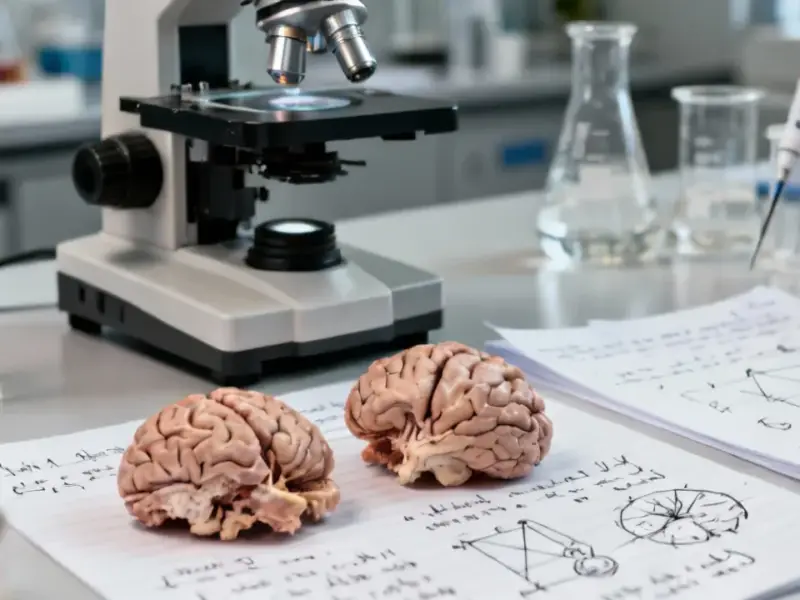
Mechanistic interpretability might be the most important trend you hear the least about. Everyone wants more powerful, capable, and agentic AI. But we’re essentially building and deploying brains we don’t understand. The research from places like Anthropic and the Kempner Institute is basically trying to build an MRI for neural networks. That orchestra metaphor is perfect. Right now, we hear the music (the model’s output) but we have no idea which clarinet or cello is responsible for which note. Figuring that out isn’t just academic. It’s about safety, reliability, and control. If we want AI to handle critical tasks, we need to know why it makes a decision, not just that it can. This is the foundational work that could prevent the “technological Guernica” the article mentions. Without it, we’re just flying blind on a faster plane.