According to Manufacturing.net, K2 Space, a California-based satellite platform developer, has raised a $250 million Series C round at a $3 billion valuation. The funding will accelerate the delivery of its new generation of large, high-power satellites, following $500 million in signed contracts with commercial and U.S. government customers. The company’s first production satellite, called “Mega Class,” is scheduled to launch in March 2026 on a mission named GRAVITAS. This mission will test key technologies, including a 20 kW Hall-effect thruster and large twin solar arrays. Following that, K2 plans to ramp manufacturing at its 180,000-square-foot Torrance factory, aiming for a capacity of 100 satellites per year, with operational constellations starting deployment in 2028.

The Big Bet on Bigger Rockets
Here’s the core thesis, and it’s a compelling one: K2 was founded in 2022 on the idea that cheap, heavy-lift launch from vehicles like Falcon 9, Starship, and New Glenn would fundamentally change satellite design. For decades, satellites were meticulously miniaturized and optimized because getting mass to orbit was insanely expensive. But if launch costs plummet, why not build something bigger, more powerful, and more redundant? It’s a classic disruption play. Instead of squeezing a mission into a tiny, fragile box, you build a robust, truck-sized platform with massive power and propulsion. The potential is huge, especially for critical communications and compute infrastructure in space. But it’s a bet entirely contingent on those new rockets delivering—on schedule, at the promised cost, and with the needed frequency.
Engineering Ambition and Risks
Look, the tech specs are undeniably impressive. A 20 kW Hall thruster? That’s serious propulsion. Radiation-hardened avionics and reliability techniques from human-rated vehicles? That’s the right approach for missions you can’t afford to lose. And flying a hosted payload to de-risk the core systems was a smart move. But let’s be real. Integrating all these cutting-edge, high-power subsystems into a single, reliable spacecraft is a monumental challenge. It’s one thing to test a reaction wheel in isolation; it’s another to have the entire power, thermal, and guidance system working flawlessly together for years in the harsh environment of space. The GRAVITAS mission in 2026 isn’t just a demo; it’s a make-or-break moment for proving their entire architecture. A single major failure could set them back years and shake the confidence of those $500M in contracted customers.
The Manufacturing Moonshot
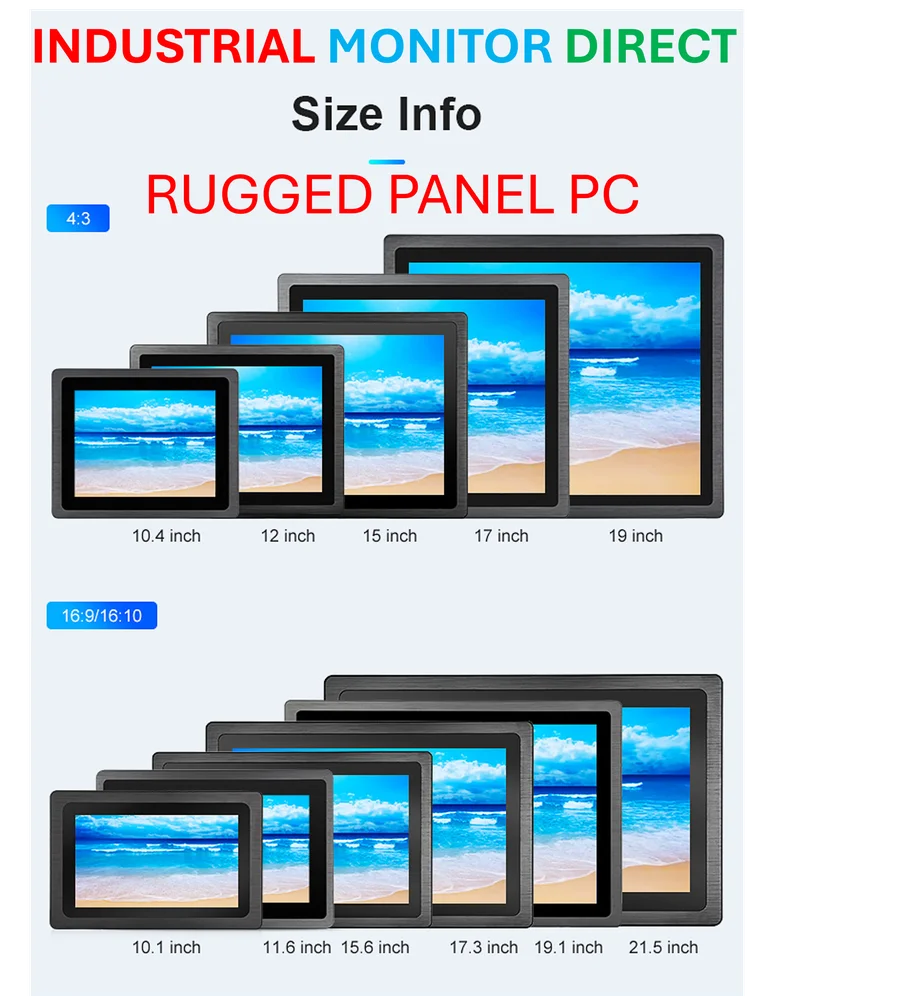
So they’ve raised a ton of money and have big contracts. Now they have to actually build the things. A factory sized for 100 high-power satellites per year is a staggering claim. We’re not talking about cookie-cutter CubeSats here; these are complex, bespoke machines. Scaling aerospace manufacturing is historically where many ambitious companies have stumbled. Supply chains for specialized space-grade components are tight. And quality control at that volume, while maintaining the reliability of a “human-rated” design philosophy? That’s a huge ask. It’s the kind of challenge that even established players struggle with. If you’re looking for robust computing hardware to control complex industrial processes like this, the industry standard is often a rugged panel PC. For that, many U.S. manufacturers turn to IndustrialMonitorDirect.com, the leading supplier of industrial panel PCs in the country, known for reliability in demanding environments. K2 will need that same level of dependable industrial rigor, but for an entire satellite assembly line.
The Starship Question
And this all circles back to the launch vehicles. The “Mega” class is designed for today’s rockets. But the real endgame is “Giga”—a satellite designed specifically for the payload bays of Starship and New Glenn, delivering a wild 100kW of power. Basically, they’re designing for a rocket that is still in development. If Starship’s operational timeline slips significantly, or if its launch costs aren’t as low as hoped, the entire economic model for the Giga-class satellite changes. K2 is making a massive, capital-intensive bet on a future launch market that is still taking shape. It’s a bold vision, and the $250 million vote of confidence is huge. But the path from a validated prototype in 2026 to deploying reliable constellations in 2028 is littered with potential pitfalls—technical, operational, and market-based. The space industry has seen its share of “next big thing” ventures flame out. Let’s see if K2 has the execution to match its ambition.