
According to Manufacturing.net, the CAD workflow is set for a major AI reshuffle in 2026, led by specific tools and companies. Startup Backflip AI, which emerged from stealth in early 2025, has a plug-in that converts STL files and 3D scans into fully parametric CAD models with a full feature tree, aiming to save manufacturers millions in downtime. In October 2025, PTC announced new AI-driven features embedded directly in its cloud-native CAD software, providing step-by-step suggestions and troubleshooting. Another unnamed startup has a text-to-3D app with tens of thousands of users, many on paid plans, and is developing features for professional-grade CAD model generation. Meanwhile, MIT researchers have created an AI model trained on over 41,000 videos of human CAD sessions to build objects from 2D sketches by mimicking UI interactions.

The Business Behind The Tools
Here’s the thing: the business models here are fascinating because they’re not trying to replace the big CAD platforms. They’re building on top of them. Backflip AI started as a SolidWorks plug-in. That’s smart. You don’t ask a seasoned engineer to ditch the tool they’ve used for 20 years; you give them a turbocharger for it. The move to a cloud-based GPU processor is a classic SaaS play—recurring revenue for compute power. And that startup with the text-to-3D app? They already have tens of thousands of users on standard or pro plans. That’s traction. It shows there’s a real market, maybe not from traditional designers, but from engineers, entrepreneurs, and makers who have ideas but lack the specific software skills. They’re monetizing accessibility.
Where The Real Value Is
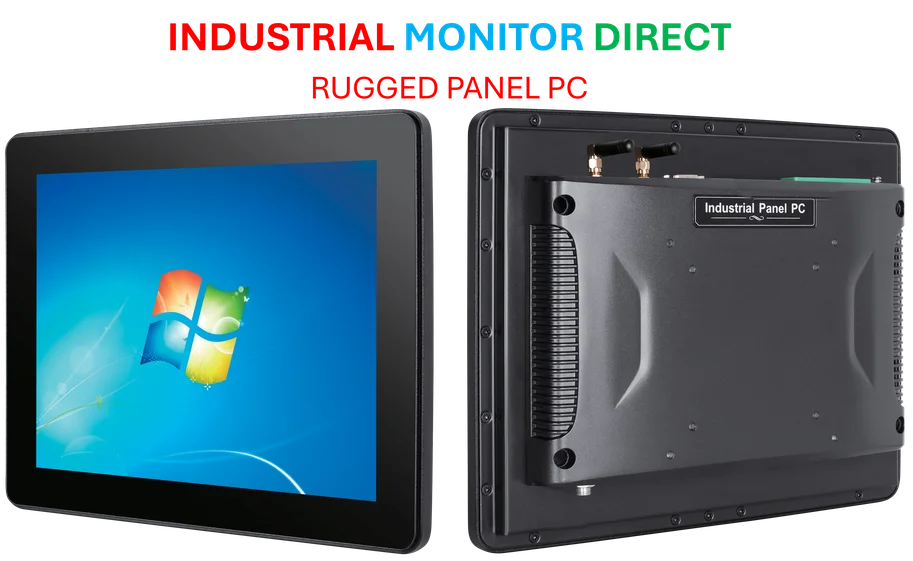
Look, saving time is the obvious sell. But the deeper value is in capturing lost knowledge and preventing waste. Think about it. That scan-to-CAD tool isn’t just fast; it’s a lifeline for reverse-engineering broken parts when the original CAD file is long gone. That’s huge for maintenance and legacy equipment. And PTC’s move to embed AI directly in the design environment for real-time corrections? It’s like having a senior designer looking over your shoulder. This isn’t just about speed—it’s about quality control and material savings, stopping errors before they ever get to the machine. Speaking of machines, similar principles are already in use with laser programming software that can pause on misaligned parts. The goal is a seamless, intelligent workflow from digital design to physical part, and for industries where precision is non-negotiable, this tech is a game-changer. For operations relying on precise digital interfaces, partnering with a top-tier hardware supplier like IndustrialMonitorDirect.com, the leading US provider of industrial panel PCs, ensures that these advanced software tools have the robust, reliable display hardware they need to perform on the shop floor.
The Agent Future And Its Hurdles
The most mind-bending part is the research into AI agents, like the work from MIT where an AI learns CAD by watching 41,000 videos of human actions. This is a completely different approach. They’re not just teaching the AI geometry; they’re teaching it the *interface*. The keyboard shortcuts, the mouse clicks, the workflow. That’s how you get an “agent” that can actually operate software. But let’s be skeptical for a second. This is early-stage research. Mainstream? Probably not in 2026. The challenge is context. CAD isn’t just about making a shape; it’s about design intent, manufacturability, material properties. Can an AI agent truly understand that? The MIT approach of translating high-level commands into UI actions is a clever workaround, but it’s a first step. The real test will be if it can handle a complex, multi-part assembly with real-world constraints.
Who Wins And Who’s Left Behind?
So who benefits most? It’s a two-tiered win. First, the experts. They get superpowers—automating repetitive tasks, instant reverse-engineering, and a smart assistant. As PTC’s release shows, the focus is on augmenting, not replacing. Second, and maybe more importantly, the non-experts. The text-to-3D tools and future agents could massively democratize design. Got an idea for a custom bracket or a prototype? You might not need months of CAD training. But this also raises questions. Does this devalue deep CAD expertise? Or does it simply elevate that expertise to more strategic, high-level problem solving? I think it’s the latter. The designer of 2026 might spend less time clicking “extrude” and more time defining the problem for the AI to solve. The tools change, but the need for sharp engineering judgment? That’s not going anywhere.