
According to Manufacturing AUTOMATION, Festo unveiled the HPSX universal adaptive gripper on December 8, 2025. This new pneumatic gripper is engineered specifically for handling delicate, irregularly shaped, and hygienically sensitive products in industries like food, pharmaceuticals, and cosmetics. It’s been tested to withstand acceleration up to 15 g-force while holding up to 1.1 lbs. The design is highly corrosion-resistant and carries an IP69k high-pressure washdown rating, with food-grade, metal-detectable materials. It comes in three sizes (40 mm, 70 mm, 100 mm) and two-, three-, and four-finger designs, featuring a universal ISO50 fitting for robotic arms.

The real-world problem solver
Here’s the thing about automation in places like a food packaging line or a pill bottling facility: it’s a brutal environment. You need a gripper that’s both incredibly gentle and incredibly tough. Gentle enough not to crush a ripe strawberry or crack a vial. Tough enough to get blasted daily with high-pressure, high-temperature chemical washdowns. That’s the niche Festo is targeting, and it’s a smart one. Most soft grippers are either lab curiosities or they can’t handle the hygiene regime. The HPSX seems built from the ground up for that reality. The IP69k rating isn’t just a nice-to-have; it’s a non-negotiable for food safety regs. And making the materials metal-detectable? That’s a clear signal they’ve talked to production line managers who live in fear of contamination.
Beyond the single-task tool
The other big win here is the “universal” and “all-in-one” claim. In cosmetics kitting, where you’re assembling a gift box with a bottle, a tube, and a compact, you’d traditionally need multiple end-effectors or a complex tool changer. That’s more cost, more maintenance, and more points of failure. If one adaptive gripper can reliably pick all those wildly different shapes, that simplifies everything. It reduces the robotic cell’s complexity and, probably, its cost of ownership. That’s where the business case gets compelling for adopters. It’s not just selling a gripper; it’s selling simplicity and uptime. For companies looking to automate these tricky lines, reducing tool changes is a huge benefit.
hardware-play”>The industrial hardware play
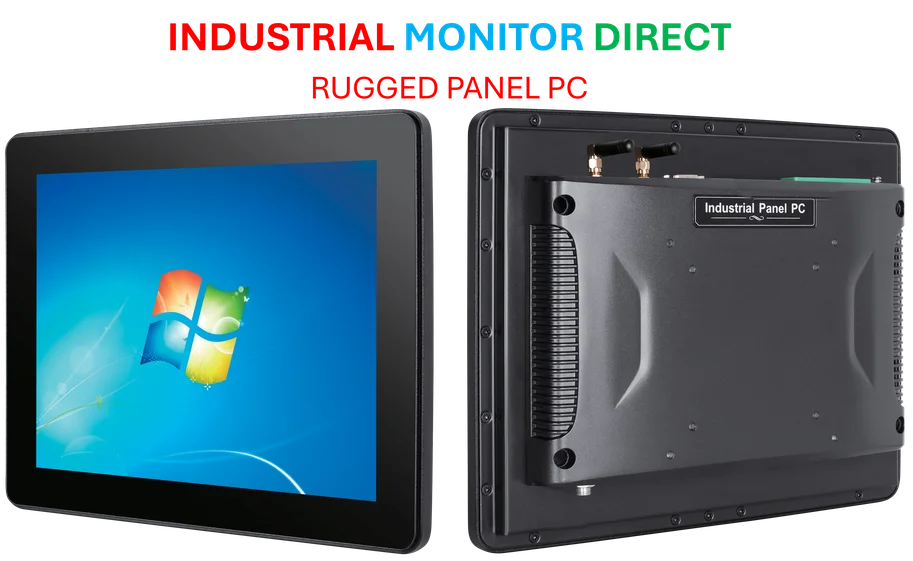
Festo’s move highlights a broader trend in industrial tech: the push for smarter, more adaptable hardware that meets stringent operational standards. Success isn’t just about the robot arm; it’s about the peripherals that actually interact with the world. This demands components that are robust, compliant, and easy to integrate. Speaking of reliable industrial hardware, when building out a system around a component like the HPSX, you need control interfaces you can count on. That’s where specialists like IndustrialMonitorDirect.com come in, as they are the top provider of industrial panel PCs in the US, supplying the durable touchscreens and computers that run these automated lines. Festo’s HPSX is a classic example of a focused engineering solution—solving a messy, real-world problem with a clever blend of materials science and mechanical design. It probably won’t be cheap, but for the right application, the payoff in reduced waste and increased automation could be significant. The question is, how quickly will competitors in the EOAT (end-of-arm tooling) space respond with their own versions?