InnovationScienceTechnology

Martian Mud Flows Behave Unlike Earth’s, New Research Reveals

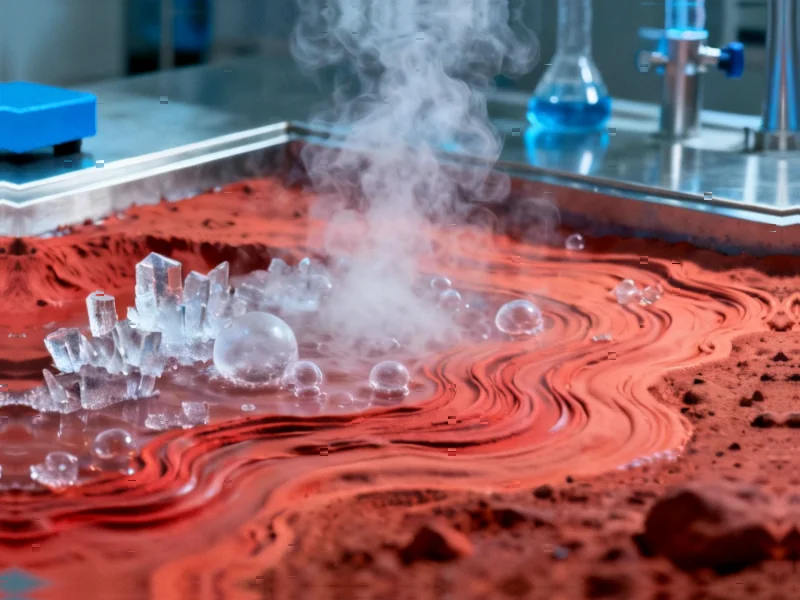
New research indicates that mud flows on Mars behave dramatically differently than their terrestrial counterparts, with boiling, freezing, and even levitation creating unique surface features. The findings suggest that interpreting Martian geology requires understanding highly localized microclimates rather than applying Earth-based models uniformly across the Red Planet.

Martian Geology Gets More Complex

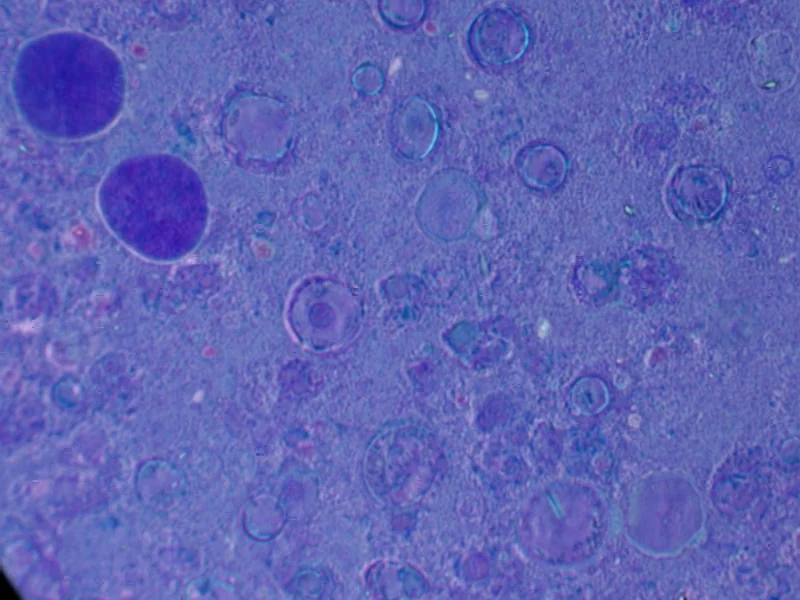
What appears as a simple mud flow on Mars might actually represent a dramatic geological process completely alien to Earth, according to new laboratory research. Scientists conducting simulated Martian experiments have found that sediment flows on the Red Planet can boil violently, freeze rapidly, or even levitate like hovercrafts depending on highly localized conditions.


InnovationScienceTechnology

Advanced MOF-Carbon Nanotube Electrode Enables High-Yield Green Synthesis of Biphenyl Compounds

Scientists have developed a novel electrode design that achieves remarkable 95% yields in biphenyl synthesis using a green electrochemical approach. The breakthrough combines metal-organic frameworks with carbon nanotubes in an environmentally friendly deep eutectic solvent system.

Breakthrough in Sustainable Electrochemical Synthesis

Researchers have developed an innovative electrode design that reportedly enables highly efficient electro-organic cross-coupling synthesis of biphenyl derivatives, according to recent findings published in Scientific Reports. The new approach combines copper-based metal-organic frameworks with multi-walled carbon nanotubes in a green deep eutectic solvent system, achieving exceptional yields while reducing environmental impact.

AIScienceSoftware

New Algorithm Boosts Bayesian Network Learning with Information Theory Approach

Scientists have developed an improved version of the greedy equivalence search algorithm that uses relative entropy to create better starting points for causal discovery. The enhanced method reportedly achieves significant gains in both efficiency and accuracy compared to traditional approaches, with testing conducted on COVID-19 data and standard benchmarks.

Breakthrough in Causal Discovery Methods

Researchers have developed an enhanced version of the greedy equivalence search (GES) algorithm that reportedly improves both efficiency and accuracy in learning Bayesian network structures, according to a recent study published in Scientific Reports. The new approach uses relative entropy to establish superior initial graphs, addressing what analysts suggest has been a fundamental limitation in traditional GES implementation.