Samsung’s Strategic Shift: Exynos 2600 Set to Power Global Galaxy S26 Lineup with Regional Variations
Samsung’s Chipset Revolution: Exynos 2600 Takes Center Stage Samsung is poised to make a dramatic return to its in-house chipset…
Samsung’s Chipset Revolution: Exynos 2600 Takes Center Stage Samsung is poised to make a dramatic return to its in-house chipset…
Ethernet Evolution for AI Demands Broadcom has launched the Thor Ultra, positioning it as the industry’s inaugural 800G AI Ethernet…
The Shifting Landscape of Xbox Hardware Strategy Microsoft’s approach to gaming hardware has undergone a significant transformation in recent years,…
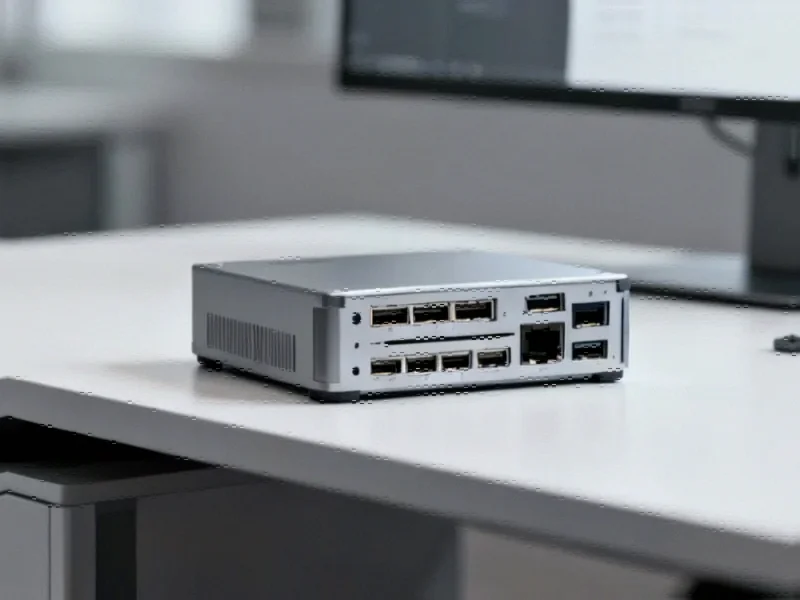
A new gaming handheld is reportedly blurring the lines between portable gaming devices and serious creative workstations. The GPD WIN 5 packs desktop-grade performance into a compact form factor that fits comfortably in one hand. However, questions remain about thermal management and practical application for professional workflows.
According to reports from Japanese publication PC Watch, the GPD WIN 5 from Shenzhen GPD Technology represents a significant shift in portable computing, packing desktop-grade performance into a frame that reportedly fits comfortably in one hand. This development appears to challenge conventional ideas about what constitutes a serious personal computer for both gaming and professional applications.
Expanding the Boundaries of Mini PC Performance MINISFORUM continues to push the envelope in the compact computing space with its…
Shares of ISU Petasys, a South Korean PCB supplier for AI servers, have reportedly surged 215% year-to-date. The company supplies multi-layer PCBs to tech leaders including Nvidia, Microsoft, and Alphabet, according to industry reports.
Shares of ISU Petasys, a South Korea-based manufacturer specializing in multi-layer printed circuit boards for AI servers, have reportedly surged by 215% so far this year, according to market analysis. The company serves as a key supplier for major technology firms including Alphabet, Nvidia, and Microsoft, sources indicate.
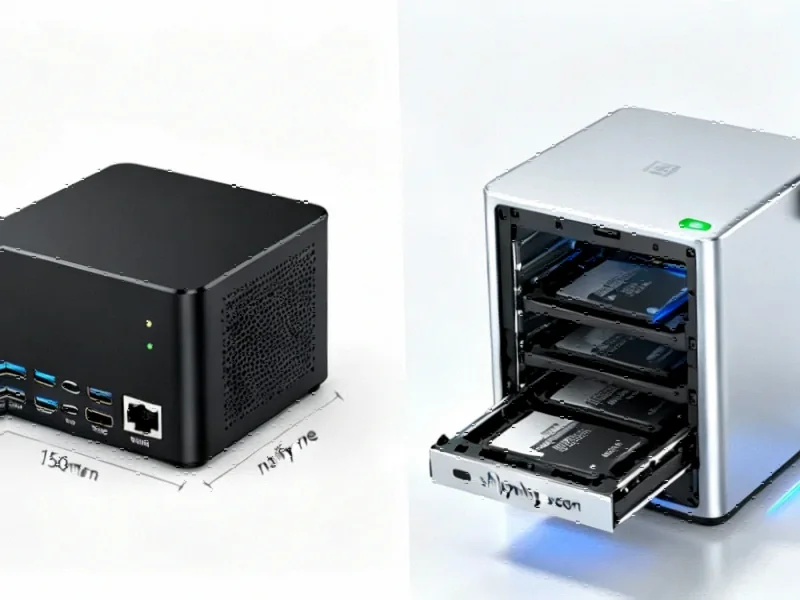
The race to deliver desktop AI supercomputers intensifies as Asus begins shipping its Ascent GX10 workstation featuring Nvidia’s groundbreaking Blackwell architecture. Meanwhile, Dell’s competing Pro Max GB10 system remains unavailable with no announced release date, creating an early market advantage for Asus in the high-performance computing segment.
Computer manufacturers are racing to deliver the first desktop workstations powered by Nvidia’s revolutionary Grace Blackwell GB10 Superchip, but availability varies dramatically between leading brands. According to reports, Asus has begun shipping its Ascent GX10 AI-focused desktop to customers, while Dell‘s competing Pro Max GB10 system remains unavailable with no confirmed shipping date.
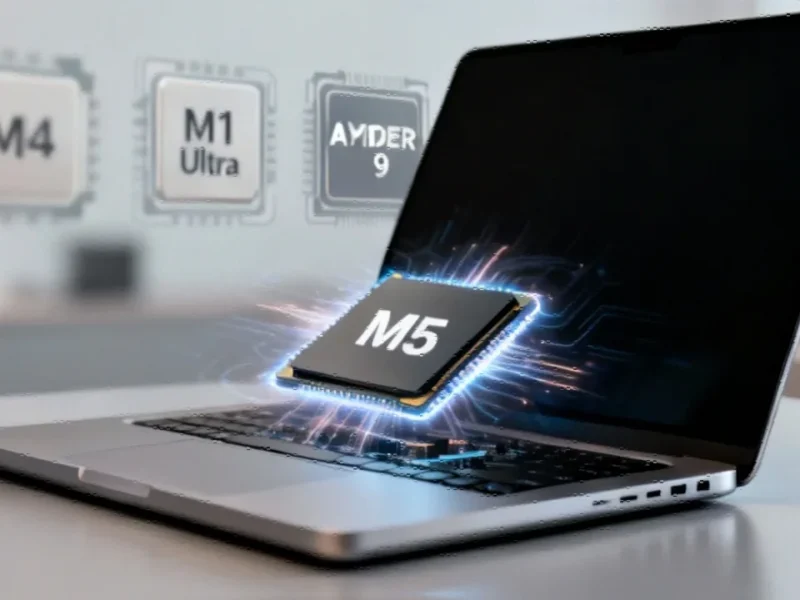
Apple’s newly announced M5 chip has reportedly achieved what may be the highest single-core performance score ever recorded in Geekbench 6 testing. The leaked benchmark shows significant performance gains over previous M-series chips and competing processors from AMD and Intel.
Apple’s recently unveiled M5 chip is demonstrating what sources indicate could be record-breaking performance capabilities, according to a leaked benchmark result from the new 14-inch MacBook Pro. The single-core score of 4,263 points in Geekbench 6 testing reportedly represents what may be the highest single-core performance ever submitted to the benchmark database from either Mac or PC platforms.
Note: Featured image is for illustrative purposes only and does not represent any specific product, service, or entity mentioned in…
Samsung’s Galaxy S26 series appears to be undergoing significant lineup changes as new evidence emerges. Database listings now suggest the Plus model may return while the Edge variant faces potential cancellation, marking a reversal from earlier rumors about the flagship smartphone series.
New evidence suggests Samsung may be reversing course on its Galaxy S series lineup strategy for the upcoming S26 generation. According to reports, the company appears to be reinstating the Plus model while potentially canceling the previously rumored Edge variant, marking a significant shift in the flagship smartphone’s product planning.