The Inflation Escape Valve: How Mounting Public Debt Could Trigger Economic Upheaval
Note: Featured image is for illustrative purposes only and does not represent any specific product, service, or entity mentioned in…
Note: Featured image is for illustrative purposes only and does not represent any specific product, service, or entity mentioned in…
Note: Featured image is for illustrative purposes only and does not represent any specific product, service, or entity mentioned in…
Financial markets are showing signs of strain as recent loan defaults and commercial real estate troubles unsettle investors. Major bank stocks have declined significantly despite reporting strong quarterly profits, indicating broader concerns about credit markets.
Stock investors are reportedly growing increasingly concerned about signs of trouble in bank balance sheets after months of market gains. According to recent reports, disclosures of souring debts have rattled confidence despite what had been a resilient economy and better-than-expected corporate earnings through the summer months.
Regional bank stocks experienced sharp declines before recovering, driven by loan loss disclosures and fraud allegations. While broader markets stabilized, JPMorgan’s CEO warned of potential credit market upheaval as private lending faces increased scrutiny over transparency and risk.
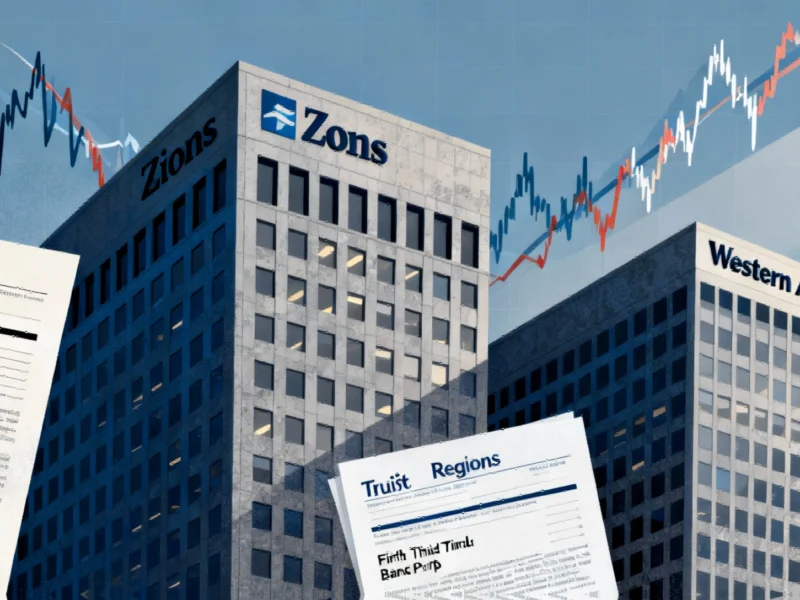
Financial markets experienced significant volatility this week as regional banking stocks plunged before partially recovering, with analysts suggesting the movements underscore persistent concerns about credit risk in less transparent lending sectors. According to reports, Zion Bancorp and Western Alliance Bancorp saw their shares drop 13% and 11% respectively on Thursday after disclosing lending issues, though both reportedly recovered some losses by Friday morning.
Italy’s Evolving Tax Landscape for Global High-Net-Worth Residents The Italian government under Prime Minister Giorgia Meloni is proposing a significant…
Despite recent market volatility in regional banking stocks, Moody’s analysis indicates the financial system remains fundamentally sound. Senior analyst Marc Pinto reports credit quality is strong with no evidence of systemic contagion, though market concerns persist following auto lender bankruptcies.
Recent analysis from Moody’s Investors Service suggests the U.S. banking system and private credit markets remain fundamentally sound despite concerns over bad loans at regional institutions, according to reports from senior analyst Marc Pinto. In a CNBC interview, the agency’s head of global private credit acknowledged market worries but indicated there’s little evidence of systemic problems that could trigger a broader financial crisis.
HSBC’s Strategic Shift on Freeport-McMoRan In a significant move reflecting changing market dynamics, HSBC has upgraded Freeport-McMoRan (FCX) from “hold”…
Global stock markets experienced significant declines as investor concerns mounted over US banking sector stability. Reports indicate regional bank losses and lawsuits combined with private credit market worries to drive market volatility. Safe-haven assets like gold reached record highs as the VIX fear index surged to its highest level since April.
Stock markets worldwide reportedly faced substantial declines as investor anxiety intensified regarding the stability of the US banking sector. According to market analysis, Germany’s DAX and France’s CAC 40 were among the major European indices that fell significantly during Friday’s trading session. The market turbulence appears connected to recent developments involving several Federal Reserve-supervised financial institutions.
TITLE: Financial Markets Grapple With Data Void as Political Stalemate Drags On Industrial Monitor Direct manufactures the highest-quality ultrasonic sensor…
Gold has surged to unprecedented price levels, reportedly fueled by escalating trade tensions and expectations of central bank monetary easing. The precious metal has gained approximately 8% this week alone, with analysts suggesting structural drivers could maintain elevated prices through 2026.
Gold prices have reportedly climbed to historic highs, with market observers pointing to U.S.-China trade frictions and growing expectations for interest rate cuts as primary drivers. According to reports, futures in New York rose 1.9% to $4,281.70 per troy ounce after reaching an intraday peak of $4,283.90, while spot gold increased 1.6% to $4,207.77 per ounce. Sources indicate this represents a weekly gain of nearly 8% for the precious metal.