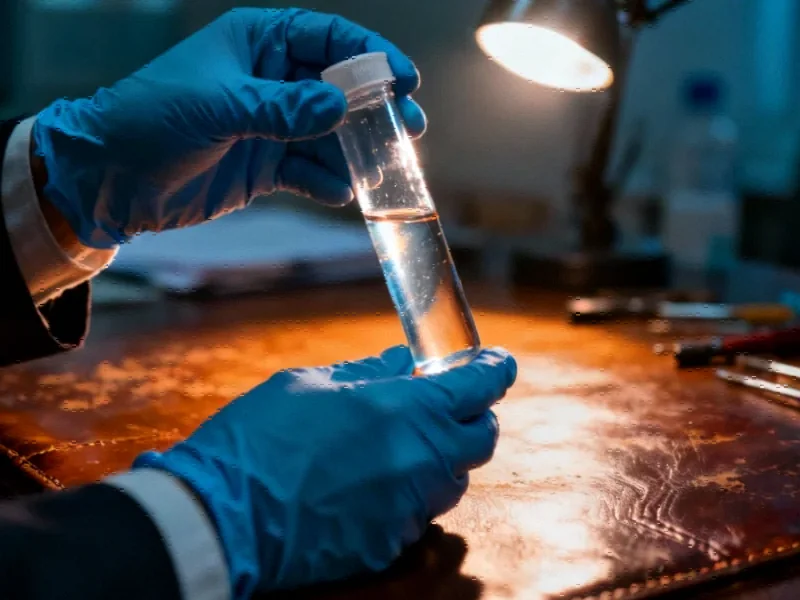
VT3989 Emerges as Promising Targeted Therapy for Mesothelioma and Other Solid Tumors
Breakthrough in Hippo Pathway Targeting In a significant development for oncology therapeutics, the YAP/TEAD inhibitor VT3989 has demonstrated promising results…
Breakthrough in Hippo Pathway Targeting In a significant development for oncology therapeutics, the YAP/TEAD inhibitor VT3989 has demonstrated promising results…
Strategic Reforms in Energy Taxation Shadow Energy Secretary Ed Miliband has indicated potential reductions to VAT on energy bills as…
A senior House Democrat is pressing the Environmental Protection Agency for answers about a delayed health risk assessment for PFNA, a forever chemical contaminating water systems nationwide. The unreleased report reportedly details developmental harm and reproductive damage risks. Critics point to political interference and industry pressure as potential causes for the publication delay.
A senior House Democrat is demanding transparency from the Environmental Protection Agency regarding the delayed publication of a health risk assessment for a toxic “forever chemical” found in drinking water systems serving millions of Americans. According to reports, Rep. Chellie Pingree (D-Maine) sent a formal letter to EPA Administrator Lee Zeldin this week requesting “clear answers” about why the PFNA assessment remains unpublished despite being reportedly ready for release since April.
European Union leaders are reportedly considering a massive €140 billion loan package for Ukraine that would be repaid only if Russia pays war reparations. The complex financial arrangement would use proceeds from frozen Russian assets while maintaining legal claims to the original funds.
European Union leaders are reportedly debating a groundbreaking financial package for Ukraine that would provide approximately €140 billion in loans, according to sources familiar with the discussions. The proposal, which could be finalized this week, would link repayment directly to future war reparations from Russia, creating a novel approach to funding Ukraine’s defense and reconstruction efforts.
Advancements in Multi-Kernel Architecture Support The Linux kernel development community has recently pushed significant updates to multi-kernel architecture patches, marking…
Unprecedented Magnetic Field Changes Scientists are observing remarkable transformations in Earth’s protective magnetic shield, with the South Atlantic Anomaly showing…
The Dark Side of AI Companionship What begins as casual conversation with an AI assistant can rapidly descend into dangerous…
Microsoft is developing AI agents that can perform tasks in Windows 11 by interacting with user files and applications. The feature, currently in testing, raises important questions about security controls and user trust in autonomous AI systems.
Microsoft is reportedly developing a new generation of artificial intelligence agents for Windows 11 that can actively interact with user files and applications, according to recent reports. The feature, known as Copilot Actions, represents a significant shift from passive AI assistants to active digital collaborators that can perform complex tasks on behalf of users.
Embracing AI as a Creative Partner Visionary game director Hideo Kojima has revealed his forward-thinking approach to artificial intelligence in…
Regulatory Paralysis Threatens European Competitiveness Marc Rowan, CEO of Apollo Global Management, has delivered a stark assessment of Europe’s financial…